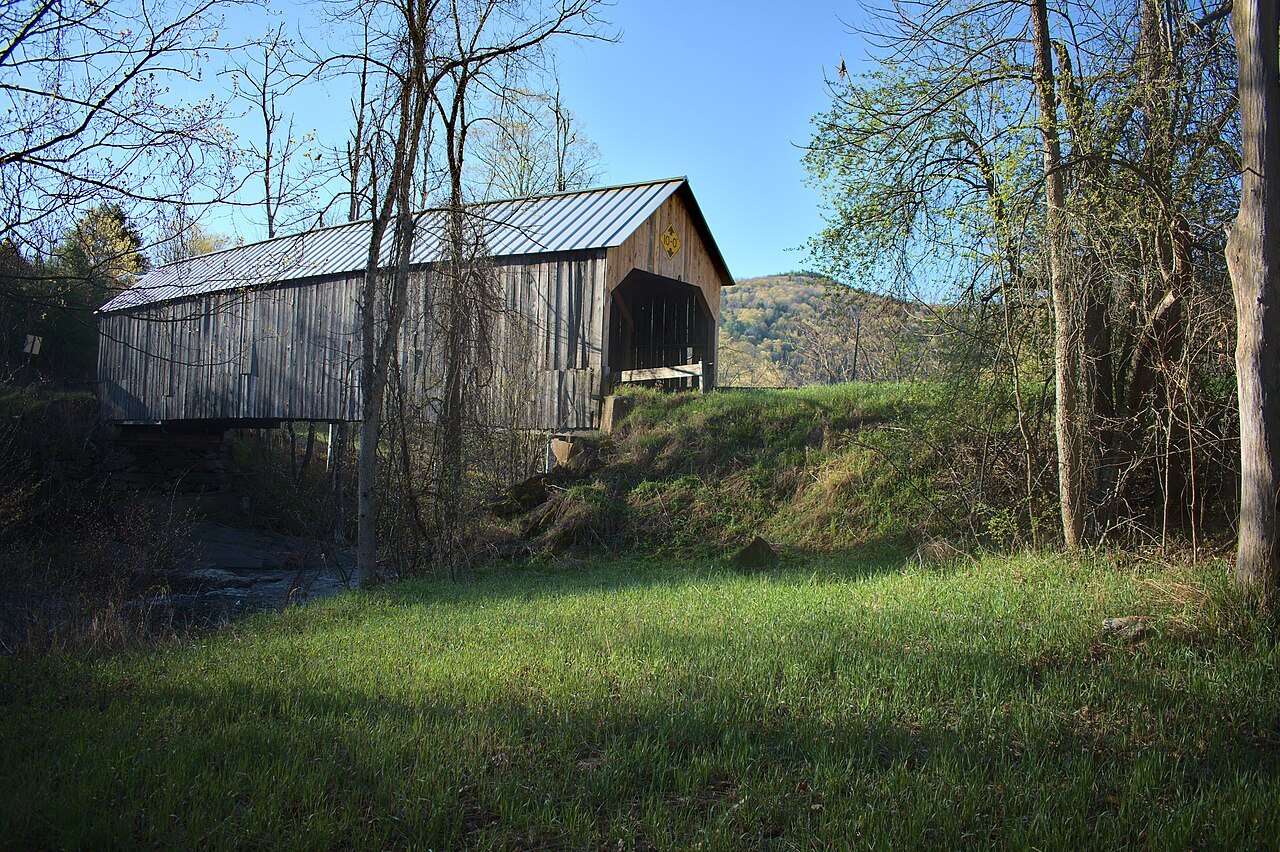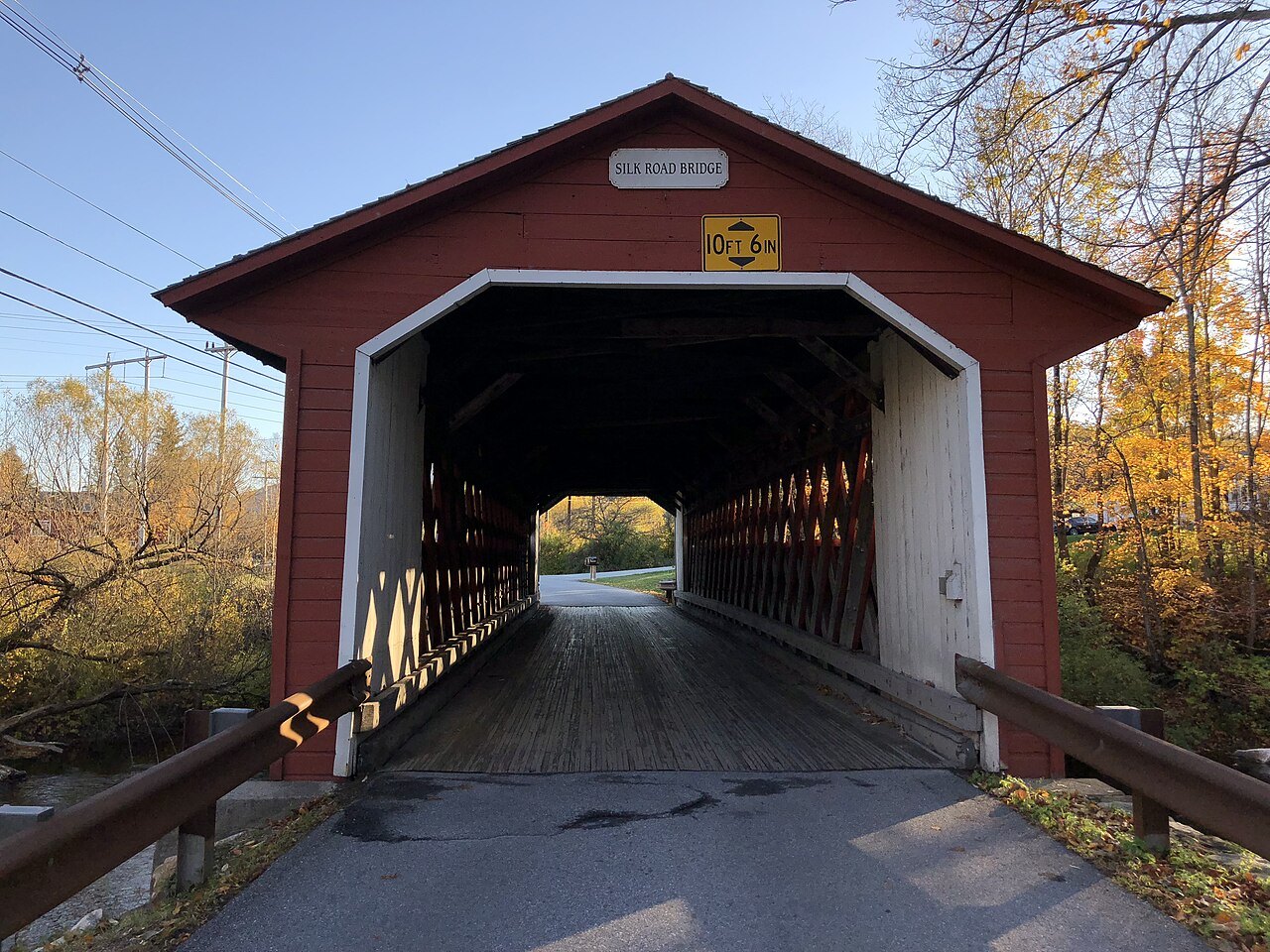
What is a Town lattice truss?
Photographs: Famartin, Wikimedia Commons, CC BY-SA 4.0 · Ahale, Wikimedia Commons, CC BY-SA 4.0 · Ahale, Wikimedia Commons, CC BY-SA 4.0
What Ithiel Town's patented lattice truss is, how it differs from other designs, and where to see it in Vermont.
What the name describes
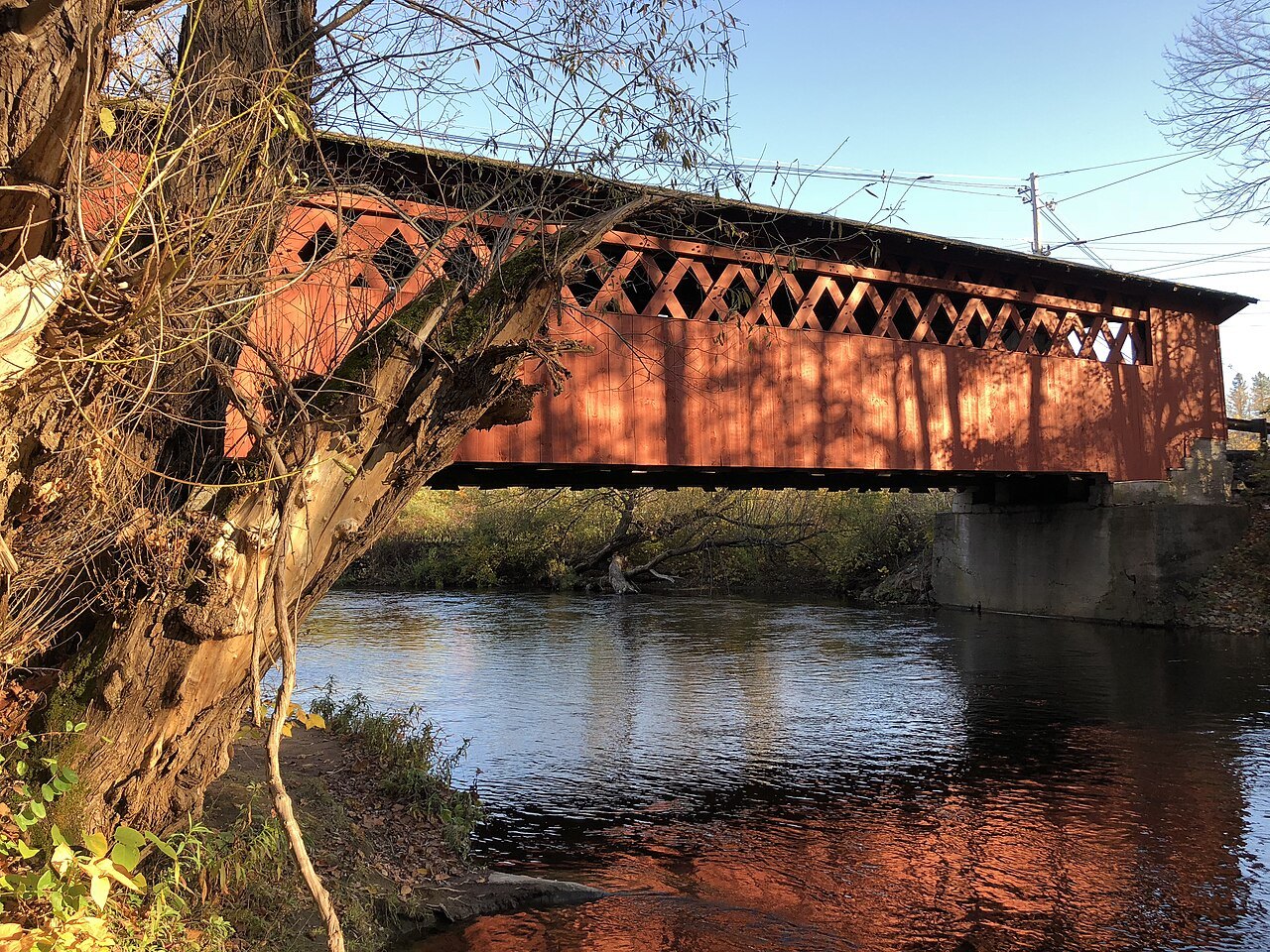
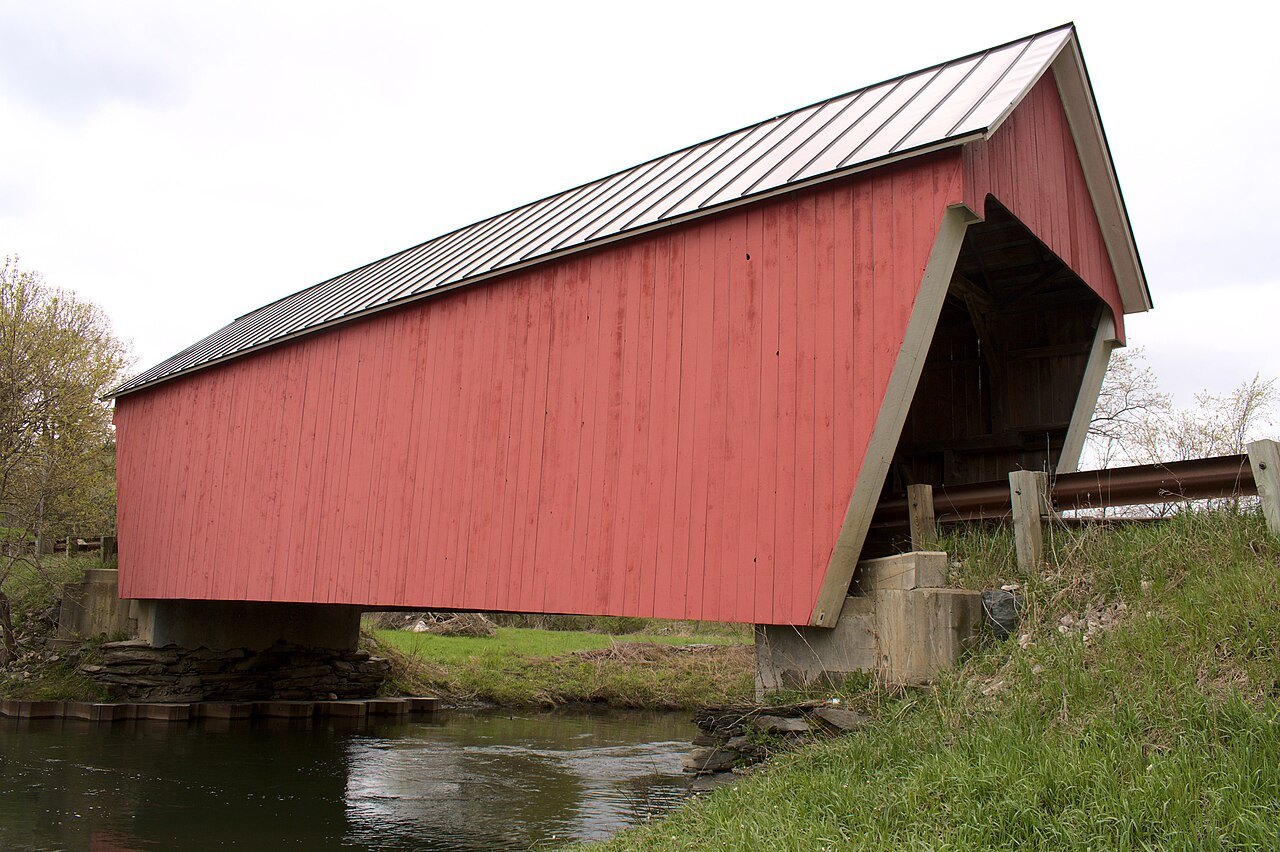
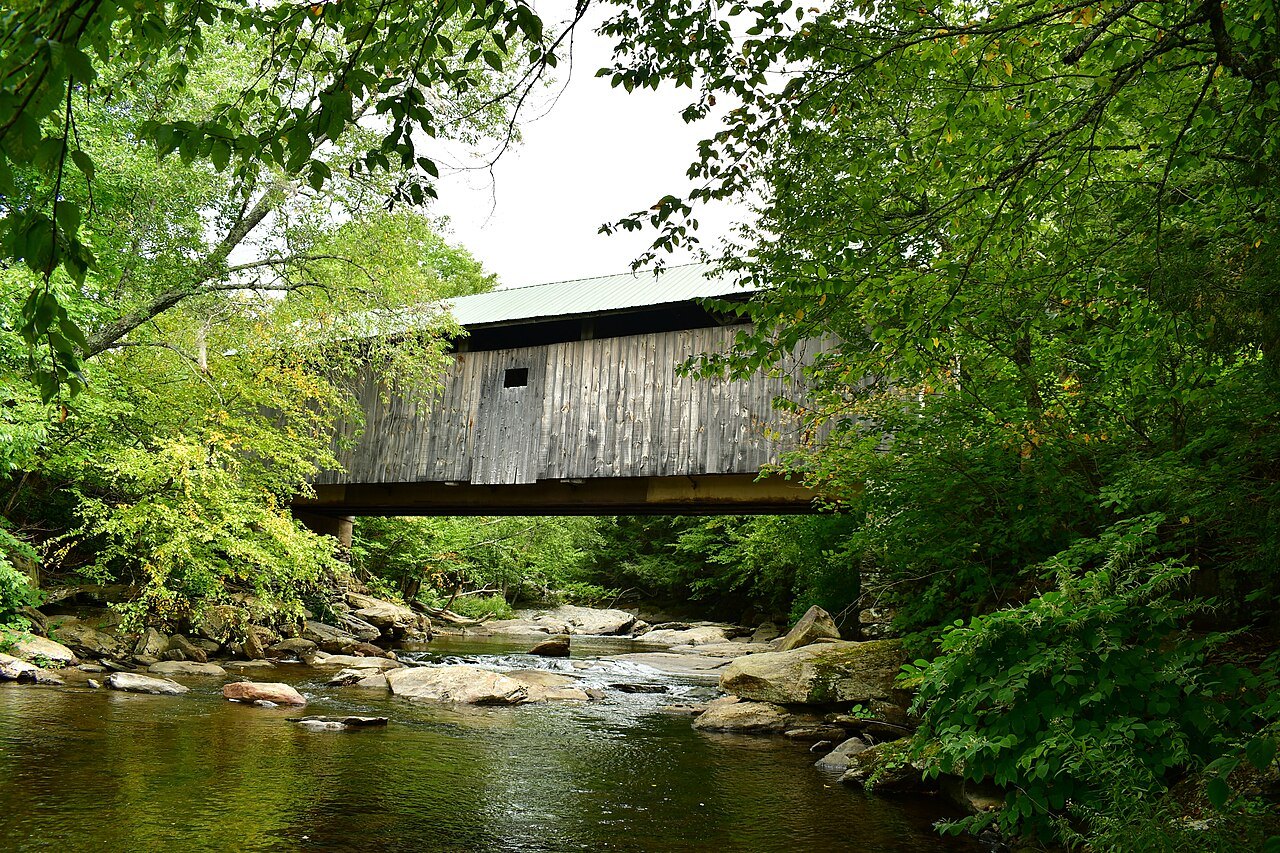
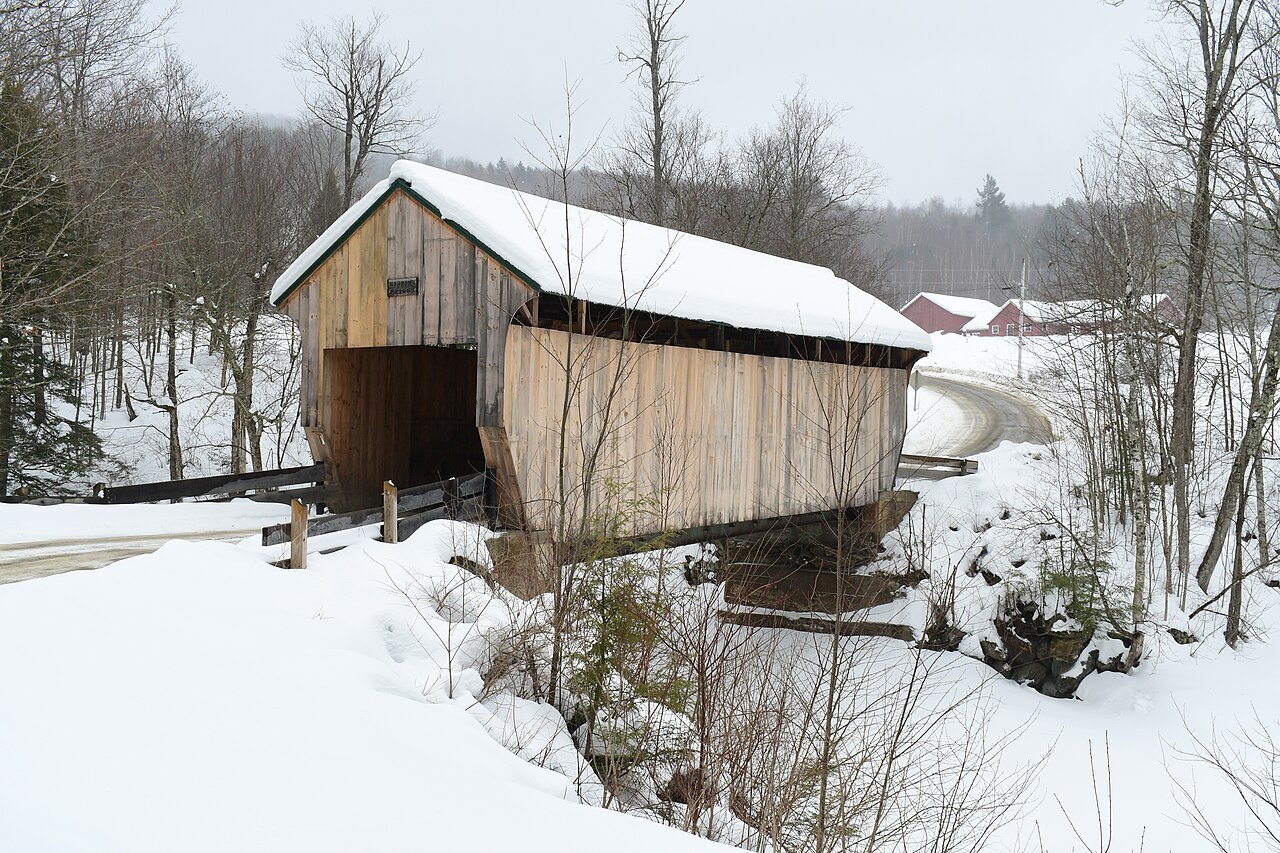
The term names a truss style, not a single bridge, and recurs across Vermont's covered crossings. A truss is a structural frame built of posts and diagonals rather than a solid wall, strong enough to carry a deck and moving traffic across open space without a central support. "Town lattice" names one way of arranging those diagonals, devised by an engineer named Ithiel Town, not a shape a visitor can spot at a glance from the road.
Town patented the design in 1820 and again, in a refined version, in 1835. Builders across New England favored it because it did not need the long, heavy timbers or elaborate joinery older truss types required. A web of shorter, lighter planks, set diagonally and pinned together at each crossing, could be assembled by local carpenters working from a pattern rather than invention, repeated as many times along the span as the river demanded.
Vermont counts its covered bridges as authentic by exactly this kind of construction, built with trusses rather than with simple stringers, and most follow local adaptations of historic building practices so that no two look quite alike. A Town lattice truss is one of those building practices, licensed under patent rather than freely copied, and it stands beside other truss types that Vermont and New England builders invented or adapted on their own.
Why the lattice pattern held up
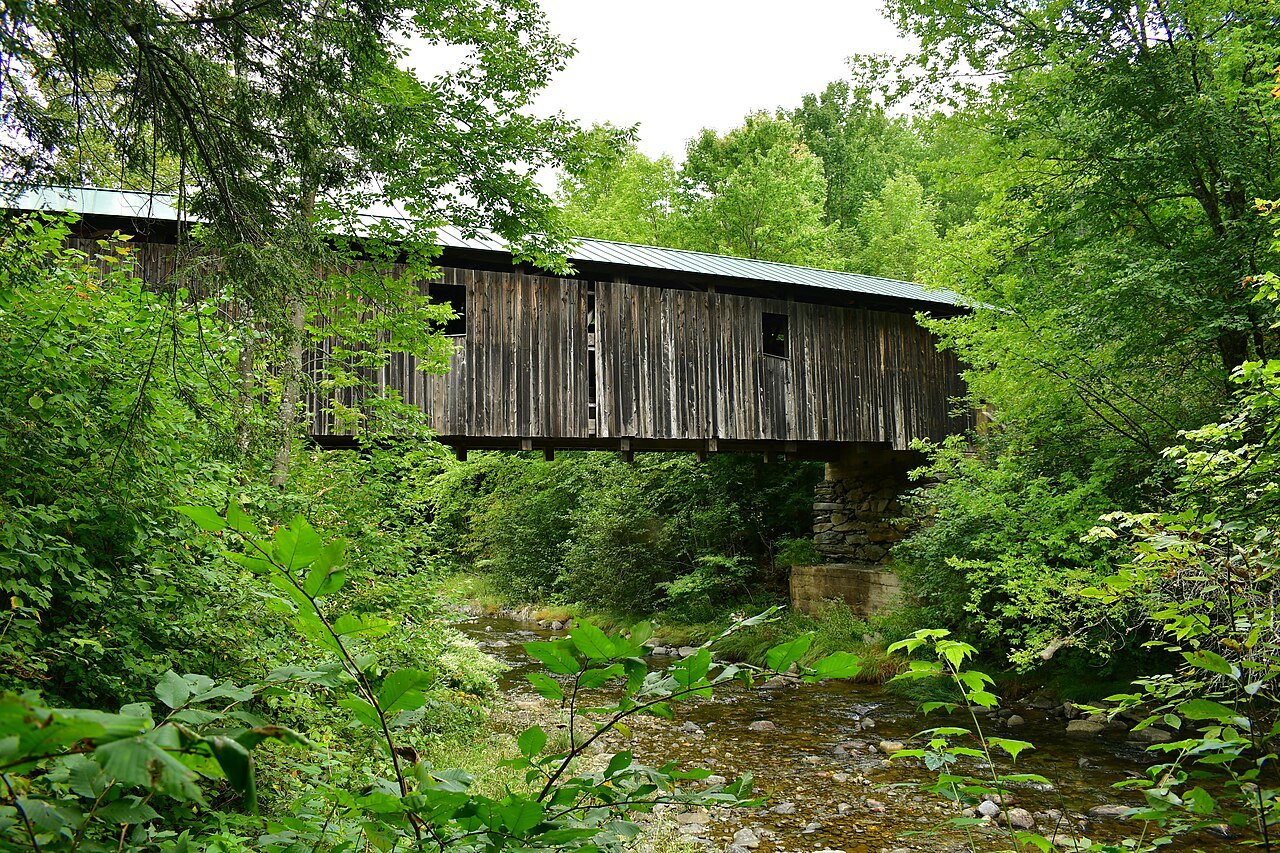
The crossed diagonal planks of a Town lattice truss spread the load across many small connections instead of concentrating it in a few large joints. That redundancy suited Vermont's rushing rivers and long winters, where a single weak joint could fail under ice or flood long before anyone noticed. It also meant a builder could replace one timber without dismantling the whole truss, a practical advantage for a structure expected to outlast the farmer who first paid for it.
The design mattered most where a long, uninterrupted span was needed, since a Town lattice truss can be built to considerable length without the central piers that other designs often required. That capacity let builders cross the widest rivers with a single structure and carry heavier loads than a simple post-and-beam crossing ever could, while a roof over the finished truss kept the timbers dry through wet springs and snow-bound winters.
Covered bridges across Vermont needed a roof for this reason no matter which truss stood beneath it: a roof prolongs the life of the wooden structure significantly and gives a stable four-season crossing. Farmers found the covering useful for another reason too, since cattle and many horses crossed more calmly when the moving water below was hidden from view, so the design answered an engineering need and a practical one at the same time.
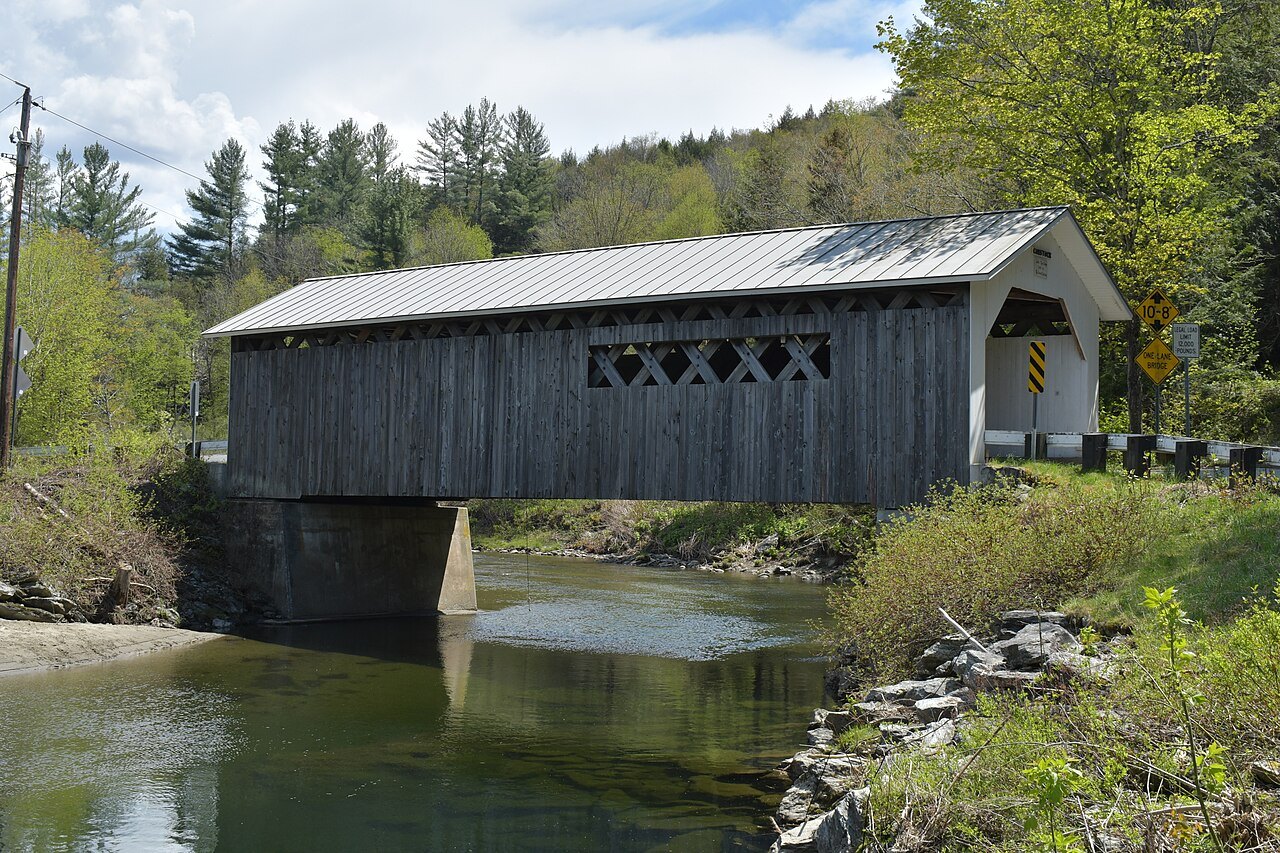
The Cornish-Windsor Bridge
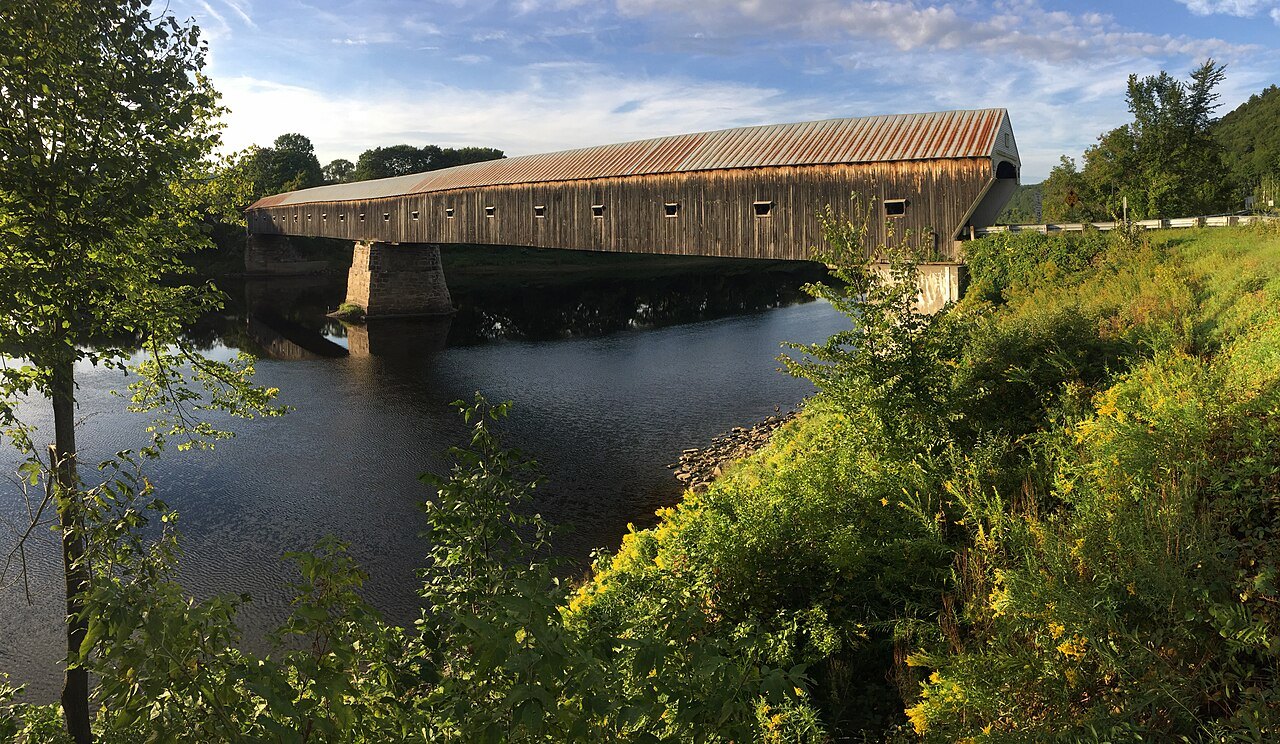
The clearest Vermont example is the Cornish-Windsor Covered Bridge, a two-span timber Town lattice-truss crossing of the Connecticut River that joins Windsor, Vermont, to Cornish, New Hampshire. Built in 1866 by Bela Jenks Fletcher of Claremont and James Frederick Tasker of Cornish, it runs approximately 449 feet long and 24 feet wide, long enough that until 2008, when the Smolen-Gulf Bridge opened in Ohio, it stood as the longest covered bridge in the United States.
It remains the longest wooden covered bridge standing and carries the longest single covered span open to automobile traffic in the country. Bridges had stood on the same site since 1796, with further crossings in 1824 and 1828, before this one replaced them, built with Ithiel Town's patented lattice so two long spans could meet at a shared pier in the river rather than needing extra support from the riverbed.
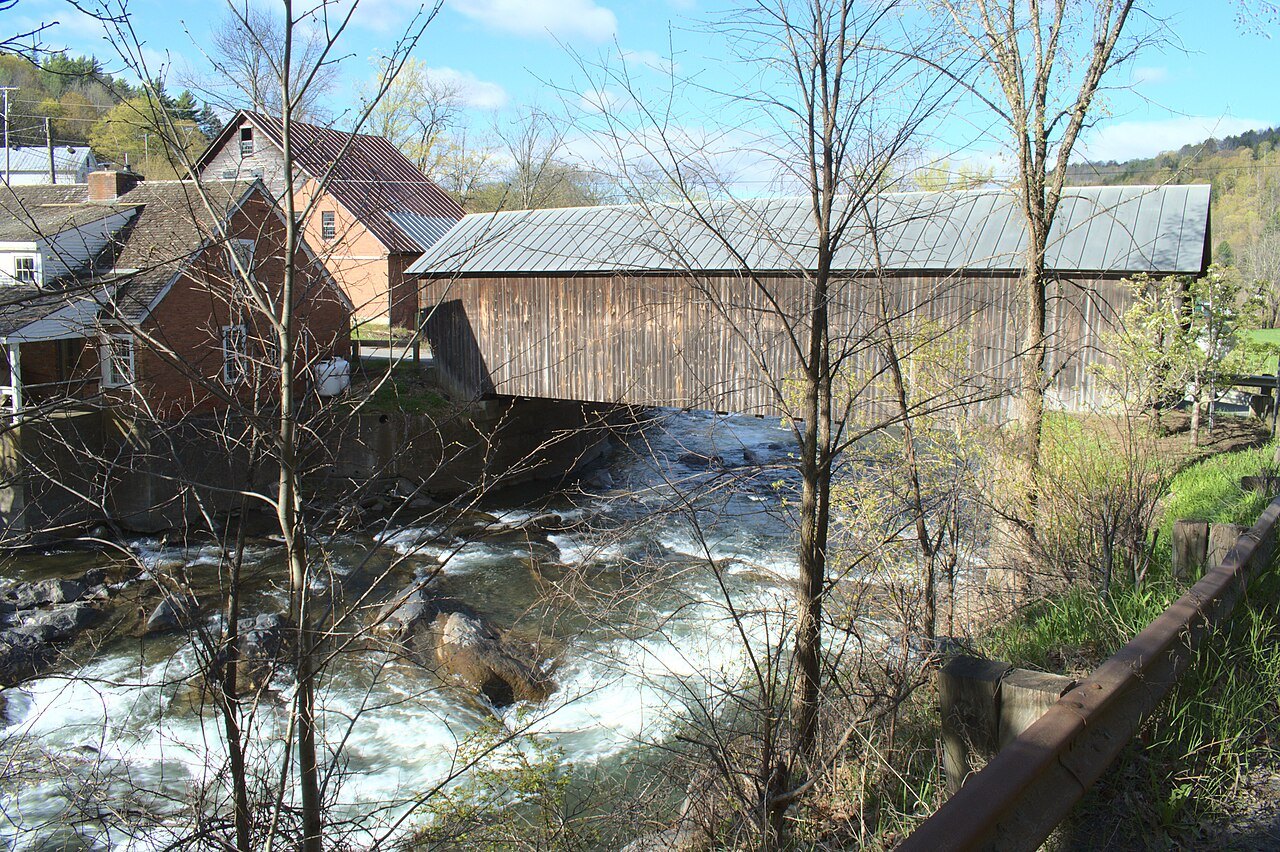
The bridge carried tolls from 1866 until 1943; New Hampshire bought it in 1936, and the tolls ended seven years later. The American Society of Civil Engineers named it a National Historic Civil Engineering Landmark in 1970, it was listed on the National Register of Historic Places in 1976, and a federally funded rehabilitation followed in 1988. The crossing can be paired with a drive along the Connecticut River on the Vermont side.
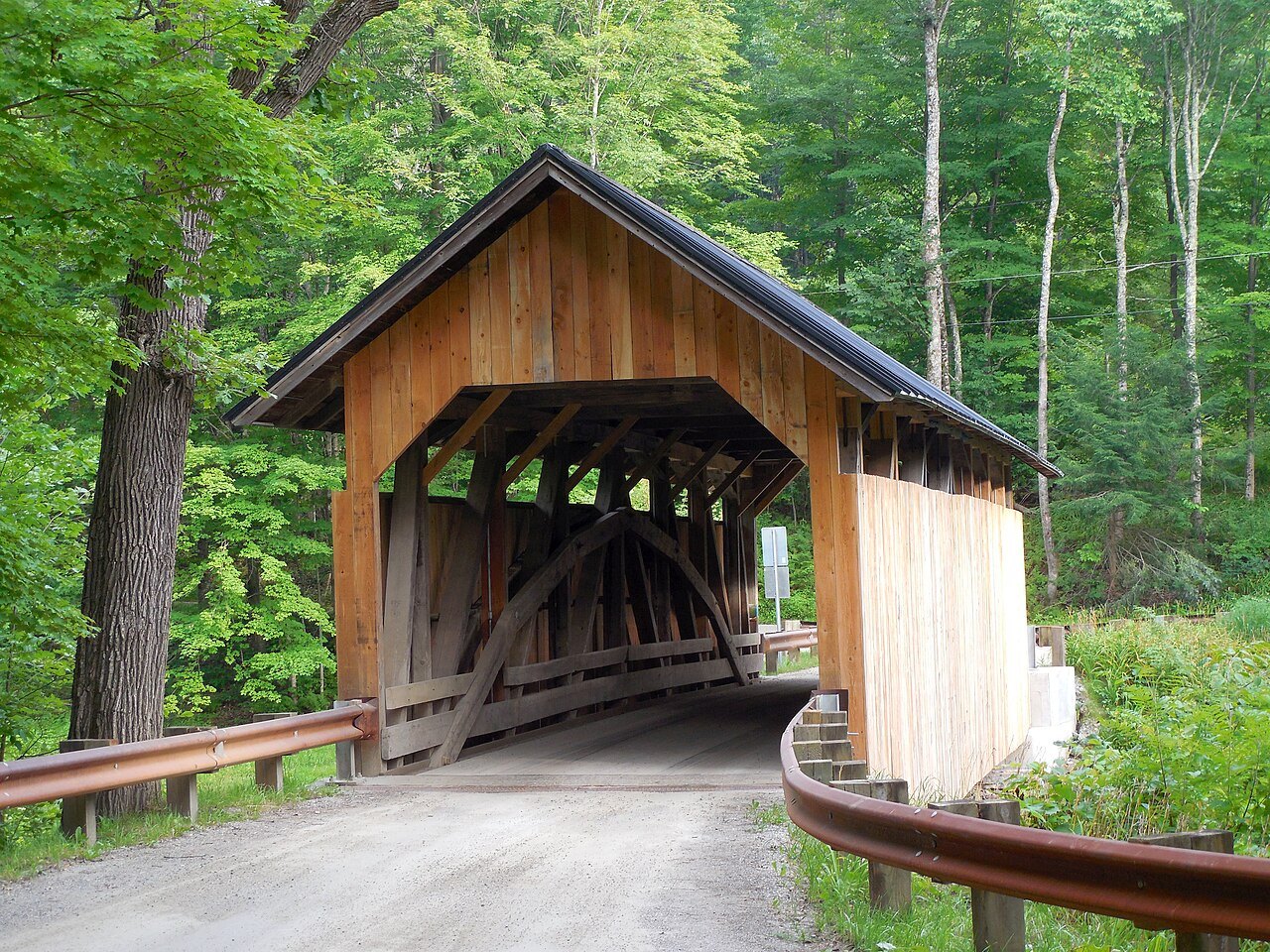
Not every bridge uses this truss
Not every covered bridge in Vermont relies on a Town lattice. The Taftsville Bridge, over the Ottauquechee River in Woodstock, follows an older craftsman tradition rather than a patented truss, possibly influenced by designs from Switzerland. Built in 1836 by Solomon Emmons III after three earlier bridges had washed away, it is counted among the oldest covered bridges in Vermont and in the country.
Its laminated arches resemble those of the Burr arch-truss, patented in 1817, but the resemblance is superficial. Engineers describe the Taftsville design as a modified multiple kingpost truss with semi-independent arches, a distinct structural idea from Ithiel Town's crossed lattice, even though both predate the automobile and both still carry traffic today. Hurricane Irene damaged the bridge badly in 2011, and repairs returned it to use in September 2013.
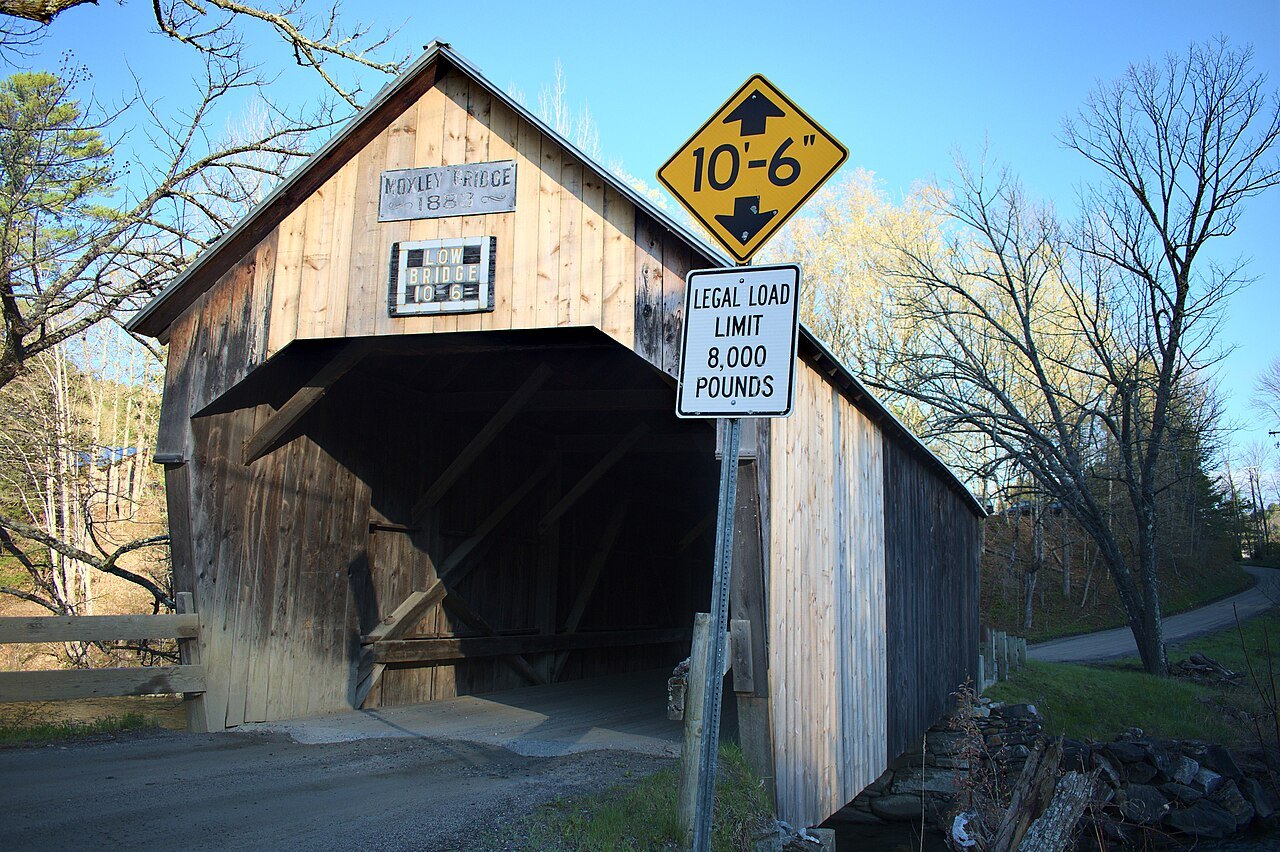
The lesson for a visitor is that a covered bridge is a roof over a truss, not one engineering method, and the truss beneath varies from span to span even within Vermont. The local historical society can usually confirm which truss type stands beneath a given roof, since a Town lattice is attributed in the record to specific bridges such as Cornish-Windsor, not to every crossing in the state.
Where to look for them
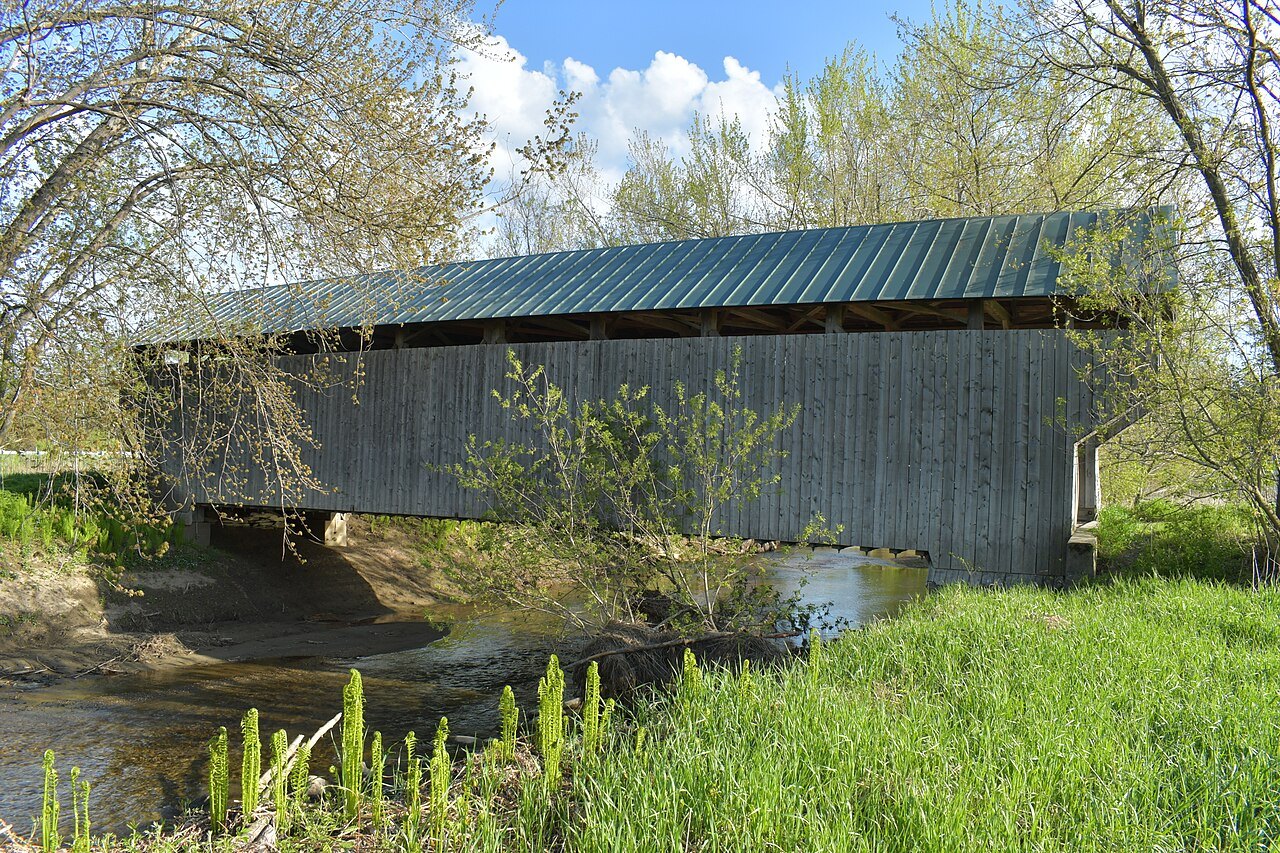
Montgomery has more covered bridges than any other Vermont town, seven in all, and Bennington, Lyndon, Rockingham, Northfield and Tunbridge each have five. Northfield also carries the only road in the country that crosses three nineteenth-century covered bridges in a row, and it is the only place in Vermont where two covered bridges can be seen from a single point, along Cox Brook Road.
Every county in the state except Grand Isle has at least one covered bridge, and the total works out to roughly one bridge for every ninety two square miles. Most still carry ordinary traffic rather than standing only as museum pieces, and a few, such as the Grist Mill Bridge in Cambridge, sit beside a swimming hole, making a stop at the water part of the visit.
Not all of this network has survived intact. The Old Mead Covered Bridge in Pittsford burned in 1971, wind destroyed the Twigg-Smith Covered Bridge in West Windsor in 2002, and Hurricane Irene took the Frank Lewis Covered Bridge in Woodstock in 2011. The Cedar Swamp Covered Bridge in Cornwall burned in 2016, and the River Road Covered Bridge in Troy was lost to a snowmobile fire in 2021.
Visiting a working truss bridge
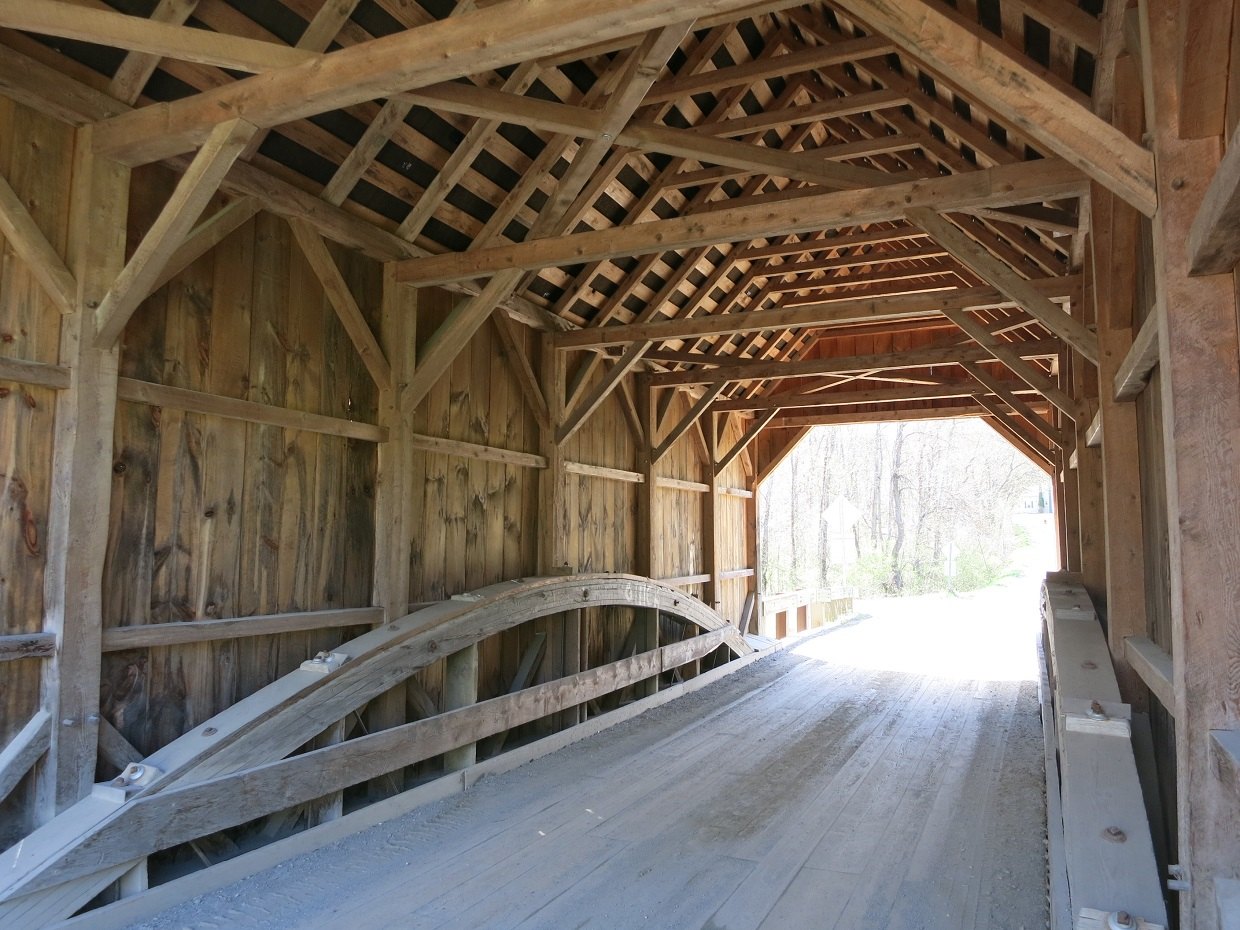
Because so many of these spans still carry traffic, a visit means treating the bridge as a road rather than only a photograph. Drive slowly through the covered section, since the deck is often a single lane and the truss timbers limit the width available, and keep clear of the travel lane if stopping to look at the lattice or kingpost work overhead.
The Bennington area holds five covered bridges within reach of one another, described on the Bennington page, and the Taftsville bridge sits close to the village of Woodstock. The scenic drives page lays out back roads that link several bridges, including the Cornish-Windsor crossing, into a single route for a day on the road.
Before a detour around flood season or winter weather, check road conditions with the town or the state's transportation information, since a bridge's truss type does not change how a closure is handled on the ground. A Town lattice truss built in 1866 and a kingpost truss built decades earlier are both, for driving purposes, narrow, low-clearance crossings that reward a slower pace.