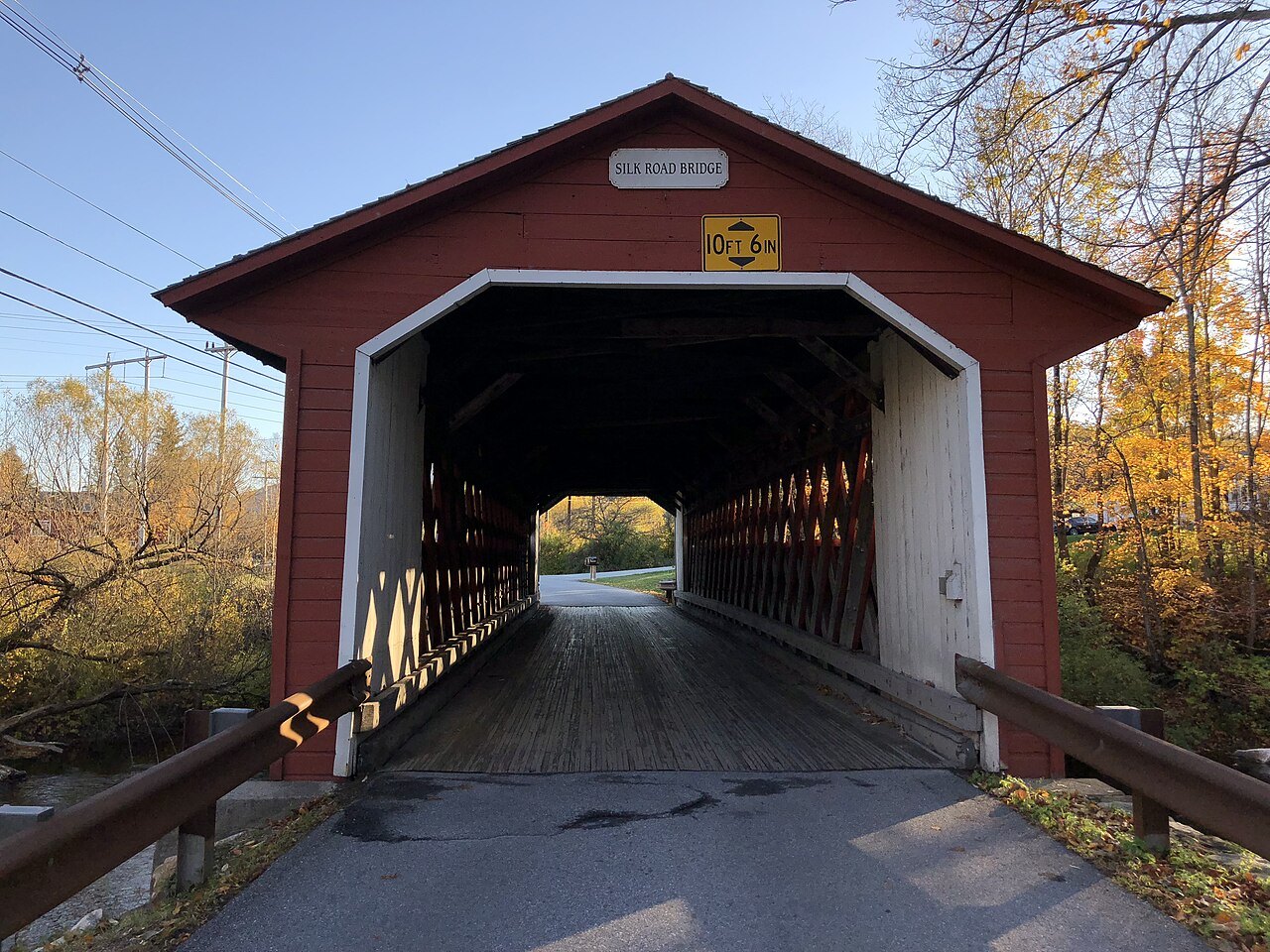
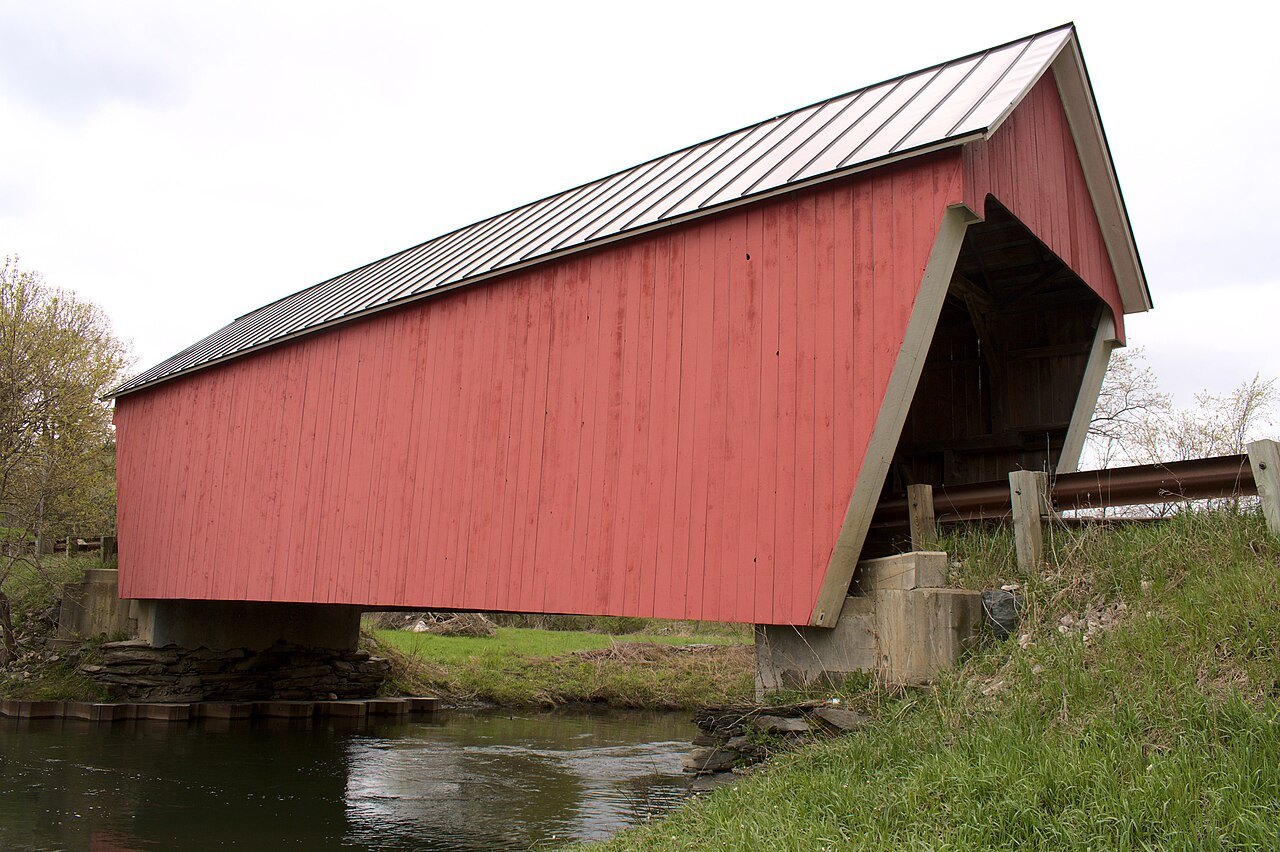
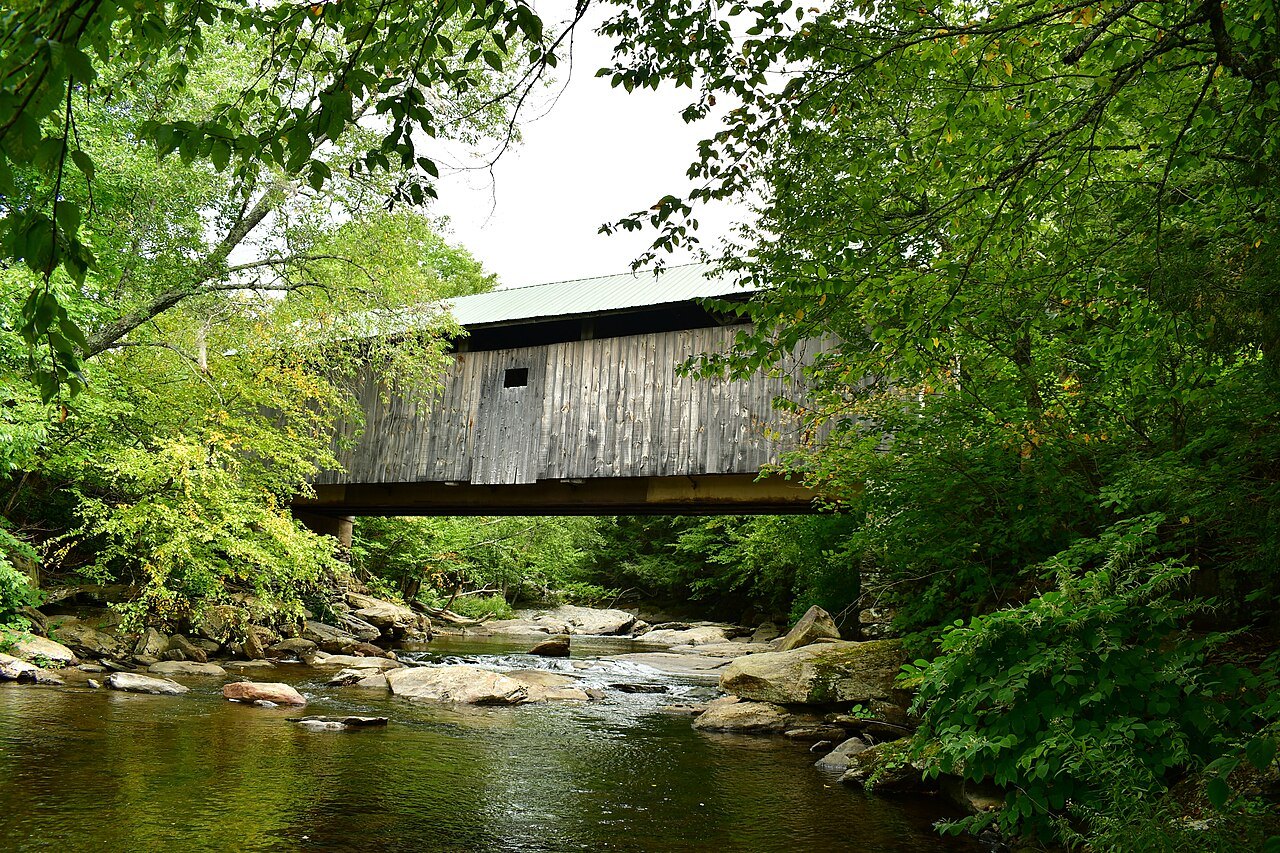
What is the Cornish–Windsor Covered Bridge, and why is it so long?
Photographs: Ahale, Wikimedia Commons, CC BY-SA 4.0 · Ahale, Wikimedia Commons, CC BY-SA 4.0 · Ahale, Wikimedia Commons, CC BY-SA 4.0
How a two-span Town lattice truss built in 1866 became the longest covered bridge joining Vermont and New Hampshire.
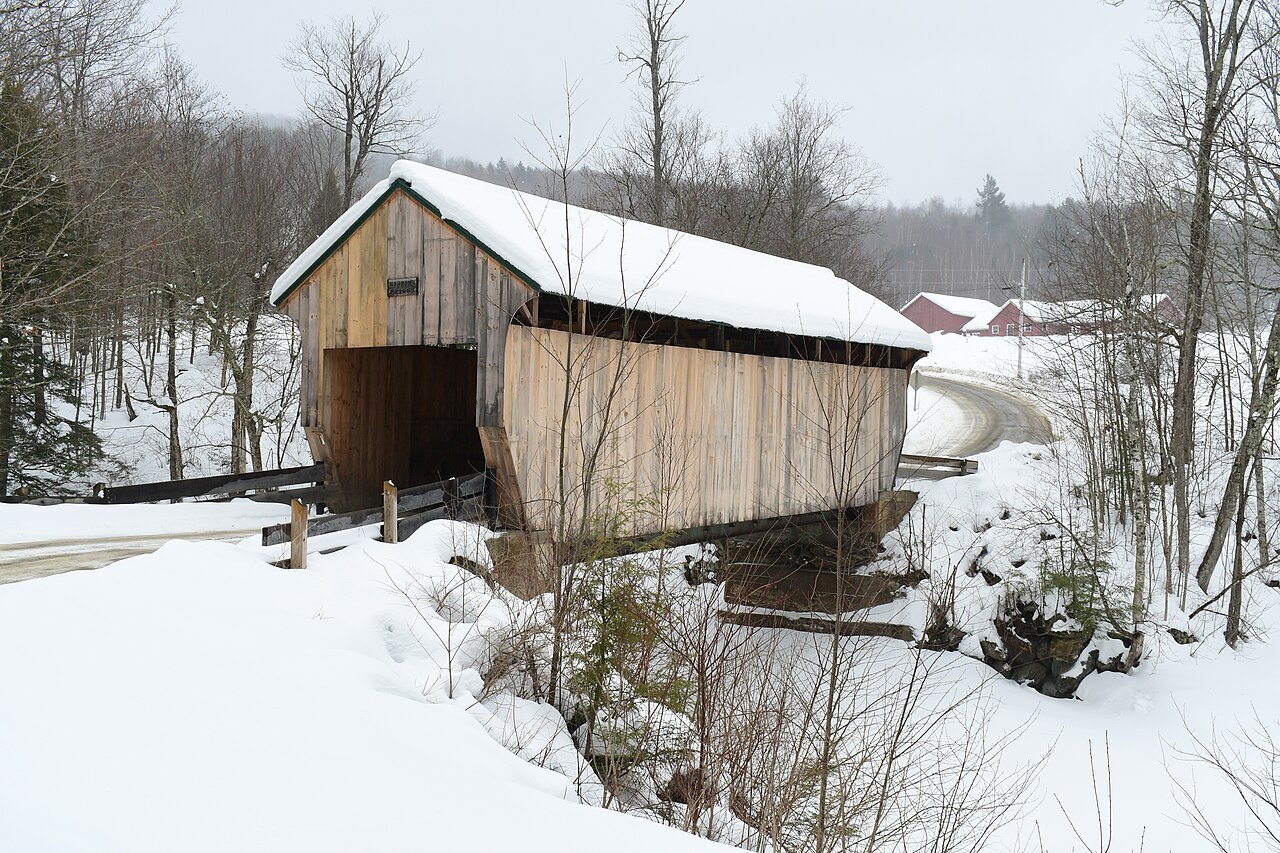
The longest covered bridge in the country
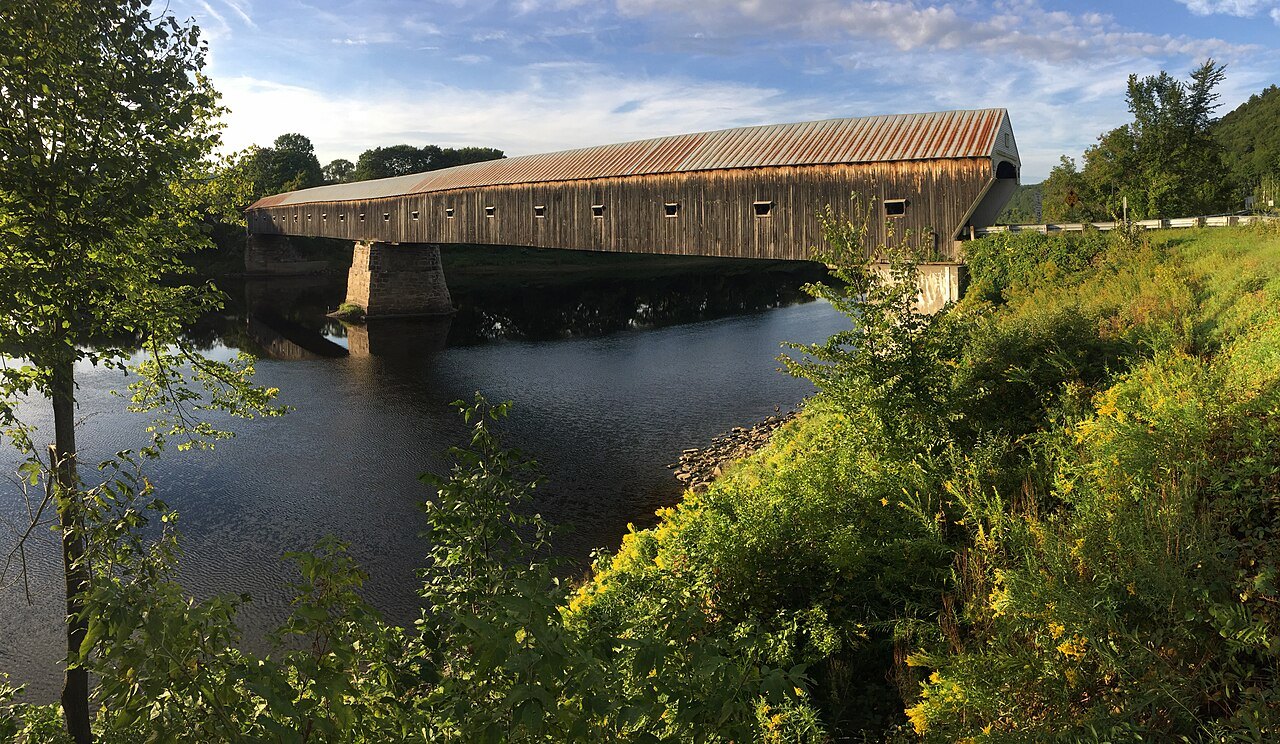
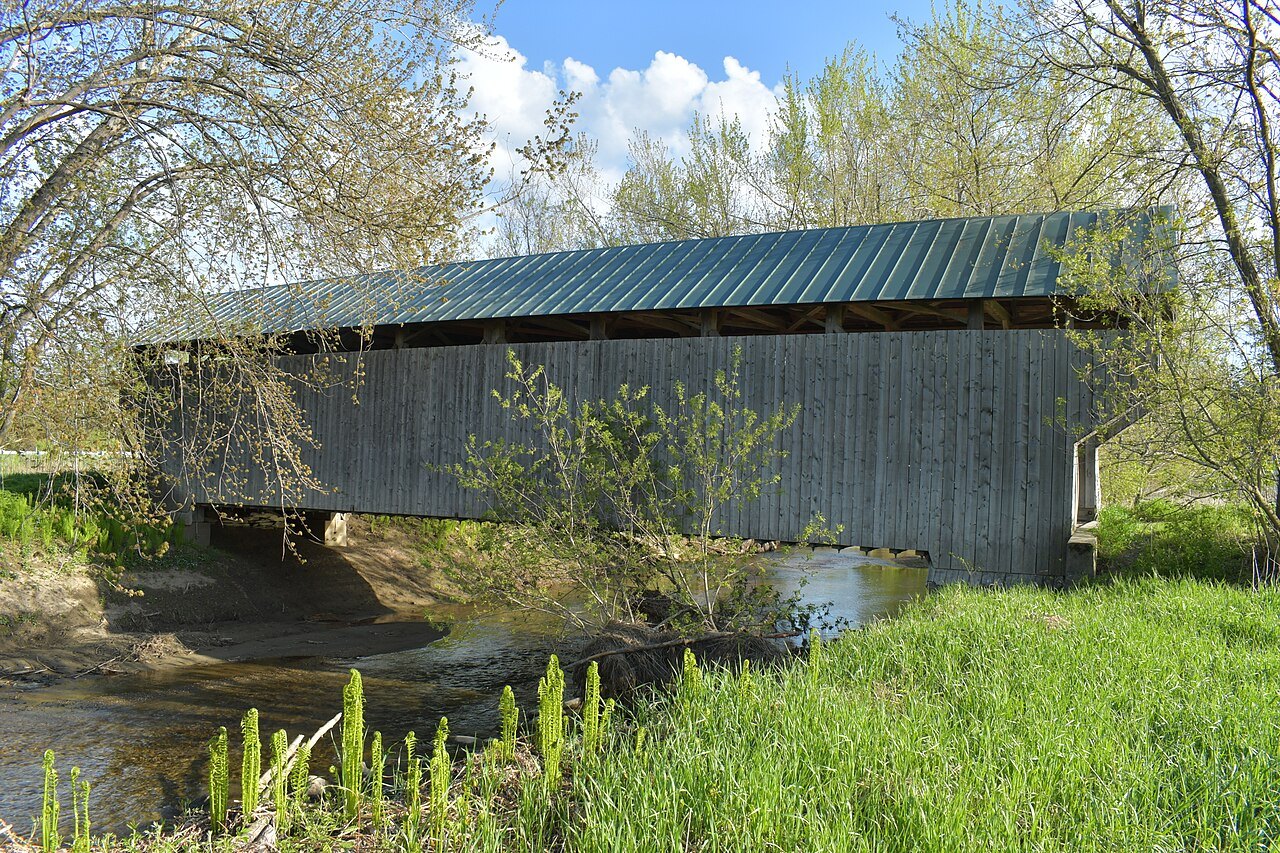
The Cornish–Windsor Covered Bridge is a two-span timber Town lattice-truss bridge that crosses the Connecticut River, linking Windsor, Vermont, on the west bank to Cornish, New Hampshire, on the east. It is one of the best known of Vermont's covered bridges, in part for its size and in part because it ties the two states together at a crossing that has carried a bridge since the late eighteenth century.
The present structure, built in 1866, is approximately 449 feet long and 24 feet wide. Until 2008, when the Smolen–Gulf Bridge opened in Ohio, it was the longest covered bridge standing in the United States. It remains the longest wooden covered bridge in the country and carries the longest single covered span open to automobile traffic anywhere in the United States.
Vermont has just over a hundred authentic covered bridges, giving it the highest number of covered bridges per square mile and per capita in the United States and in North America. A bridge counts as authentic because of how it is built, with trusses rather than stringers, not because of its age. More on the pattern of Vermont's bridges, including which towns have the most, appears on the covered bridges page.
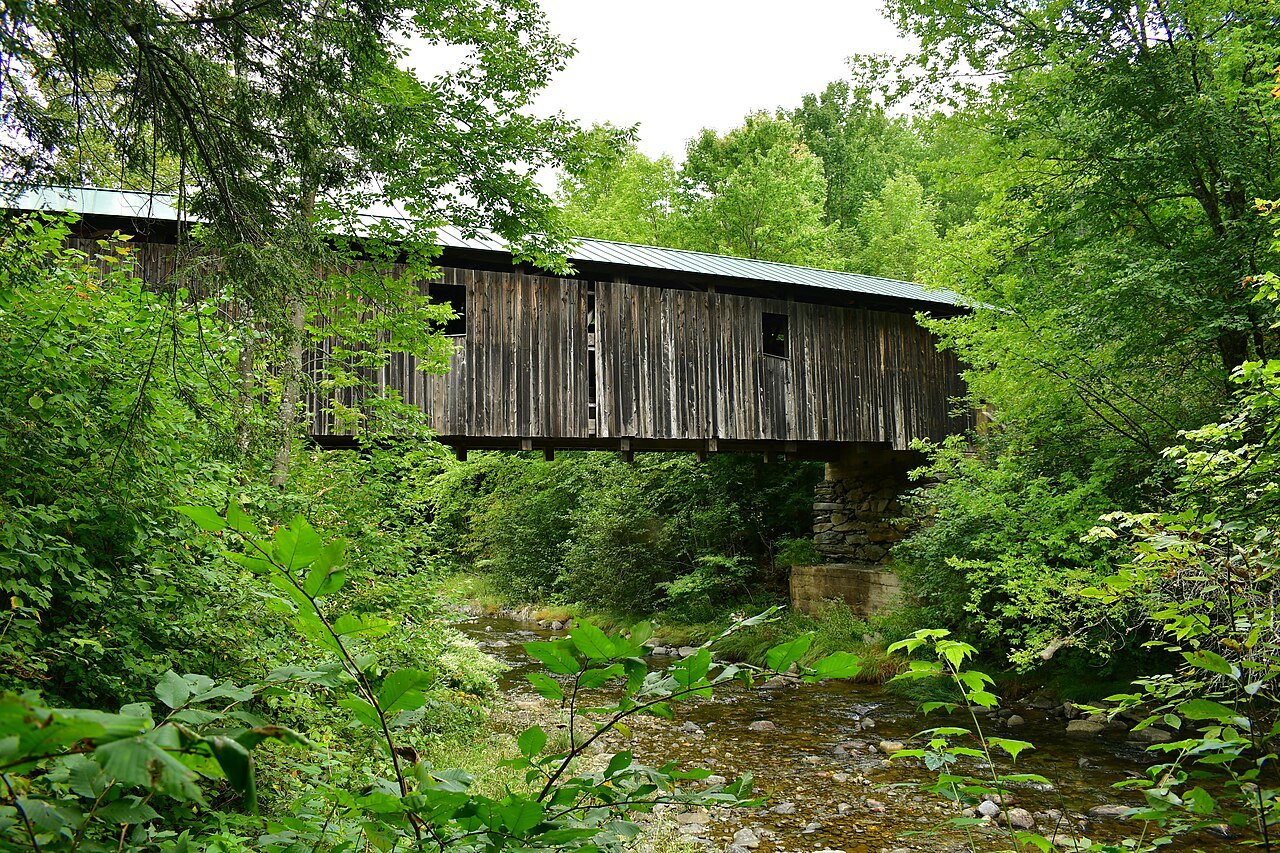
Why the bridge is so long: the Town lattice truss
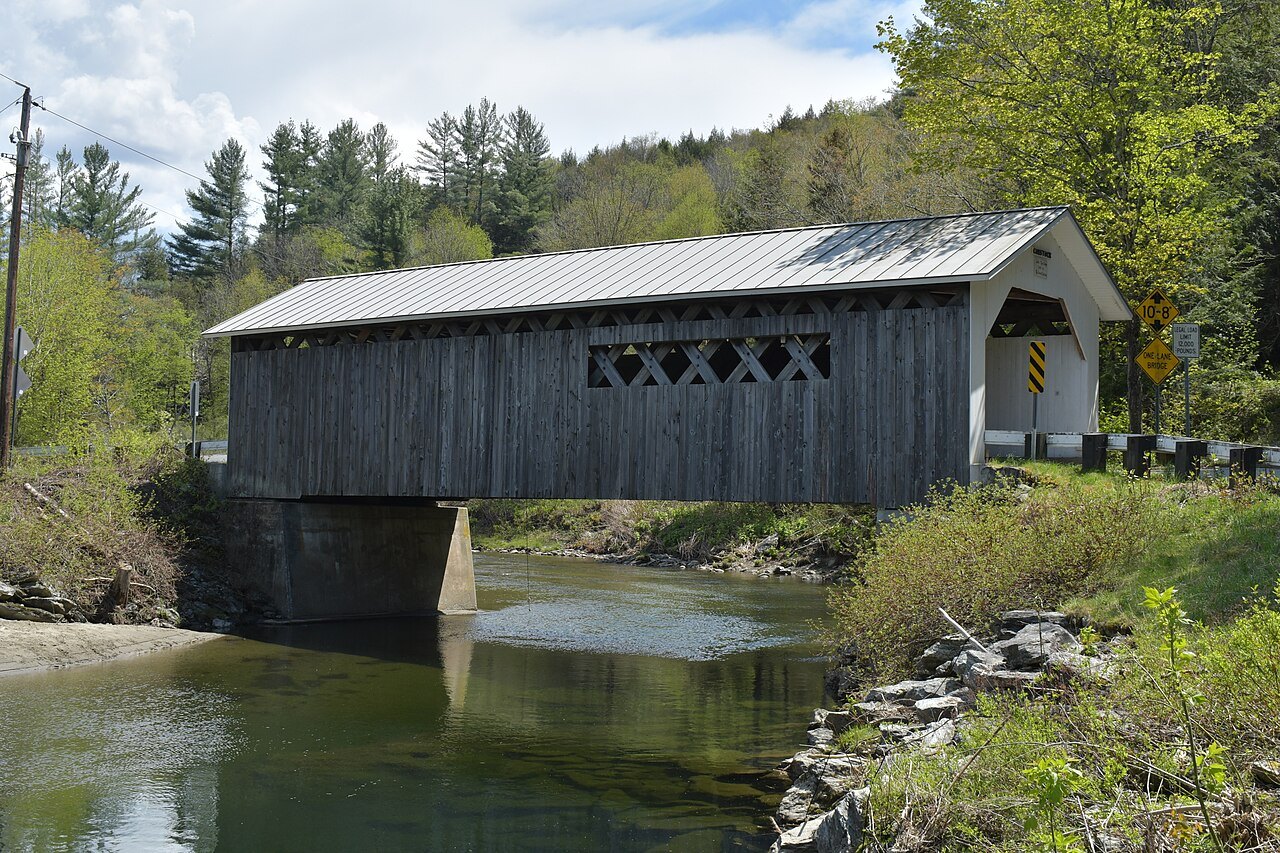
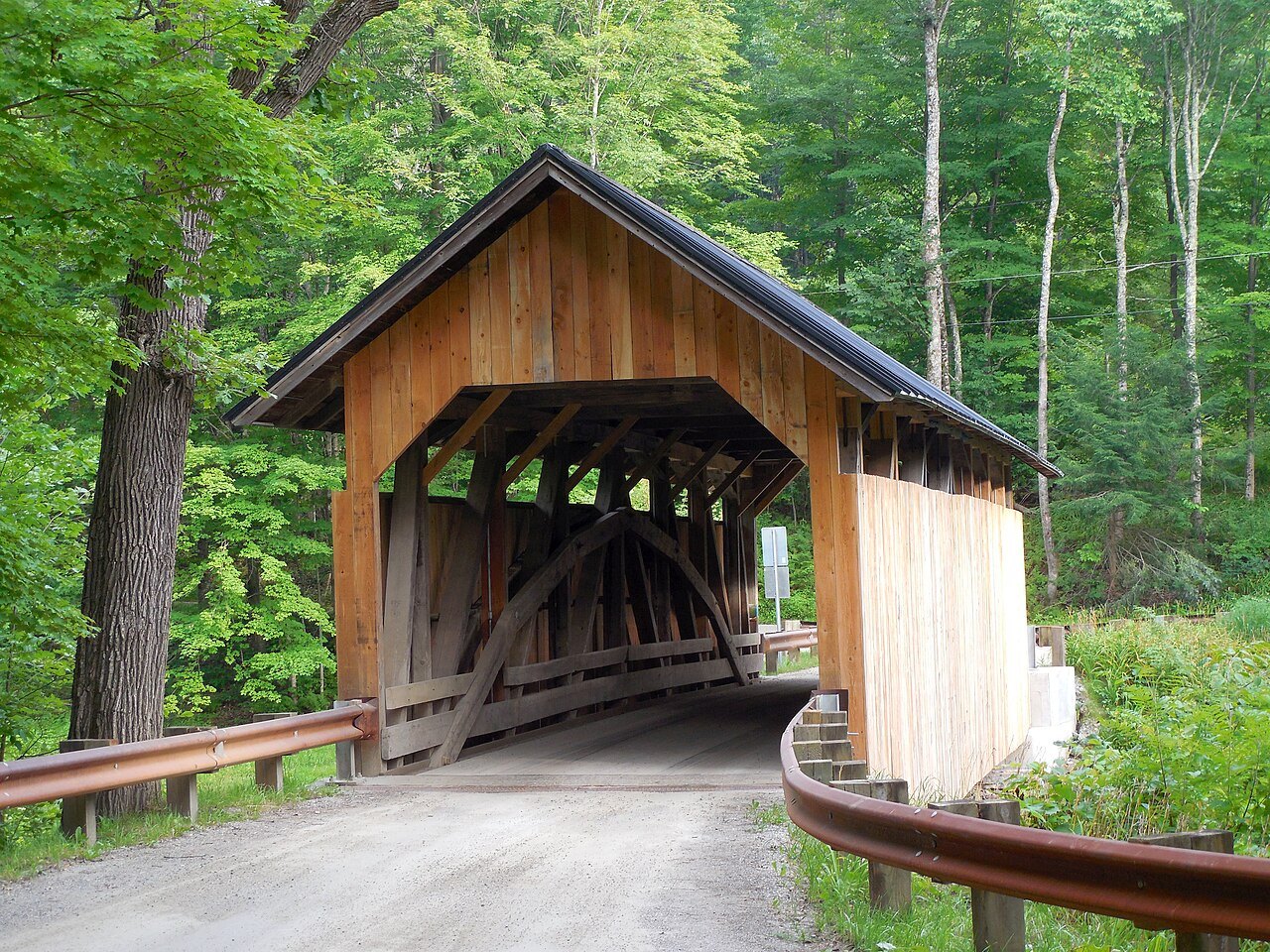
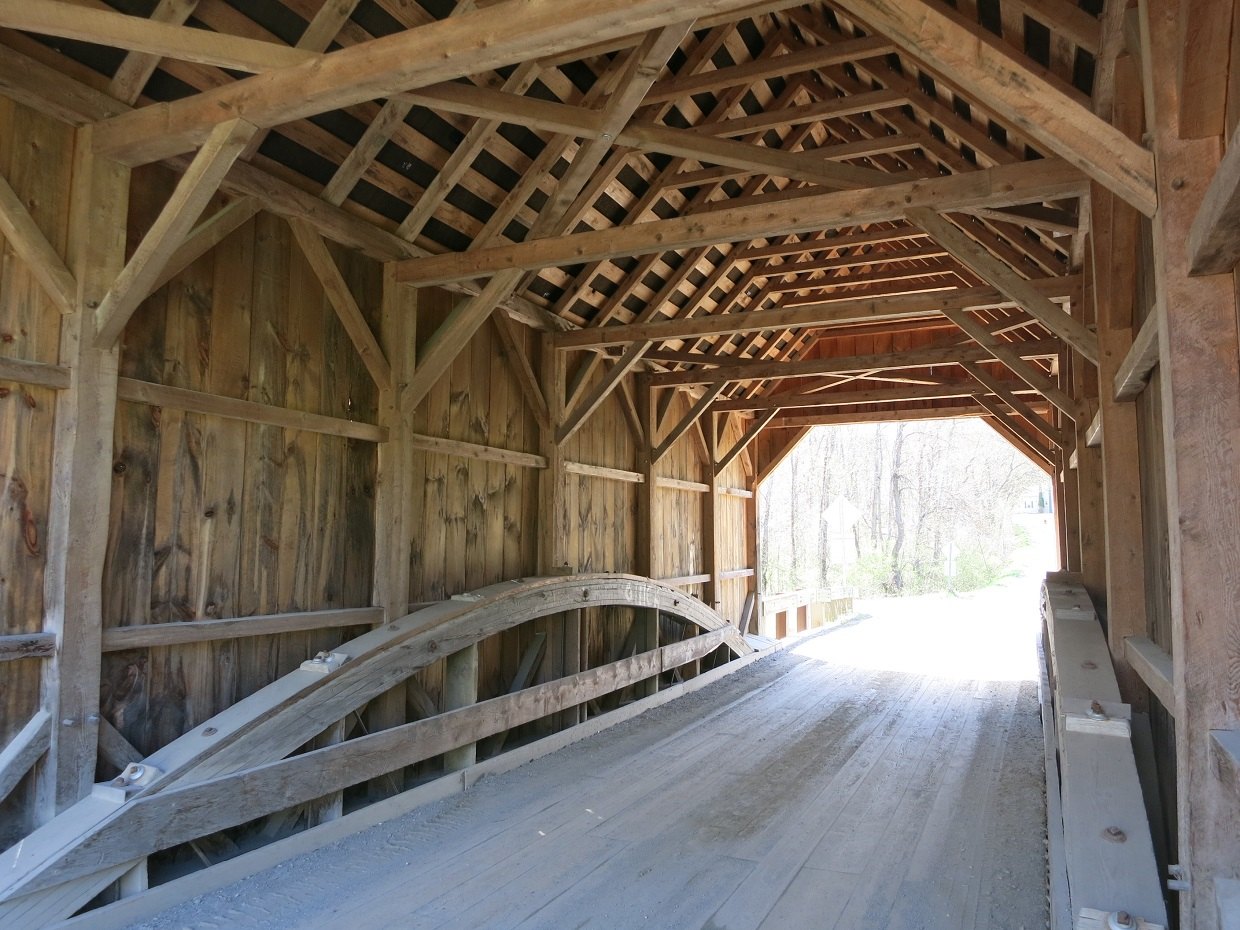
The bridge's truss is a Town lattice, a design patented by Ithiel Town in 1820 and again in 1835. Instead of heavy triangulated timbers, a Town lattice is built from a web of diagonal planks pinned where they cross, so that the load is spread across many small members rather than concentrated in a few large ones. The pattern let builders use ordinary sawn lumber instead of massive hand-hewn beams.
That efficiency made it practical to build in two long spans rather than many short ones, which is part of why the Cornish–Windsor crossing could stretch across the Connecticut River in a single structure rather than a series of shorter bridges resting on piers along the way. The same truss type appears throughout New England's surviving covered bridges, though rarely at a length approaching this one, since few other river crossings in the region demanded a span this wide.
The roof over the truss is not decorative. It shields the wood from rain and snow, which lets a timber bridge stand for generations rather than rot out in a few decades, and it gives a level, stable crossing through every season. Farmers found another benefit: cattle and many horses balk at open water beneath their feet, and a covered bridge hides the river below.
Who built it, and what stood here before
The present bridge was built in 1866 by Bela Jenks Fletcher of Claremont, New Hampshire, and James Frederick Tasker of Cornish. Their crossing was not the first on this stretch of the Connecticut River: bridges had stood at the site in 1796, 1824 and 1828, each eventually lost, a common fate for river crossings before floods and ice could be reliably managed.
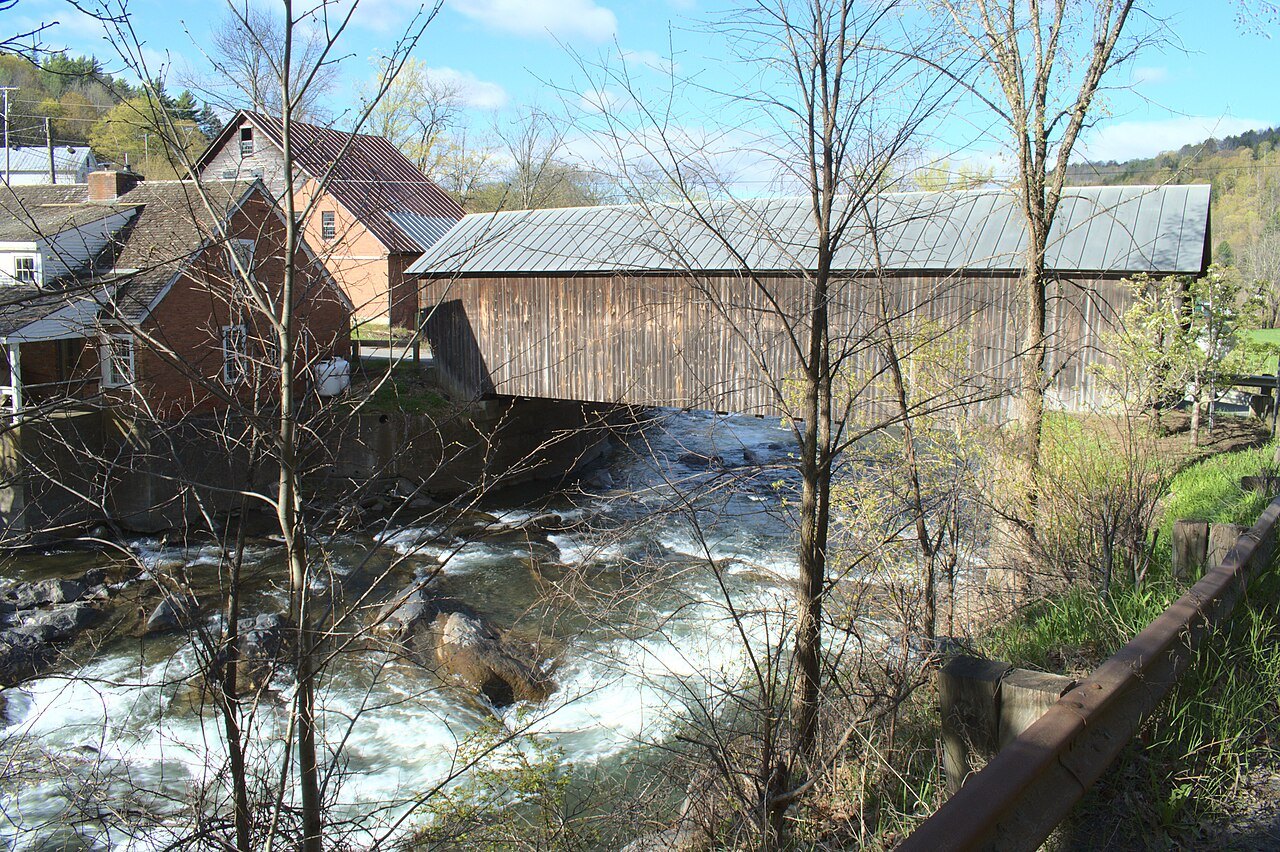
Vermont's covered bridges as a group tell a similar story. As many as seven hundred may once have stood across the state, and many were washed out or replaced after floods over the following century and a half. That the 1866 bridge at Windsor and Cornish has lasted this long, carrying traffic for more than a hundred fifty years, makes it unusual even among its own kind.
Fletcher and Tasker's design, the two-span Town lattice, was a proven solution by the 1860s and was within reach of local builders and local timber, which is part of why Vermont ended up with so many bridges built to local adaptations of a shared pattern rather than a single standard design.
A toll bridge until 1943
From the year it opened in 1866 until 1943, crossing the Cornish–Windsor Bridge meant paying a toll, a common arrangement for large bridges built with private or local funds in the nineteenth century. The State of New Hampshire bought the bridge outright in 1936, and tolls were finally lifted in 1943, after more than three-quarters of a century of paid crossings.
New Hampshire's ownership of the bridge is a reminder that the Connecticut River itself forms the line between the two states. For a visitor, crossing from Windsor to Cornish and back needs no formality beyond driving, walking or cycling across the span itself, the same free crossing that has been in place since tolls ended in 1943.
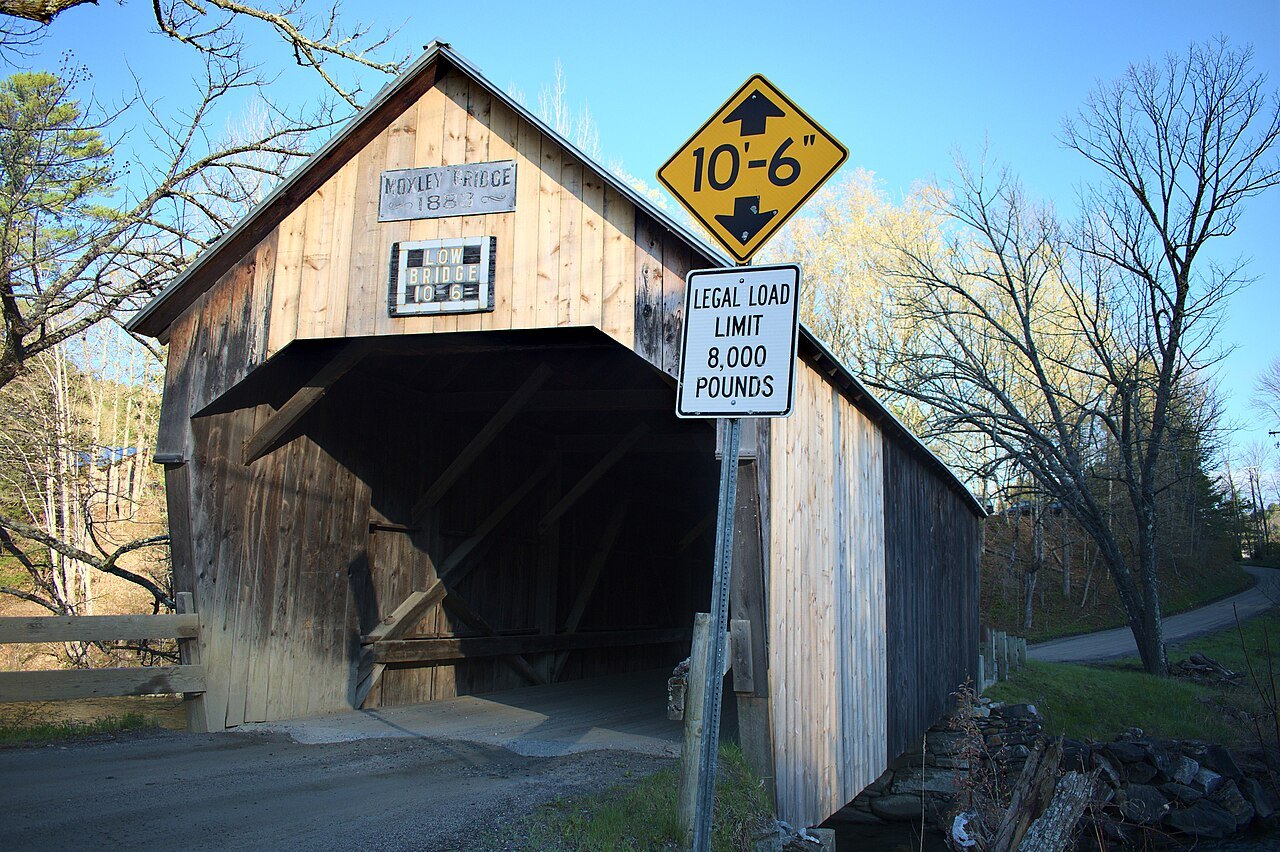
Covered bridges of this era were sometimes nicknamed kissing bridges, since their enclosed decks gave a horse and buggy a moment of privacy as it crossed; the covering did double duty, sheltering the timber frame from weather while shielding the road from view. Whether the name ever attached to this particular crossing is not recorded, but the custom was widespread enough that visitors should assume most older spans in the region earned it at some point.
Landmark status and preservation
The bridge's engineering has been formally recognized twice over the past half-century. In 1970 the American Society of Civil Engineers named it a National Historic Civil Engineering Landmark, honoring the design and construction of its lattice truss. In 1976 it was listed on the National Register of Historic Places, a federal listing that records its history and guards against unconsidered alteration to its structure or setting.
A rehabilitation funded by the Federal Highway Administration took place in 1988, work typical of what a wooden bridge this size needs every few decades: replacing worn decking, checking the lattice for rot and keeping the roof watertight. Such projects are the reason bridges built in the 1860s still carry cars and trucks rather than standing as museum pieces.
Nearly all of Vermont's surviving covered bridges are looked after in a similar way, by local and state preservation groups working with the towns that own them, since most are still treated as working, protected landmarks rather than simply old structures left standing. The bridges remain wooden and remain vulnerable: fire, wind and flood have claimed others elsewhere in the state.
Visiting the Cornish–Windsor Bridge
The bridge sits at Windsor, Vermont, on a route that pairs naturally with a drive along the Connecticut River; the scenic drives page lays out back roads built around a covered bridge route, and the Cornish–Windsor crossing makes a logical anchor for one such loop. Windsor itself is a short stop worth combining with the crossing rather than treating the bridge as a drive-through on the way to somewhere else.
Like most of Vermont's covered bridges, this one still carries vehicle traffic, so drive through slowly and watch for oncoming cars inside the single lane created by the truss walls. Photographers should step out of the travel lane to shoot the span or the river below rather than stopping on the deck itself.
Bridges of this age sometimes close for inspection or repair with little advance notice, so anyone planning a trip built around the Cornish–Windsor crossing should confirm its status beforehand with the town of Windsor or with New Hampshire's transportation officials, since ownership of the span passed to that state in 1936.