Vermont's covered bridges, from Taftsville to the Cornish–Windsor span
Photographs: Eurodog, Wikimedia Commons, CC BY-SA 4.0 · Ahale, Wikimedia Commons, CC BY-SA 4.0 · Ahale, Wikimedia Commons, CC BY-SA 4.0
Southern Vermont · landmark 13 of 15
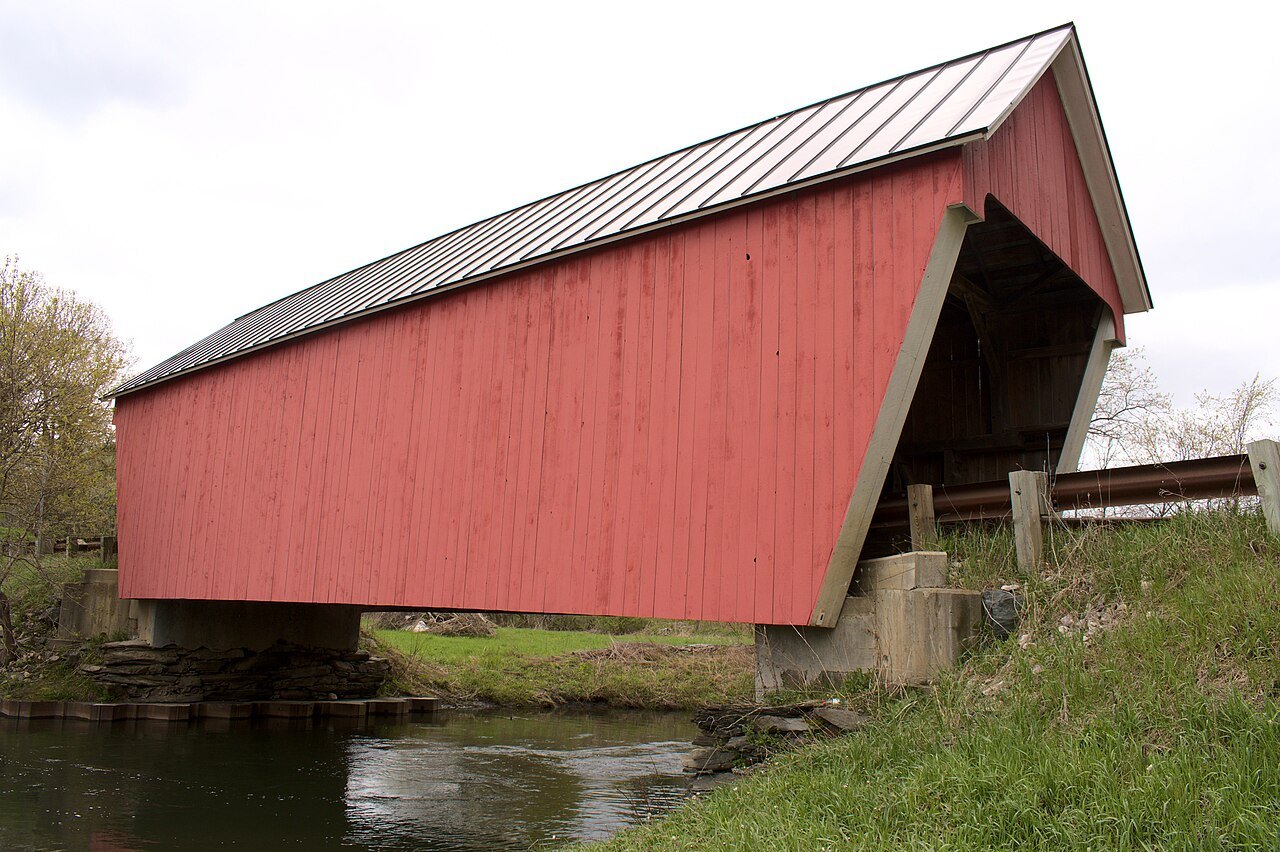
Vermont has just over a hundred authentic covered bridges, more per square mile and per person than any other state, and no two are alike; the longest crosses the Connecticut River at Windsor.
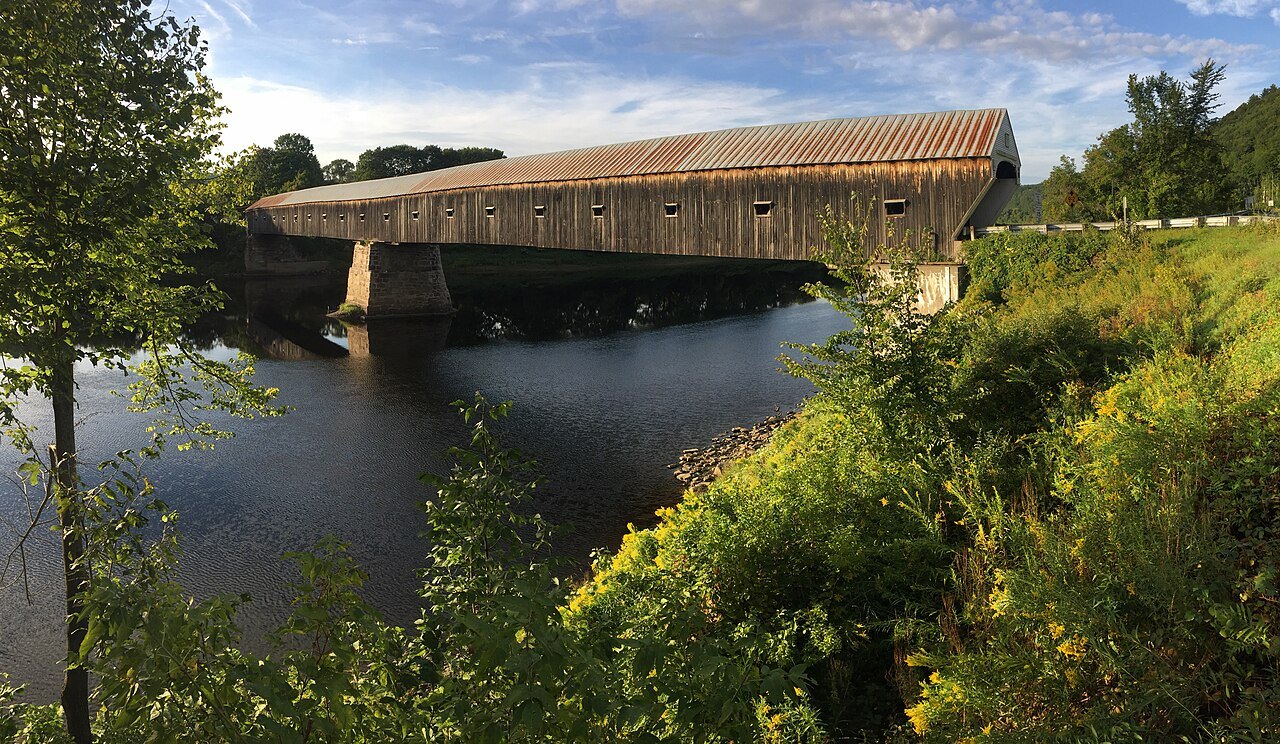
- Cornish–Windsor Covered BridgeTwo spans of Town lattice truss, about 449 feet long, built in 1866 across the Connecticut River.
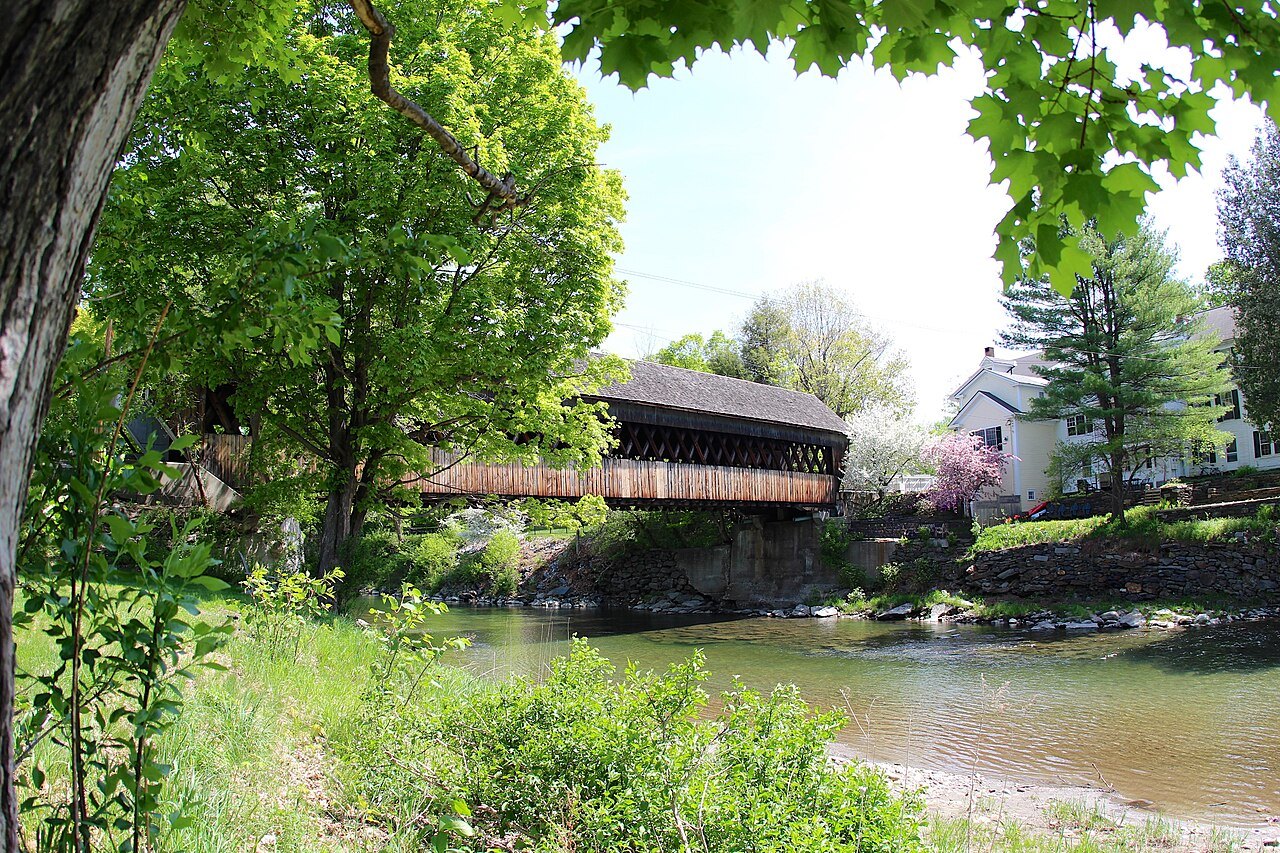
- Taftsville Covered BridgeBuilt in 1836 over the Ottauquechee, with an unusual modified multiple kingpost truss.
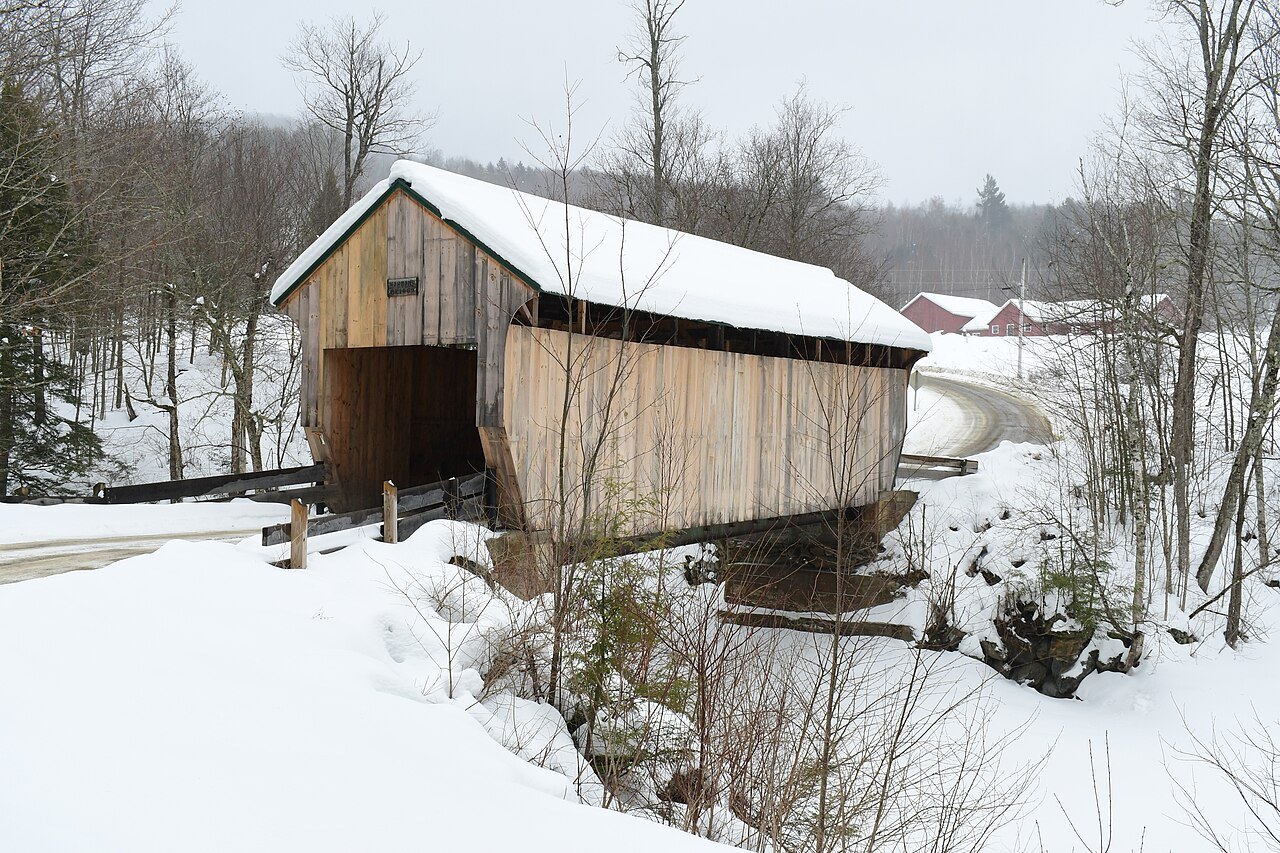
- The Cox Brook Road bridgesThree 19th-century covered bridges carry one road in Northfield, two visible from one point.
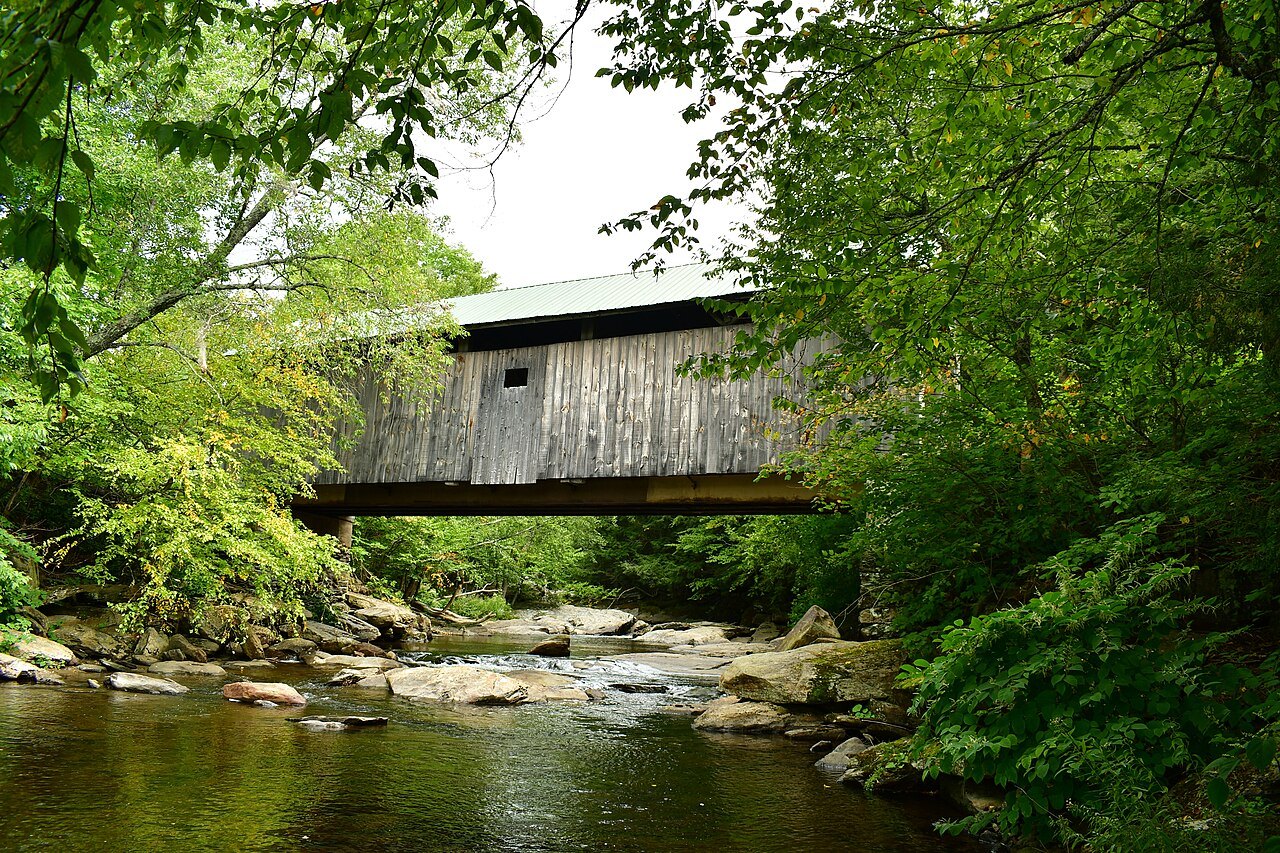
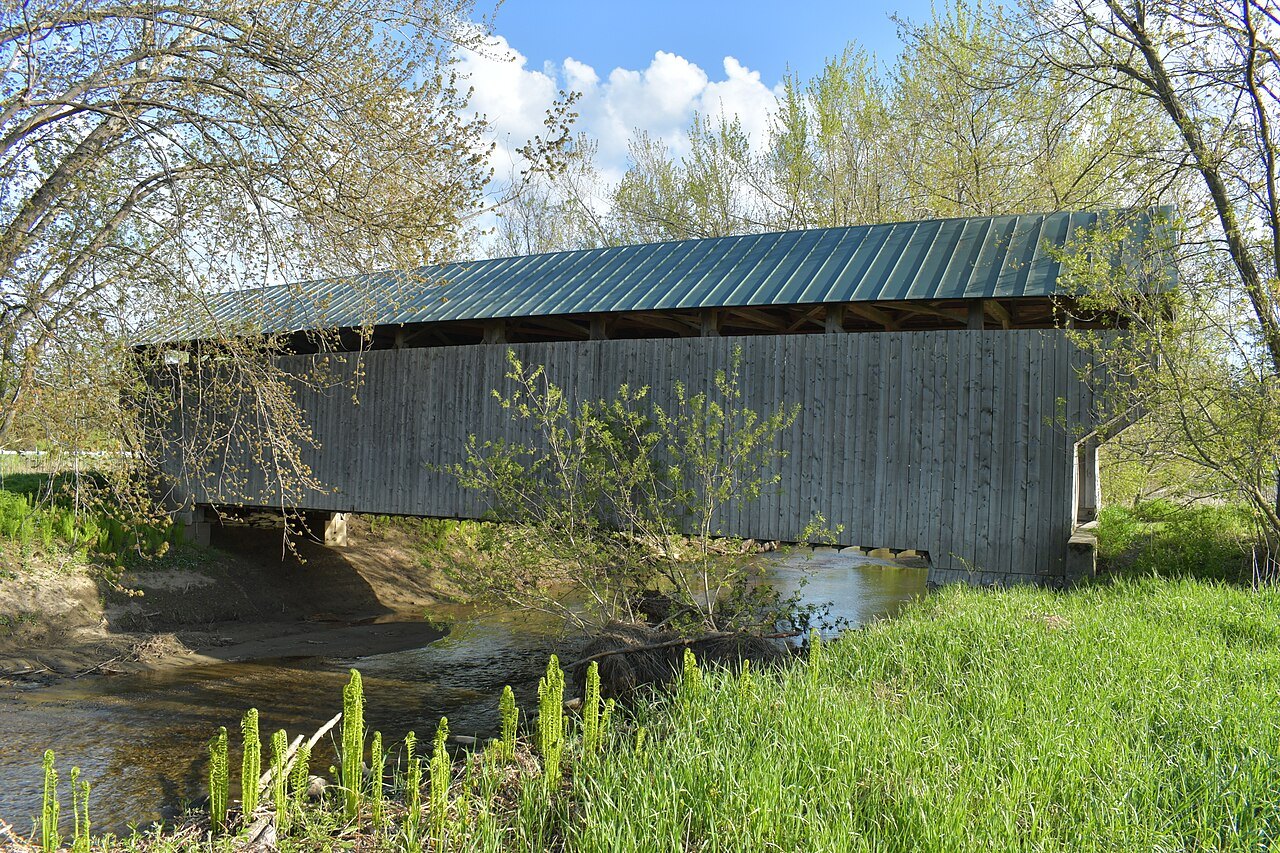
- Grist Mill BridgeA Cambridge covered bridge used as part of a swimming hole.
- MontgomeryThe town with the most covered bridges in Vermont, seven.
Why it matters
There are just over a hundred authentic covered bridges in Vermont, which gives the state the highest number of covered bridges per square mile and per capita in the United States and in North America. A bridge counts as authentic by its construction, not its age: it is built with trusses rather than with stringers, as many non-authentic covered bridges are. Most Vermont bridges use local timber and follow local adaptations of historic building practices, so no two are exactly alike.
Vermont holds more than half of the roughly two hundred remaining historic covered bridges in New England and the third most overall, after Pennsylvania and Ohio. Almost all are treated as protected landmarks by their communities, with local and state preservation groups looking after them, and they serve as tourist attractions as well as working crossings.
Why bridges have roofs
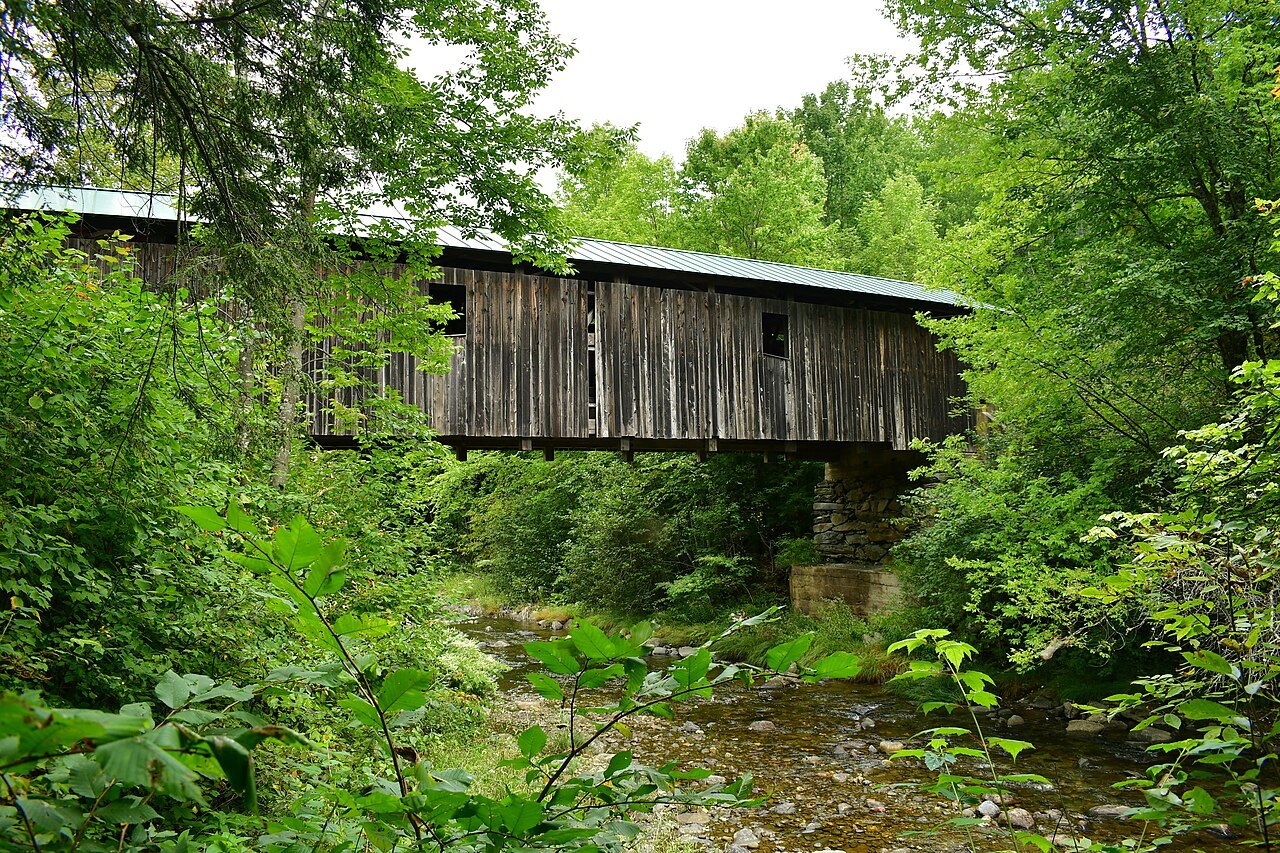
Vermont's geography is rugged, with dense woods and settlements strung along river valleys, so a bridge that lasts all year matters. A roof prolongs the life of the wooden structure significantly and gives a stable four-season crossing. It also found favor with farmers, who discovered that cattle cross more calmly when the swift water below is out of sight: cows and many horses have an inborn aversion to uneven ground and moving water, and a covered bridge hides the river from them.
It is estimated that as many as 700 covered bridges once stood in Vermont, and many were lost or replaced after floods. Covered bridges were also called kissing bridges in the more modest late nineteenth century, for the privacy they gave a horse and buggy passing through.
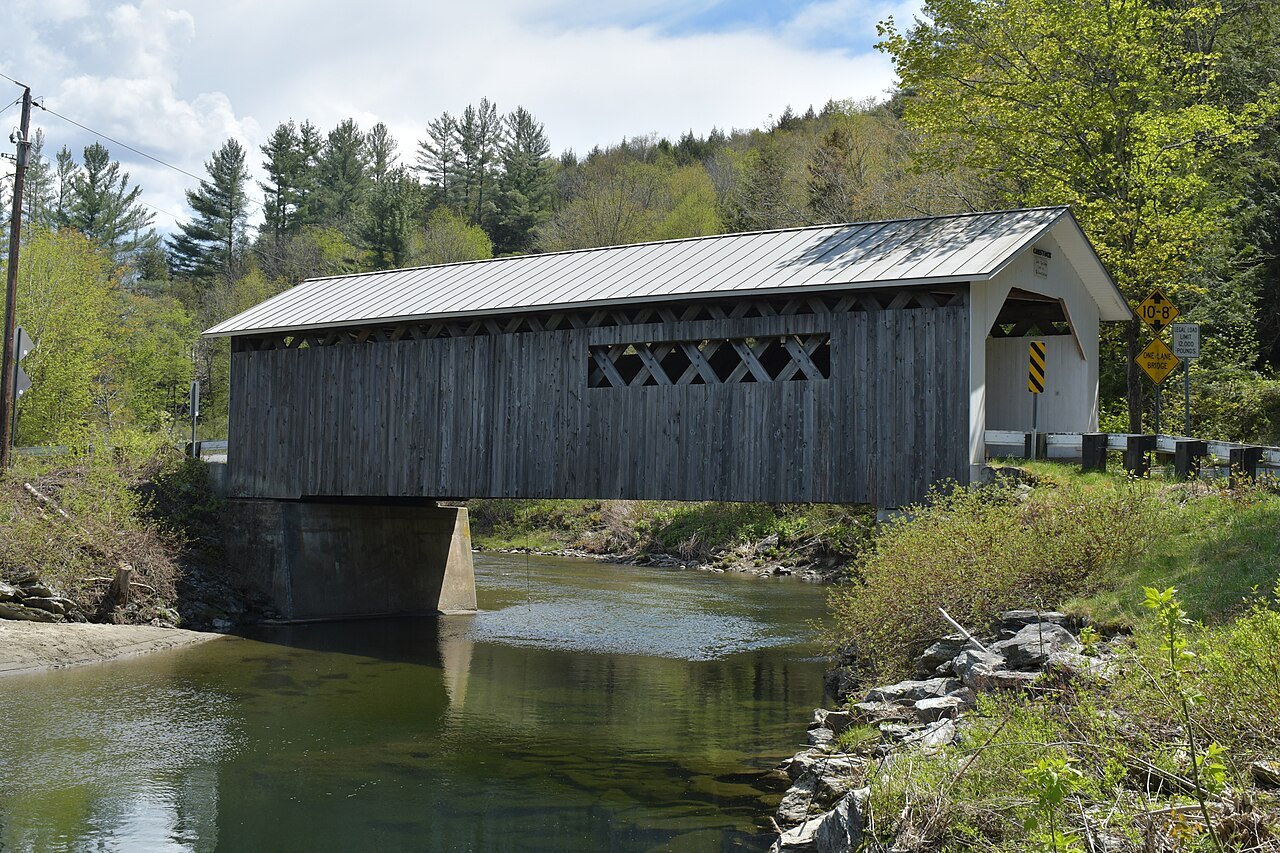
The Cornish–Windsor Covered Bridge
The longest bridge is shared with a neighbor. The Cornish–Windsor Covered Bridge is a two-span timber Town lattice-truss bridge across the Connecticut River, joining Windsor, Vermont, on the west to Cornish, New Hampshire, on the east. Until 2008, when the Smolen–Gulf Bridge opened in Ohio, it was the longest covered bridge standing in the United States, and it is still the longest wooden covered bridge and has the longest single covered span carrying automobile traffic.
The present bridge was built in 1866 by Bela Jenks Fletcher of Claremont and James Frederick Tasker of Cornish, and is approximately 449 feet long and 24 feet wide. Its lattice truss is the type patented by Ithiel Town in 1820 and 1835. Bridges stood on the site in 1796, 1824 and 1828 before it. The bridge was a toll crossing from 1866 until 1943, was bought by the state of New Hampshire in 1936 and became free of tolls in 1943. In 1970 the American Society of Civil Engineers named it a National Historic Civil Engineering Landmark, and in 1976 it was listed on the National Register of Historic Places. A rehabilitation was funded by the Federal Highway Administration in 1988.
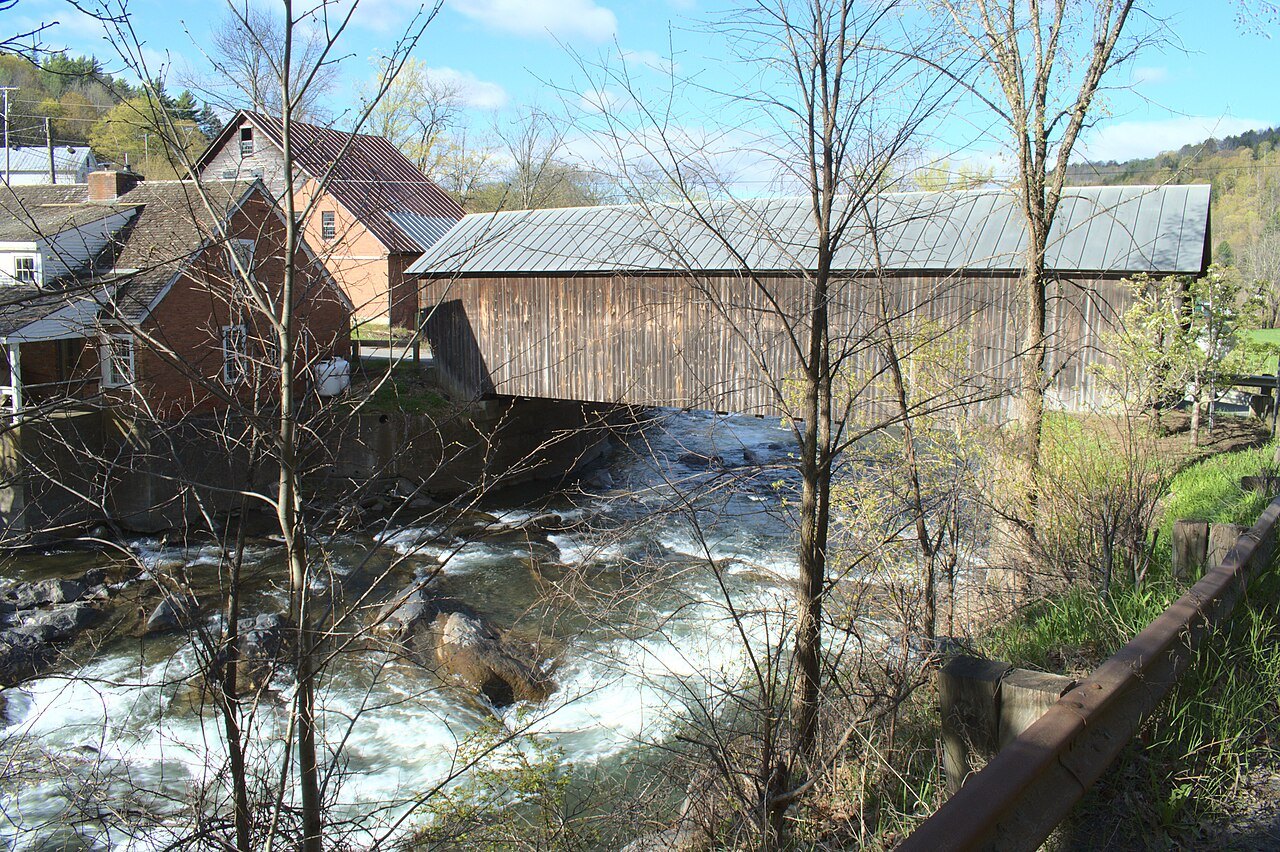
The Taftsville Covered Bridge
The Taftsville Bridge crosses the Ottauquechee River in the village of Taftsville, in Woodstock. Built in 1836, it is among the oldest covered bridges in Vermont and in the country. Stephen Taft arrived in the early 1790s, and within ten years he and his brother had established mills, so the growing settlement needed a bridge. Floods washed away the first bridge in 1807, its replacement in 1811 and the third in 1828, after which a local man, Solomon Emmons III, was hired to build a more resilient crossing.
His bridge reaches 189 feet in two spans of 89 and 100 feet, from either bank to a central pier in the gorge, and is 20 feet wide. It follows an older craftsman tradition, possibly influenced by designs in Switzerland, and not a patented truss. The laminated arches look like those of the Burr arch-truss, patented in 1817, but the resemblance is superficial; the design is better described as a modified multiple kingpost truss with semi-independent arches. Hurricane Irene damaged it badly in 2011, and it reopened in September 2013.
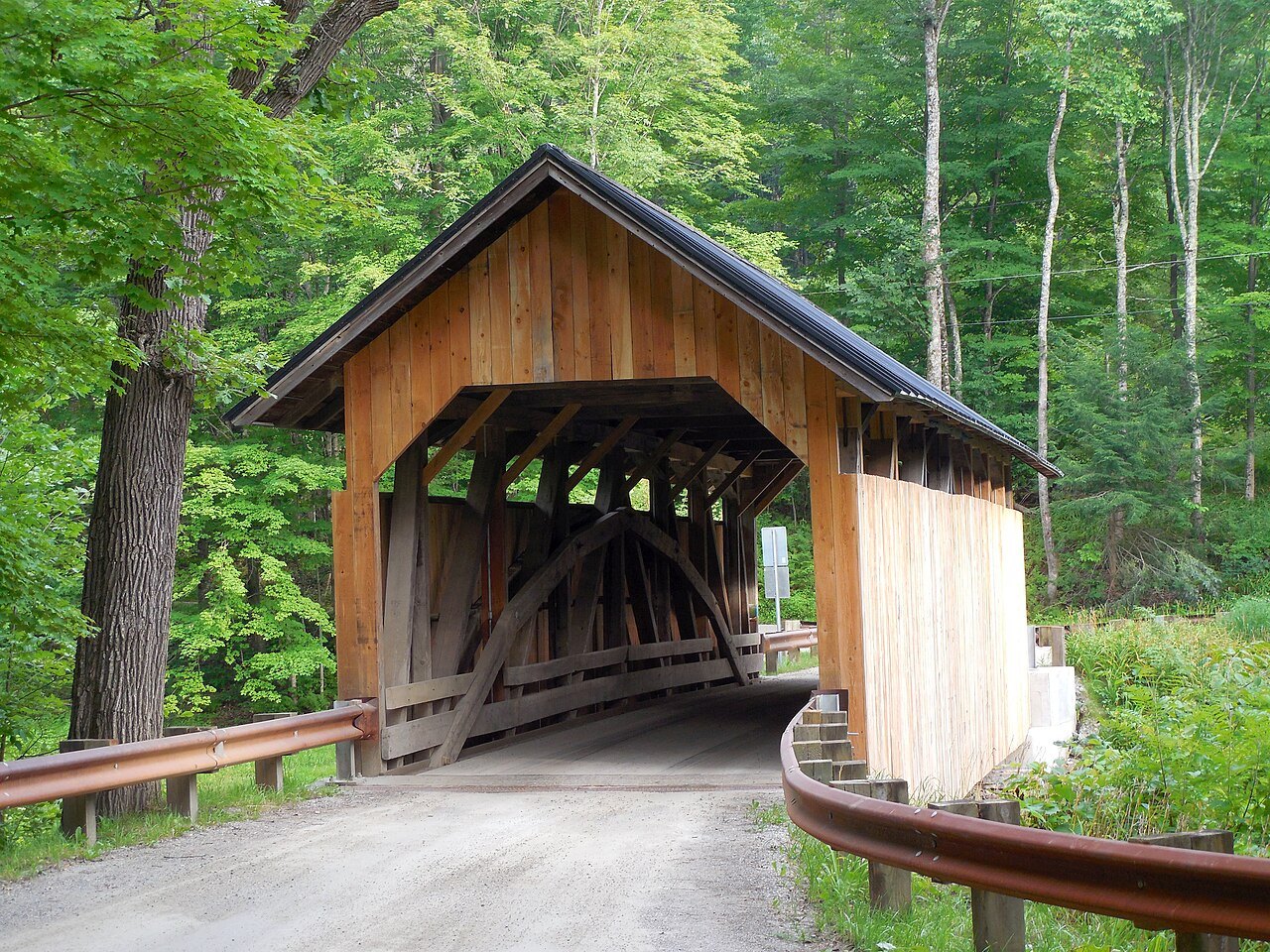
Where the bridges cluster
Montgomery has the most covered bridges of any town in Vermont, seven. Bennington, Lyndon, Rockingham, Northfield and, aptly, Tunbridge each have five. Northfield also has the only road in the United States carried over three 19th-century covered bridges and the only place where two can be seen from one point: the upper, middle and lower Cox Brook Road bridges.
Every county in Vermont except Grand Isle has at least one covered bridge. There is about one for every 92 square miles of the state and one for every 6,172 residents. Many still carry traffic, and some are part of swimming holes, like the Grist Mill Bridge in Cambridge. Bennington's bridges are covered with the town on the Bennington page.
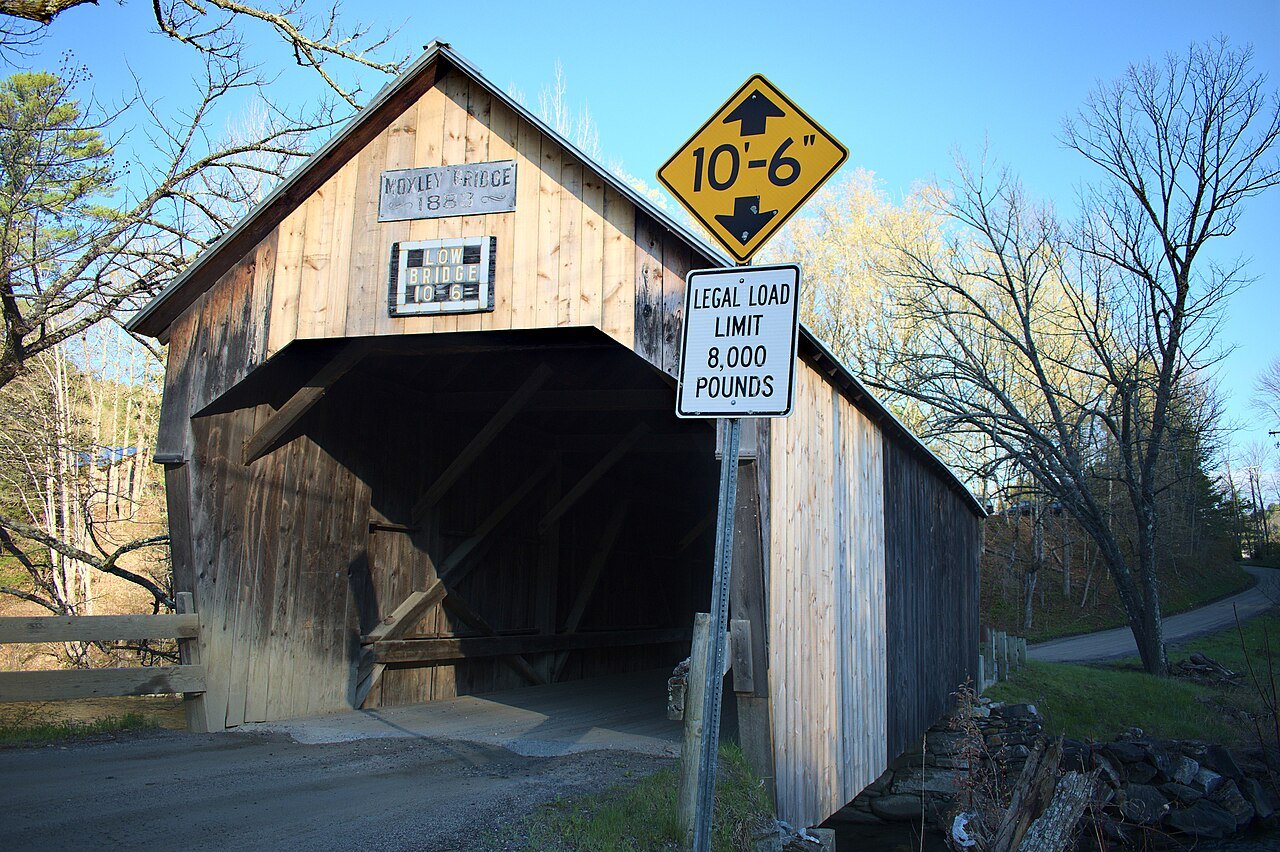
Losses
Not every bridge has survived. The Old Mead Covered Bridge in Pittsford was destroyed by fire in 1971. The Twigg-Smith Covered Bridge in West Windsor was destroyed by wind in 2002, and the Frank Lewis Covered Bridge in Woodstock by Hurricane Irene in 2011. The Cedar Swamp Covered Bridge in Cornwall burned in 2016, and the River Road Covered Bridge in Troy was destroyed by a snowmobile fire in 2021. Each loss is a reminder that the bridges are wooden structures that depend on ongoing care.
Seeing them
A covered bridge works best as a reason to take a back road. The village of Woodstock lies close to the Taftsville bridge. In the south, the Bennington area has five, and the Connecticut River crossing at Windsor can be paired with a drive along the river. Many bridges still carry vehicles, so drive slowly through, and stay out of the traffic lane when taking photographs.
The scenic drives page picks out the back roads for a bridge route.