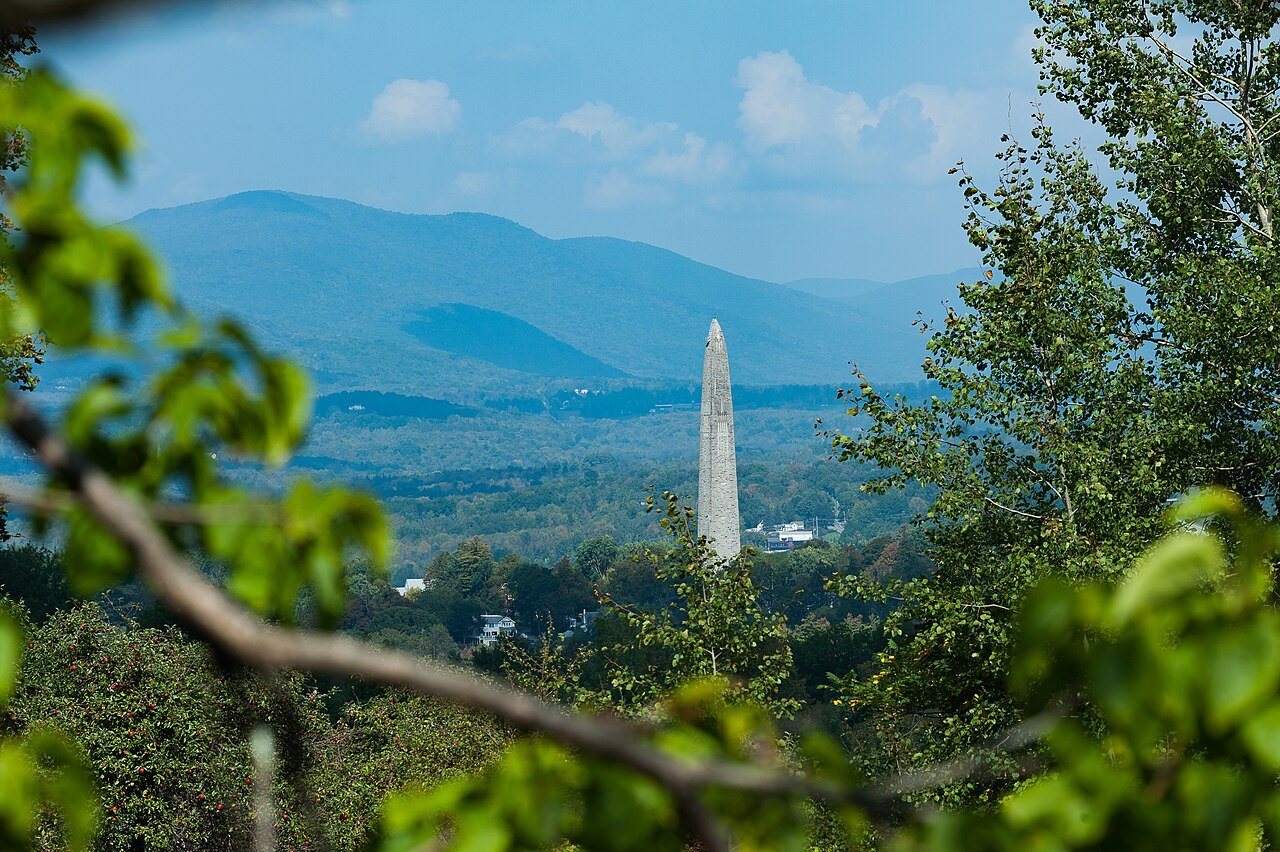
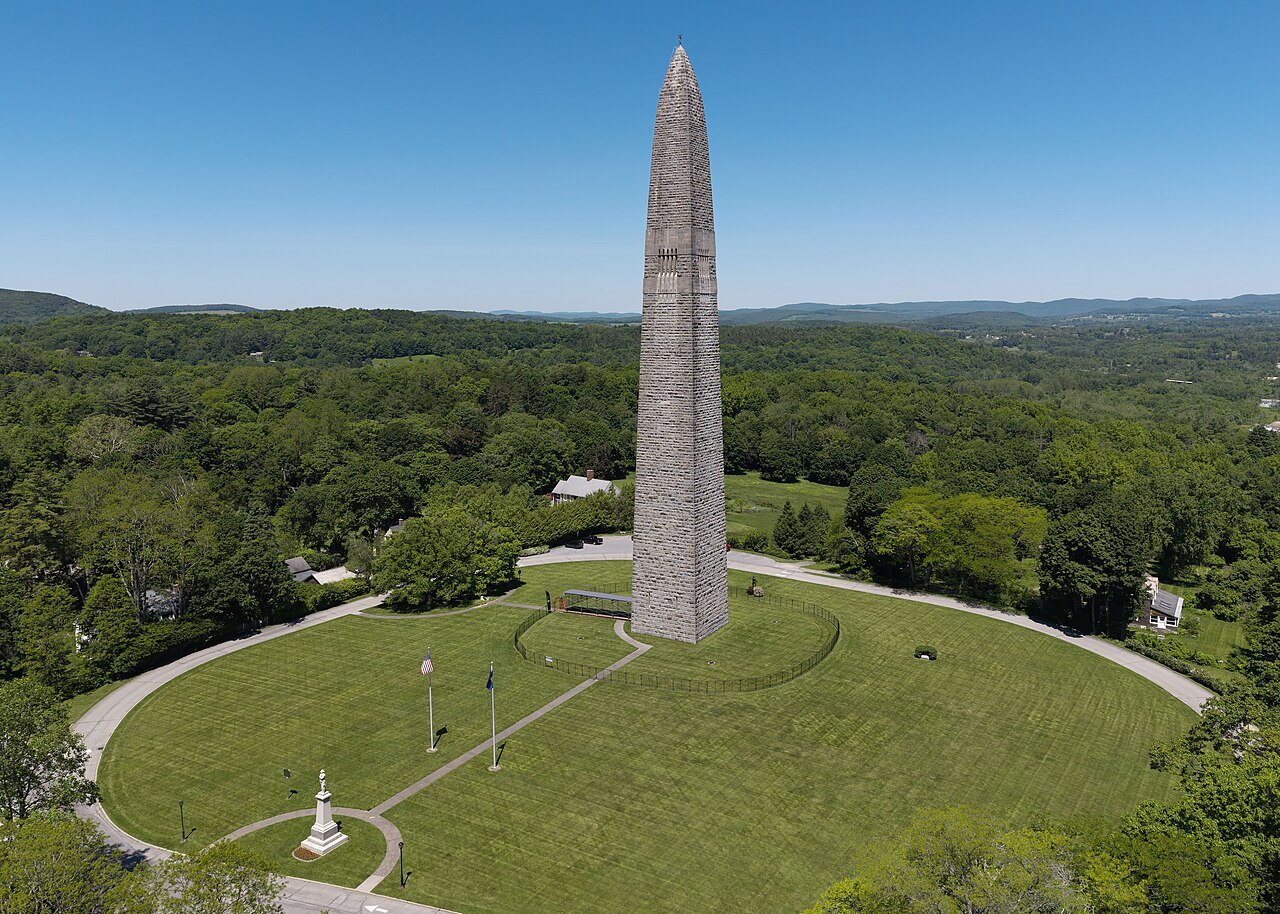
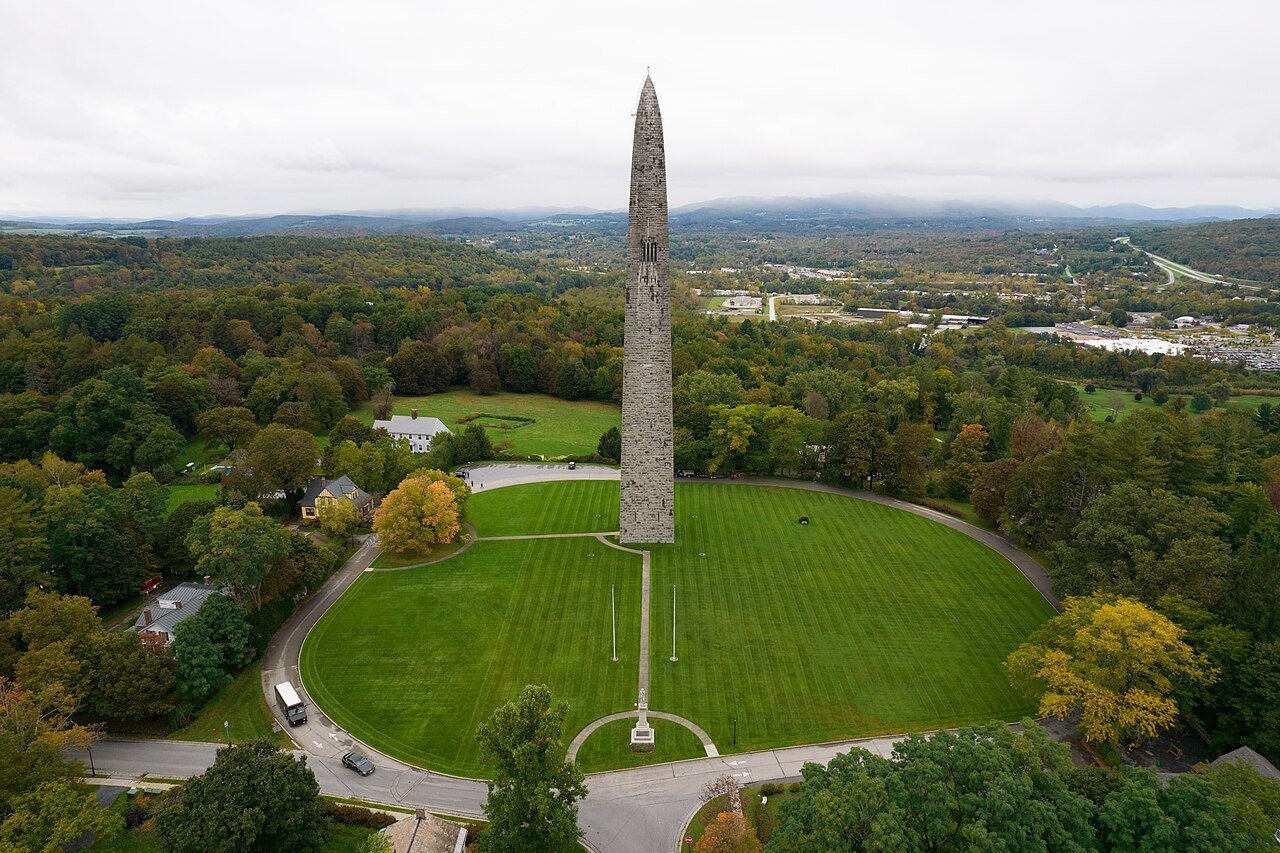
The Bennington Battle Monument, a 306-foot obelisk above the town
Photographs: MarkVII88, Wikimedia Commons, CC BY-SA 4.0 · Roman Eugeniusz, Wikimedia Commons, CC BY-SA 3.0 · Joe Mabel (on Flickr as Joe Mabel from Seattle, US), Wikimedia Commons, CC BY-SA 3.0
Southern Vermont · landmark 12 of 15
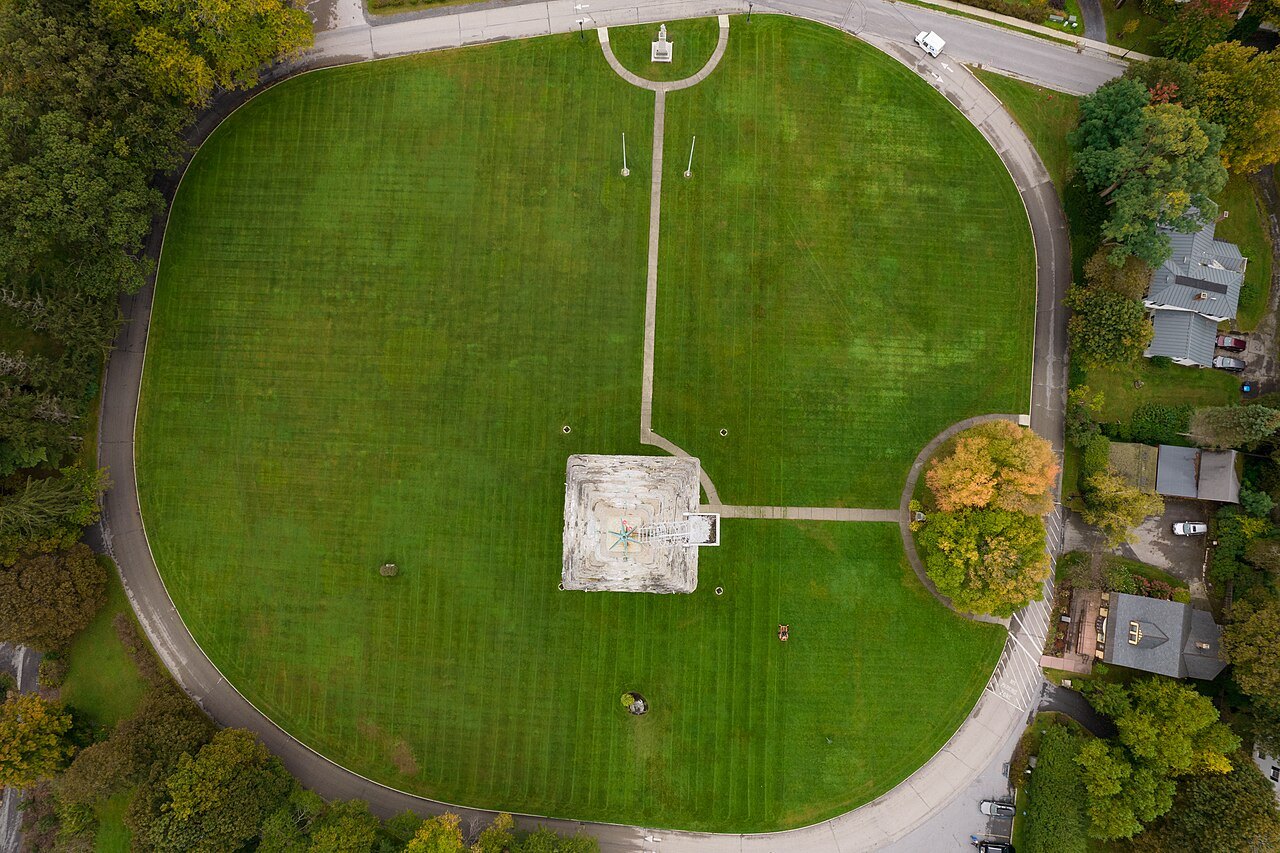
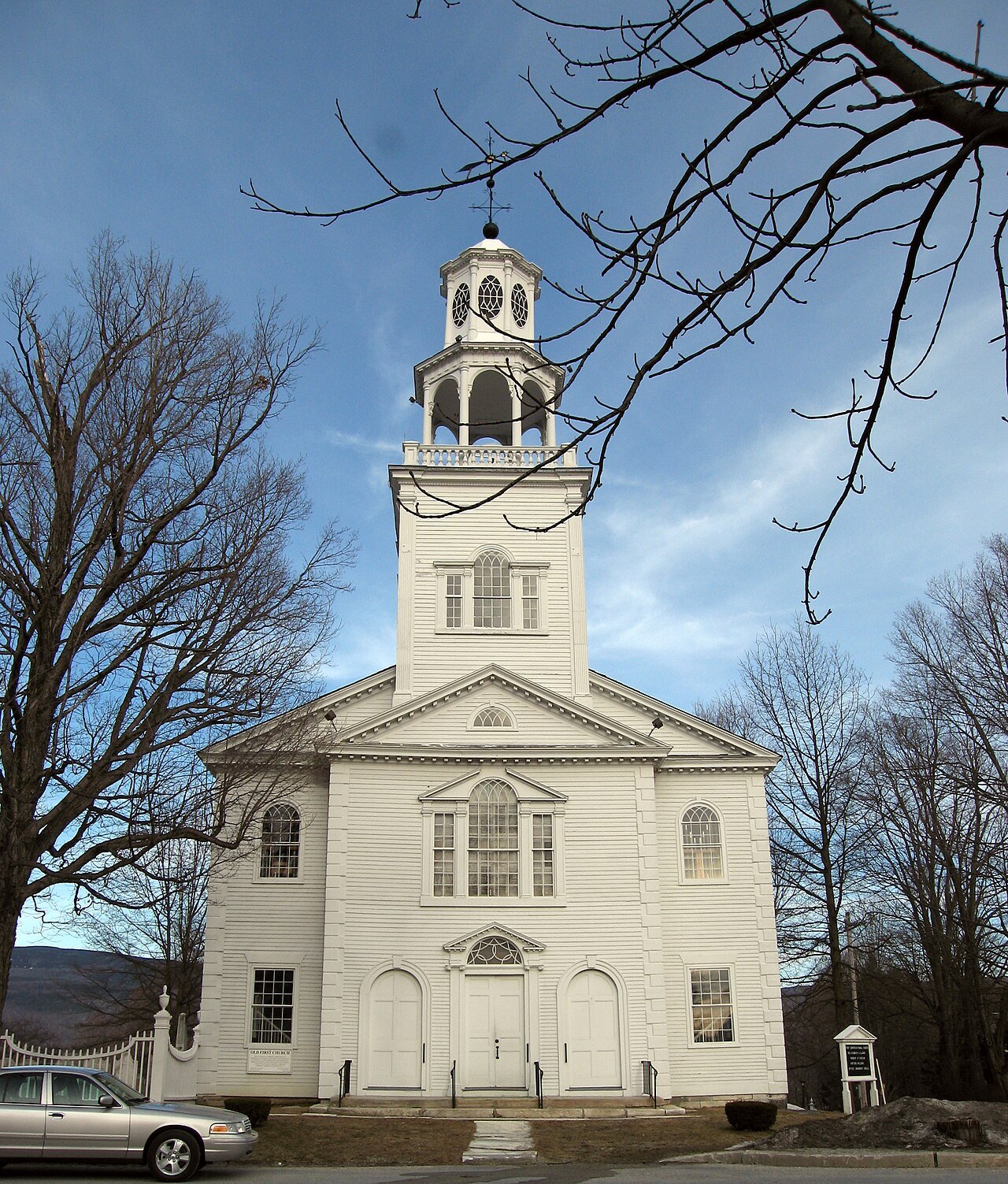
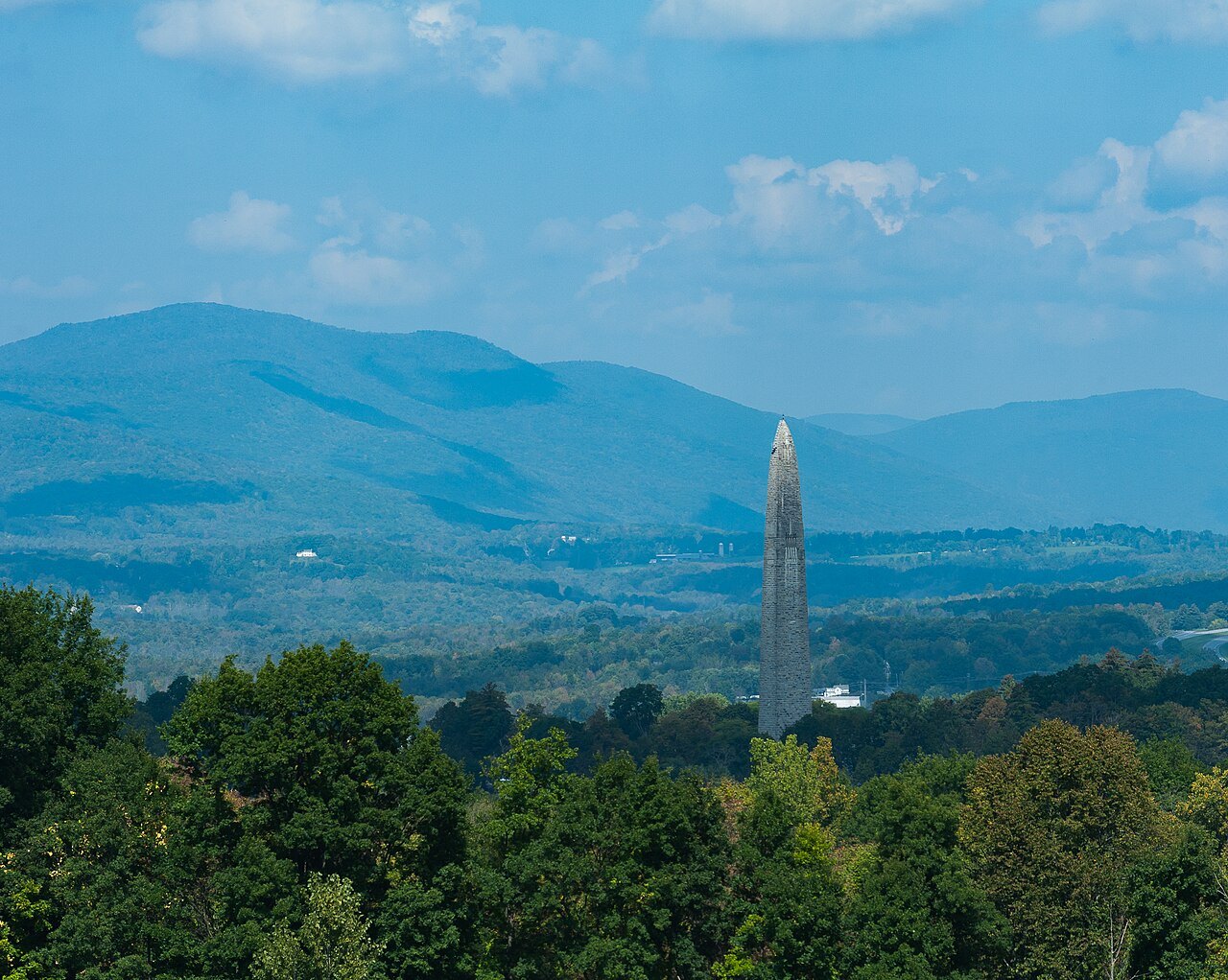
The tallest structure in Bennington is a stone obelisk commemorating the battle of August 16, 1777, which was fought across the state line, and the old village around it holds Robert Frost's grave and the Old First Church.
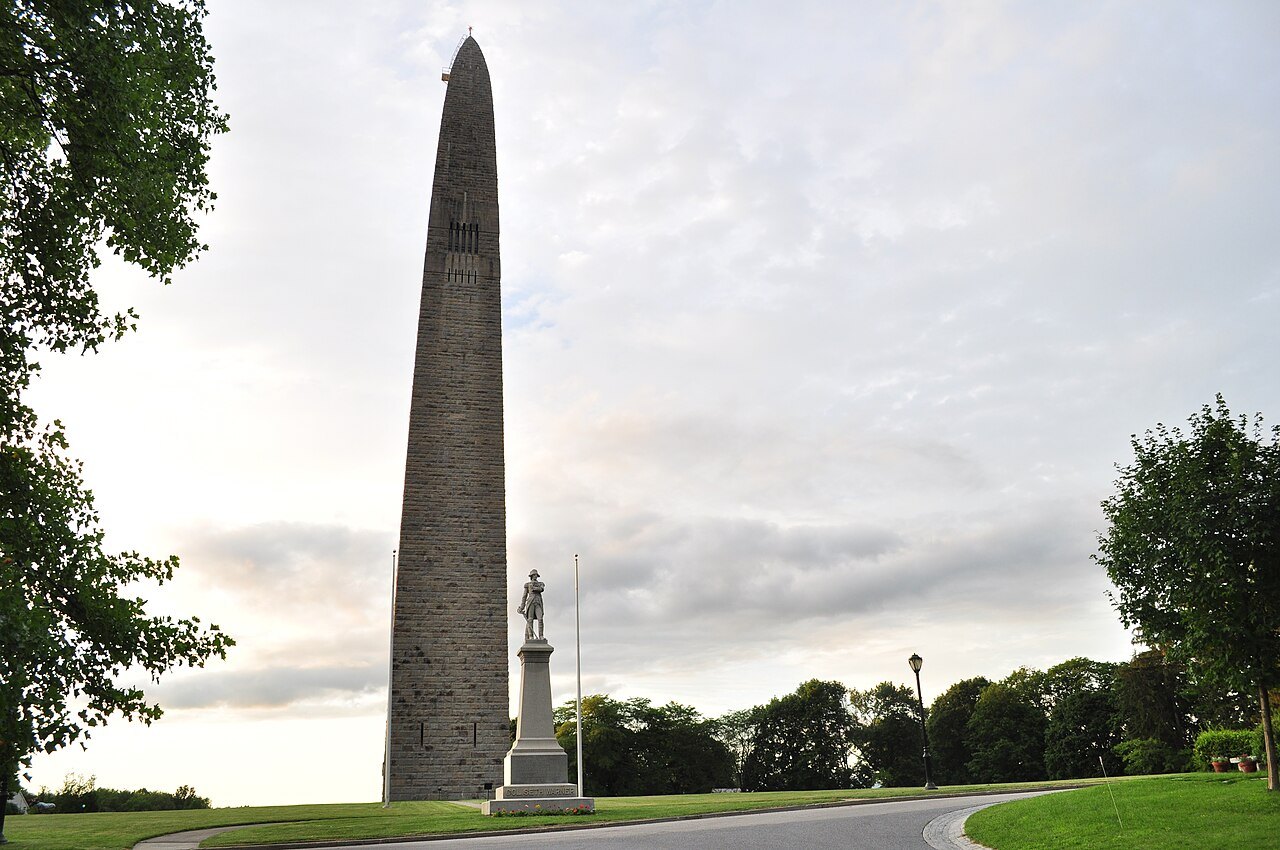
- The obeliskA 306-foot tower of Sandy Hill dolomite, finished in November 1889.
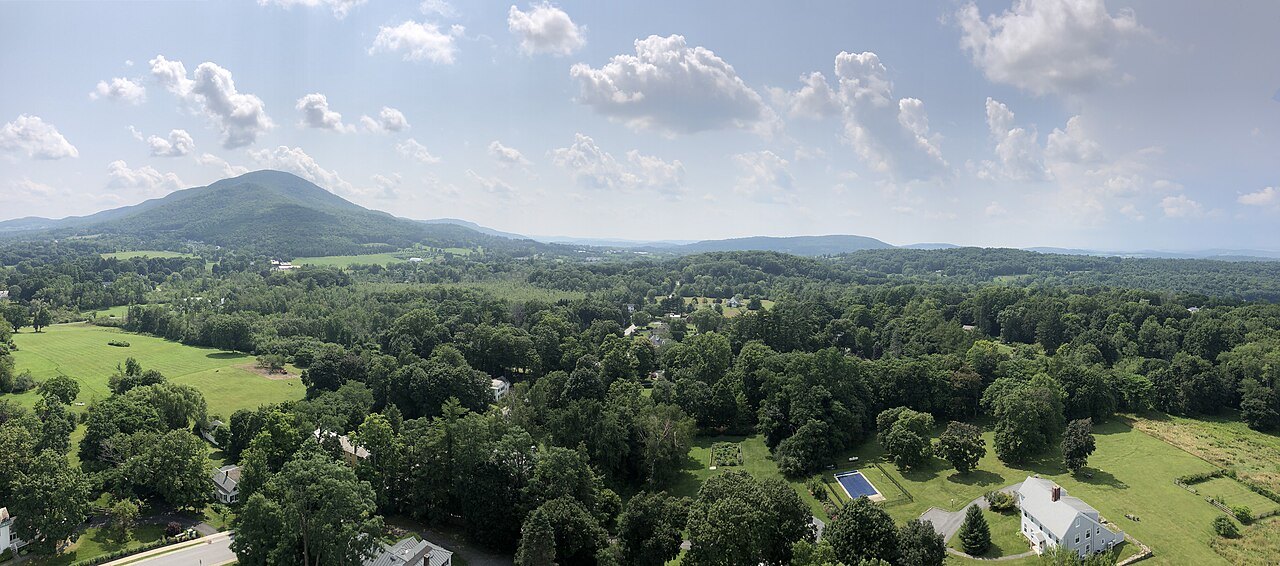
- The observation levelAt 200 feet, reached by elevator, with views over three states.
- The Burgoyne kettleA kettle captured from the British camp at Saratoga, shown in the monument.
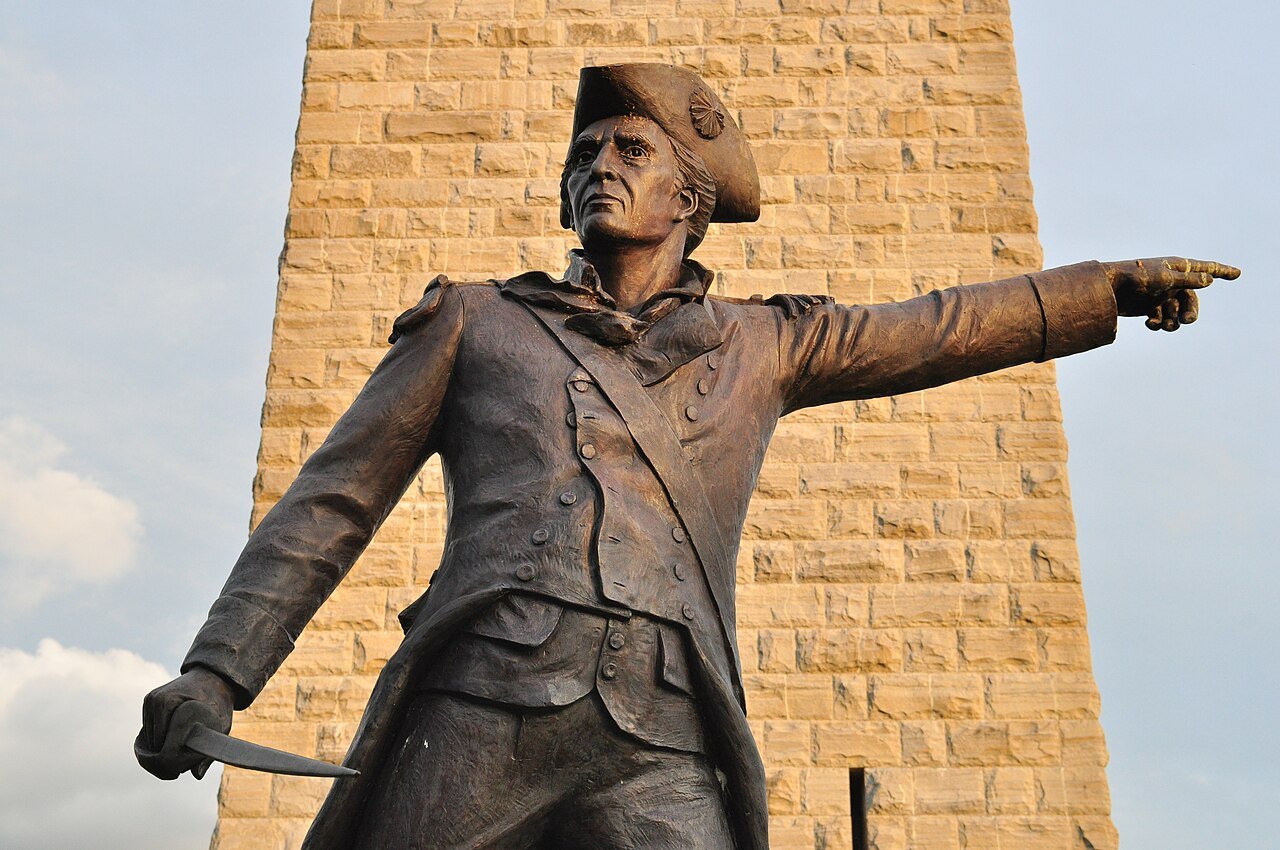
- Statues on the groundsJohn Stark, Seth Warner and other notables ornament the grounds.
- Old BenningtonThe original settlement of 1761, with the Old First Church and Robert Frost's grave.
Why it matters
The Bennington Battle Monument is a 306-foot stone obelisk at 15 Monument Circle in Bennington. It commemorates the Battle of Bennington, fought on August 16, 1777, during the American Revolution. On that day Brigadier General John Stark and 1,400 New Hampshire men, aided by colonels Warner and Herrick of Vermont, Simonds of Massachusetts and Moses Nichols of New Hampshire, defeated two detachments of General John Burgoyne's army, who were trying to capture a store of weapons and food kept where the monument now stands.
The battle is named for Bennington, but it was fought several miles away, in Walloomsac, New York, and the battlefield, a National Historic Landmark, lies entirely in New York State. The monument stands on the site of the supplies the British wanted.
The victory had consequences far beyond the town. It cost Burgoyne almost a thousand men and deprived him of the mounts, draft animals and provisions he needed, it led his Indian allies largely to abandon him, and it contributed to his eventual defeat at Saratoga. It galvanized support for the Patriot cause and played a part in bringing France into the war on the American side.
Building the monument
In 1877 a local historical society began planning a monument for the battle's centennial, and considered many designs. One, a slender stone column only 100 feet tall, was shown at the centennial celebration, which President Rutherford B. Hayes attended. The committee eventually accepted J. Phillip Rinn's design, with some changes. The cornerstone was laid in 1887 and the monument was completed in November 1889. Dedication was delayed until 1891, when President Benjamin Harrison attended and held a reception at a nearby hotel.
The stone is Sandy Hill dolomite from present-day Hudson Falls, New York, a blue-gray magnesian limestone with many fossils in it.
The battle
The fight came out of the Saratoga campaign. General John Burgoyne was advancing toward Albany from Canada, and by late July his supplies were dwindling. In response to a proposal by the commander of his Hessian troops, he sent a detachment under Lieutenant-Colonel Friedrich Baum to raid Bennington for horses, draft animals and provisions. Both he and Baum wrongly believed the town lightly defended. In fact New Hampshire had authorized John Stark to raise a militia, and he had raised 1,500 men in six days, more than a tenth of the state's men over sixteen.
Heavy rain kept the armies apart for a day and a half. On the afternoon of August 16 the weather cleared, and Stark's men, New Hampshire and Massachusetts militia with Vermont militiamen under Seth Warner, closed in from the flanks and overran Baum's position, killing Baum and capturing hundreds. When 550 Hessians under Heinrich von Breymann arrived, the fighting started again, and Warner's troops came up in time to help drive them off at nightfall.
Hessian, Loyalist and Iroquois losses were recorded at 207 dead and 700 captured, against thirty Americans dead and forty wounded. The victory cost Burgoyne almost a thousand men and much of his supplies, and it is considered one of the turning points of the war. Vermont keeps the anniversary as Bennington Battle Day.
Climbing and looking
From the observation level at 200 feet, reached by elevator, a visitor can see Vermont and the neighboring states of Massachusetts and New York. The 417 stairs are not for public use. A kettle captured from General Burgoyne's camp at Saratoga is on view in the monument, along with a diorama of the second engagement and displays on how the monument was built. Statues of John Stark, whose motto was Live Free or Die, of Seth Warner and of other notables ornament the grounds.
The tavern that is gone
Although the monument stands miles from the battlefield, it is very close to what was once the site of the Catamount Tavern, where Ethan Allen and the Green Mountain Boys planned an early raid of the Revolution in 1775. The tavern is a reminder that Bennington's importance to the Revolution was as a gathering place for the Vermont militia as well as a battle name.
Old Bennington
The town was chartered on January 3, 1749, by the colonial governor Benning Wentworth and named for him, the first of the New Hampshire Grants. Three historic districts survive: Old Bennington, Downtown Bennington and North Bennington. Old Bennington is the original settlement, dating back to 1761, when Congregational Separatists arrived from Connecticut and from Amherst and Hardwick in Massachusetts.
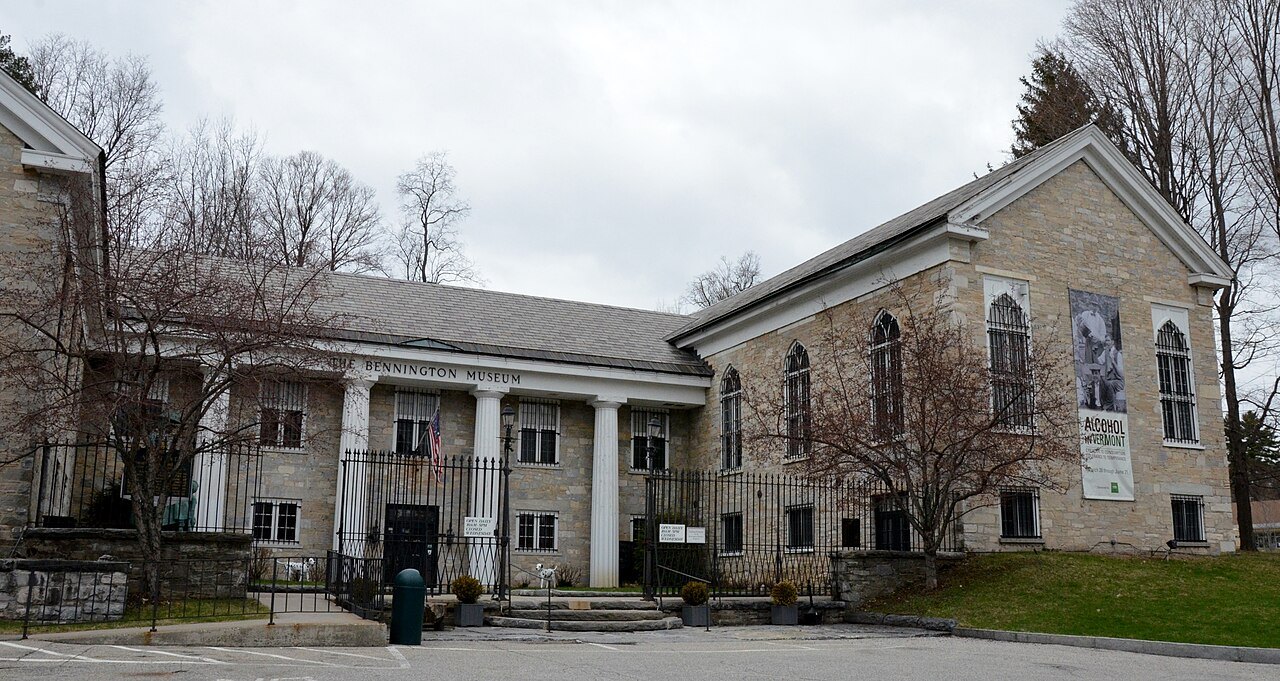
It holds the Old First Church and Robert Frost's grave, and the town is also home to the Bennington Museum, the Bennington Potters, Grandma Moses' Schoolhouse and the Old Blacksmith Shop Visitor Center. The downtown area is noted for its preserved architecture, shops and cafés, and a river walk. The town lies along the western edge of the Green Mountains and is drained by the Walloomsac River, which flows to the Hoosic and then the Hudson. The town has a long history of manufacturing, mainly in wood processing, and is recognized nationally for its pottery, iron and textiles.
Getting the most from a visit
Combine the monument with a walk through Old Bennington and the museum, and plan for the Long Trail, which meets Route 9 at Woodford, just east of town. The Hildene estate in Manchester is a short drive north, and the covered bridges of the valleys are close by.
The monument's access to the top follows its own seasonal arrangements, so check before traveling.