Bellows Falls, the canal village on the Great Falls of the Connecticut
Photographs: Beyond My Ken, Wikimedia Commons, CC BY-SA 4.0 · John Phelan, Wikimedia Commons, CC BY 4.0 · Beyond My Ken, Wikimedia Commons, CC BY-SA 4.0
The cities · Southern Vermont
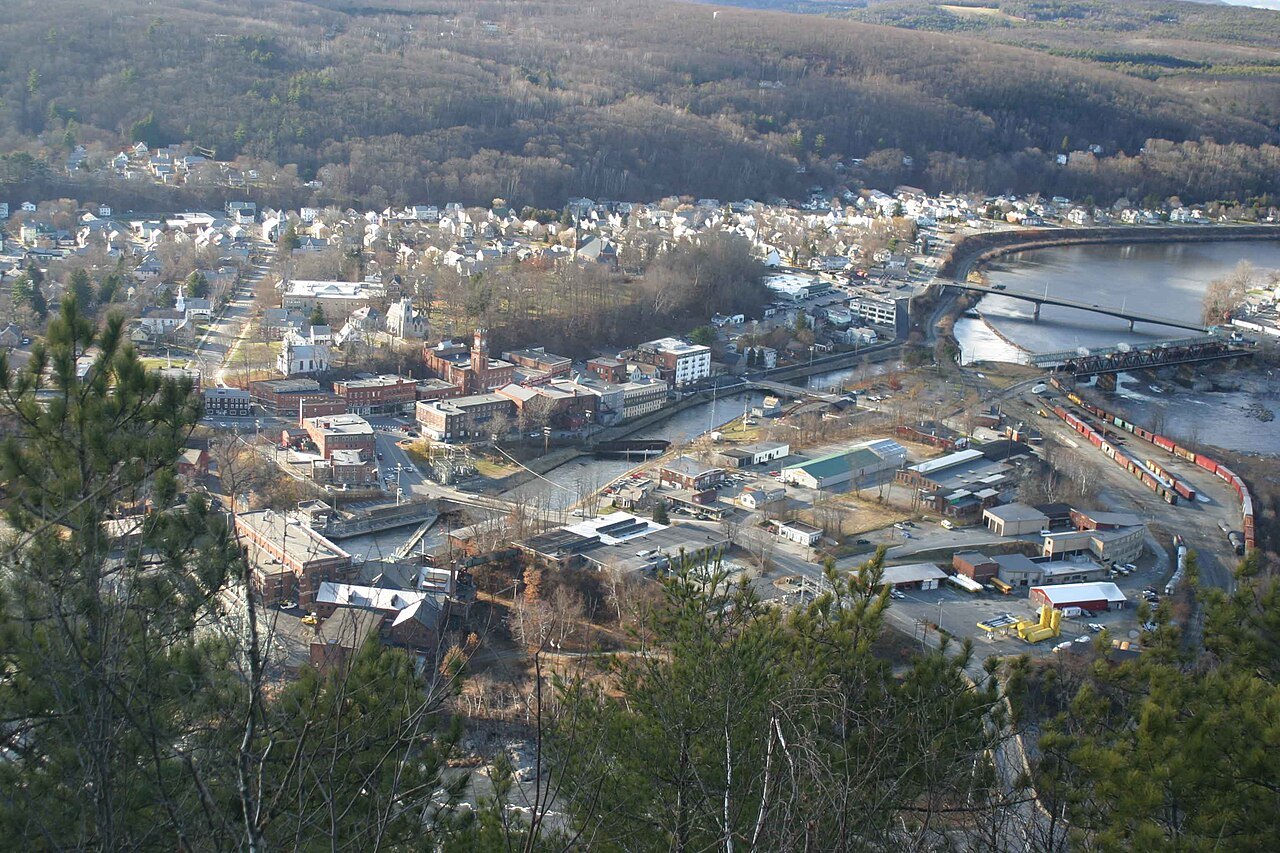
Bellows Falls is an incorporated village in the town of Rockingham, Windham County, built beside the Great Falls of the Connecticut River, with a canal, a railroad station, a 1941 diner and a Victorian downtown listed as a historic district.
- The Great FallsThe waterfall the settlers first named Great Falls, a translation of the Abenaki name Kitchee pontegu.
- The Bellows Falls CanalOne of the first canals built in the United States, dug from 1791 to 1802 to lift boats around the gorge.
- The railroad stationHome of the Green Mountain Railroad, and a historic landmark on the National Register.
- Miss Bellows Falls DinerA barrel-roofed Worcester diner of 1941 that arrived in the village on May 14, 1944.
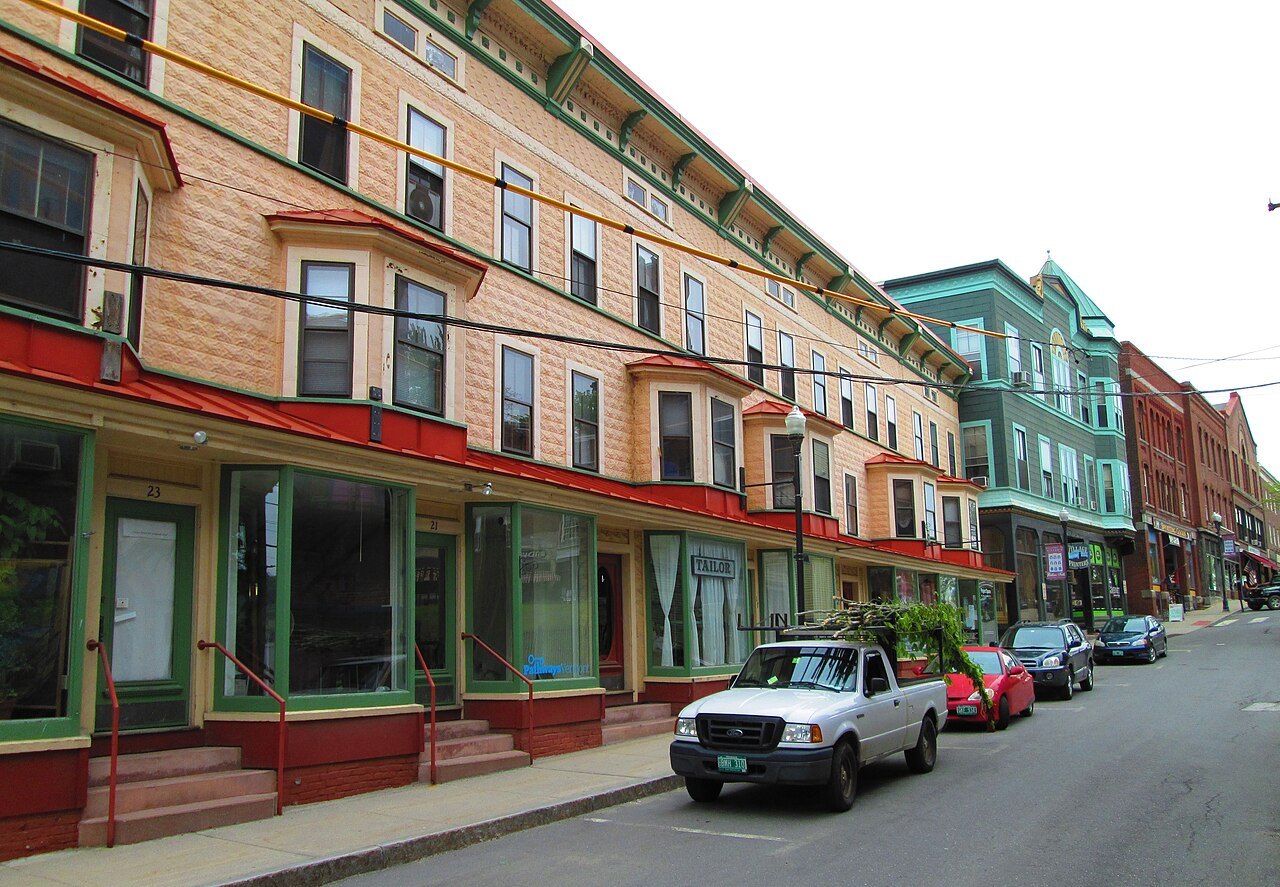
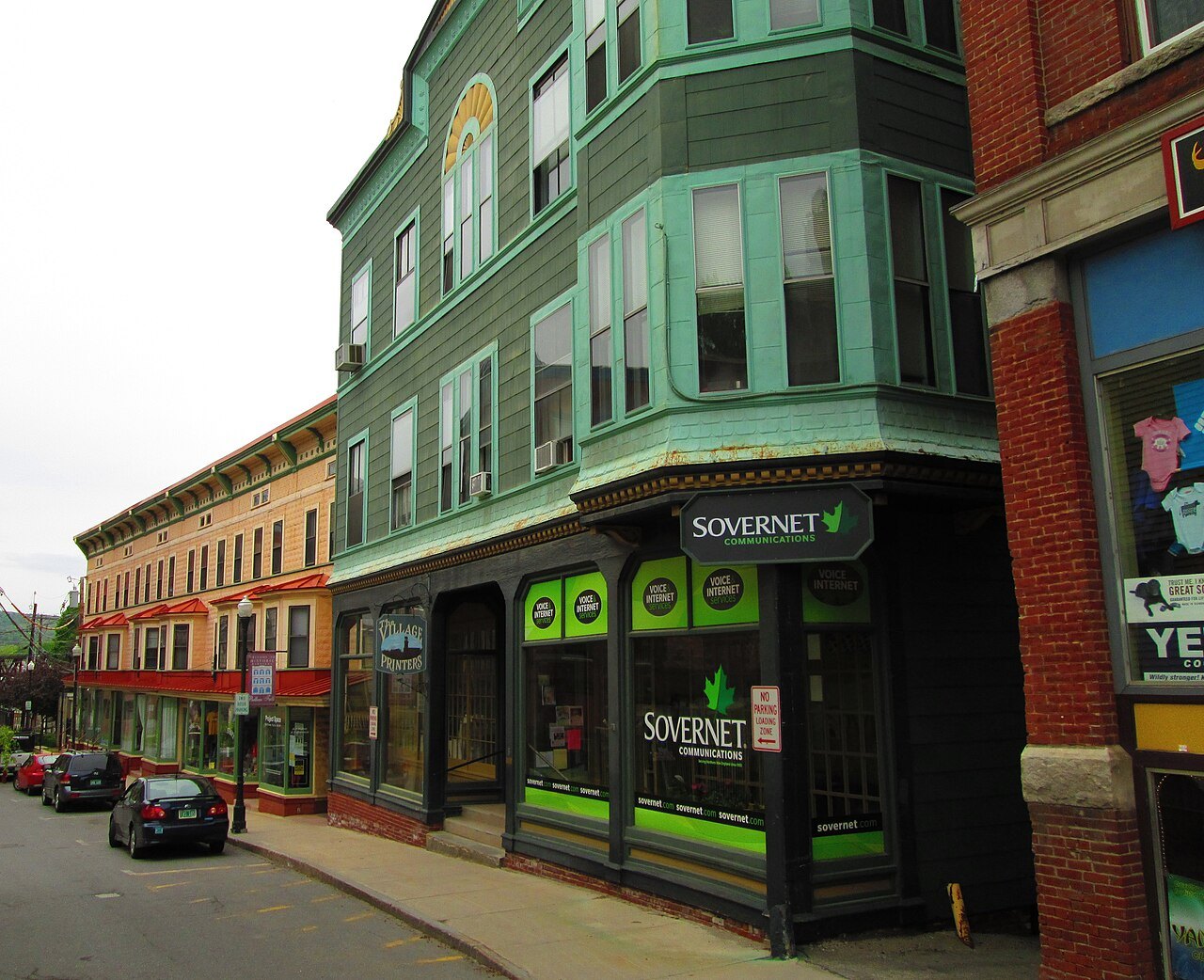
- The Victorian downtownMill-era mercantile buildings and houses, listed as historic districts on the National Register.
- Roots on the RiverThe annual festival the village hosts, with the No Film Film Festival.
Why it matters
Bellows Falls is a small village, 2,747 people at the 2020 census, in a compact area bounded on the east by the Connecticut River. It is one of two incorporated villages in the town of Rockingham. The village is home to the Green Mountain Railroad and Bellows Falls station, and it hosts the annual Roots on the River Festival and the No Film Film Festival.
Heritage tourism here rests on its Victorian architecture. The commercial town center, the canal, the bridges that span it and several neighborhoods of houses are listed as historic districts on the National Register of Historic Places, as are individual landmarks such as the railroad station and the Adams Gristmill. It is a village for walking and looking, and for seeing how a mill town of the nineteenth century was put together.
The falls, the bridge and the canal
The community was settled in 1753 by colonists of English descent, who called it Great Falls. The settlers later renamed the town for Colonel Benjamin Bellows, a landowner, but kept the name Great Falls for the waterfall itself, a translation of its Abenaki name, Kitchee pontegu.
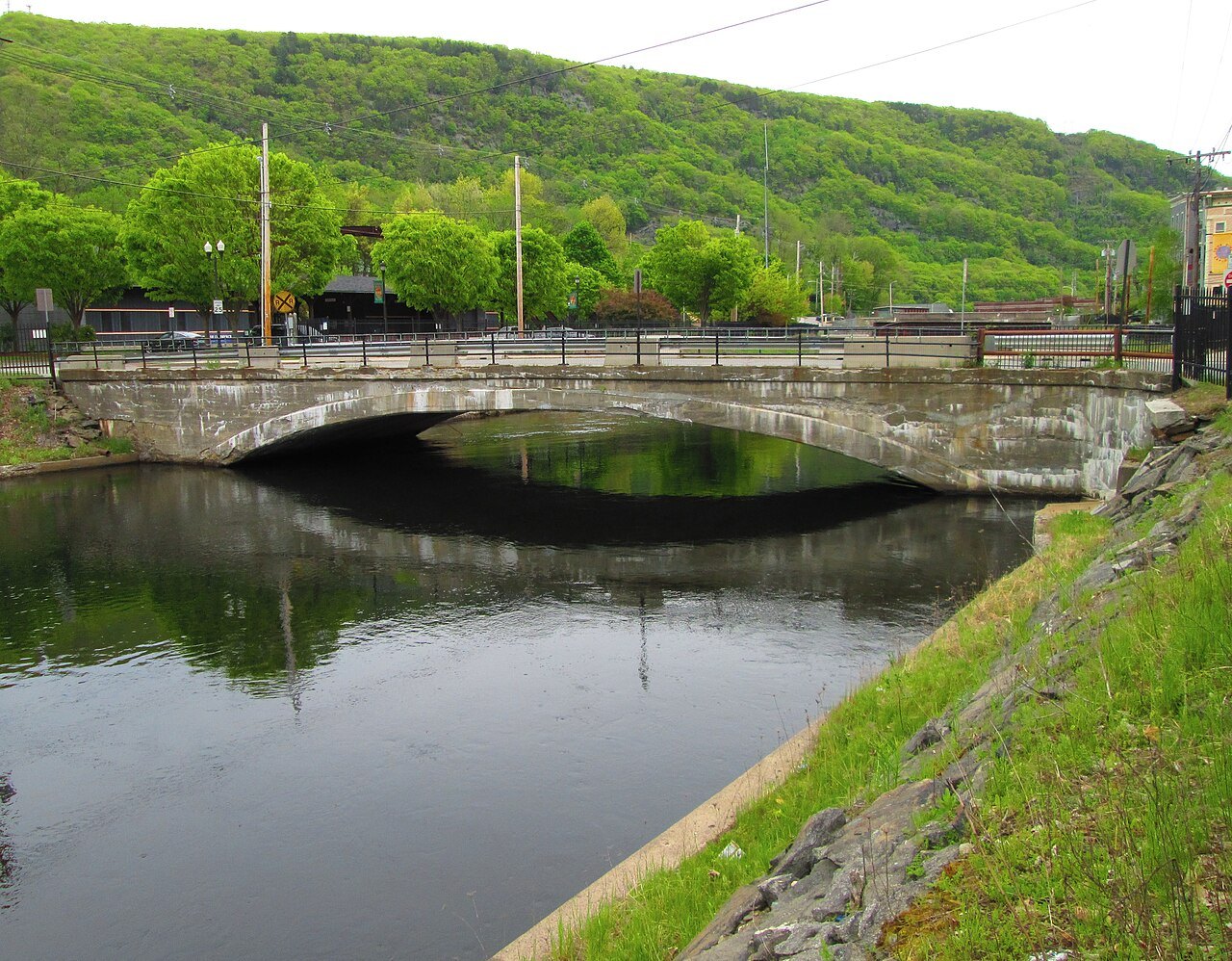
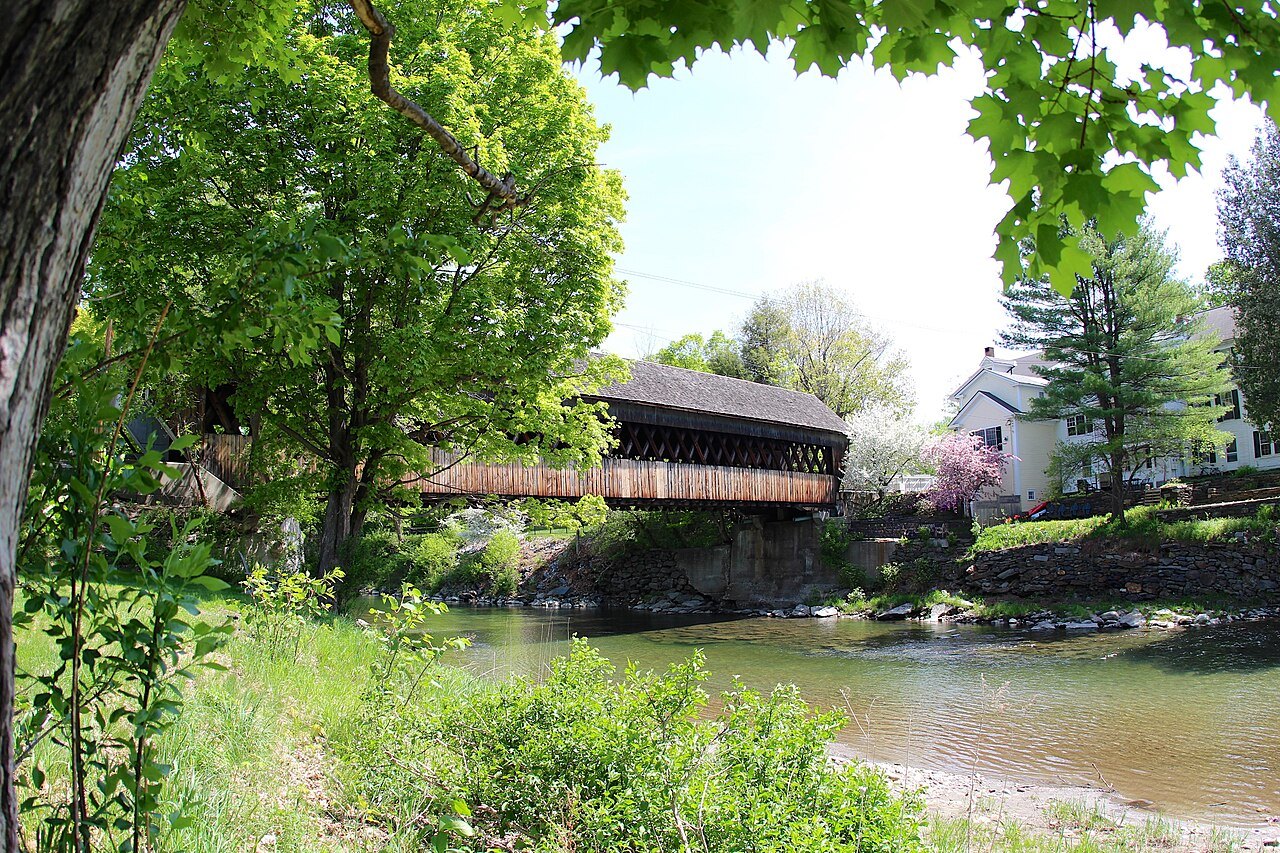
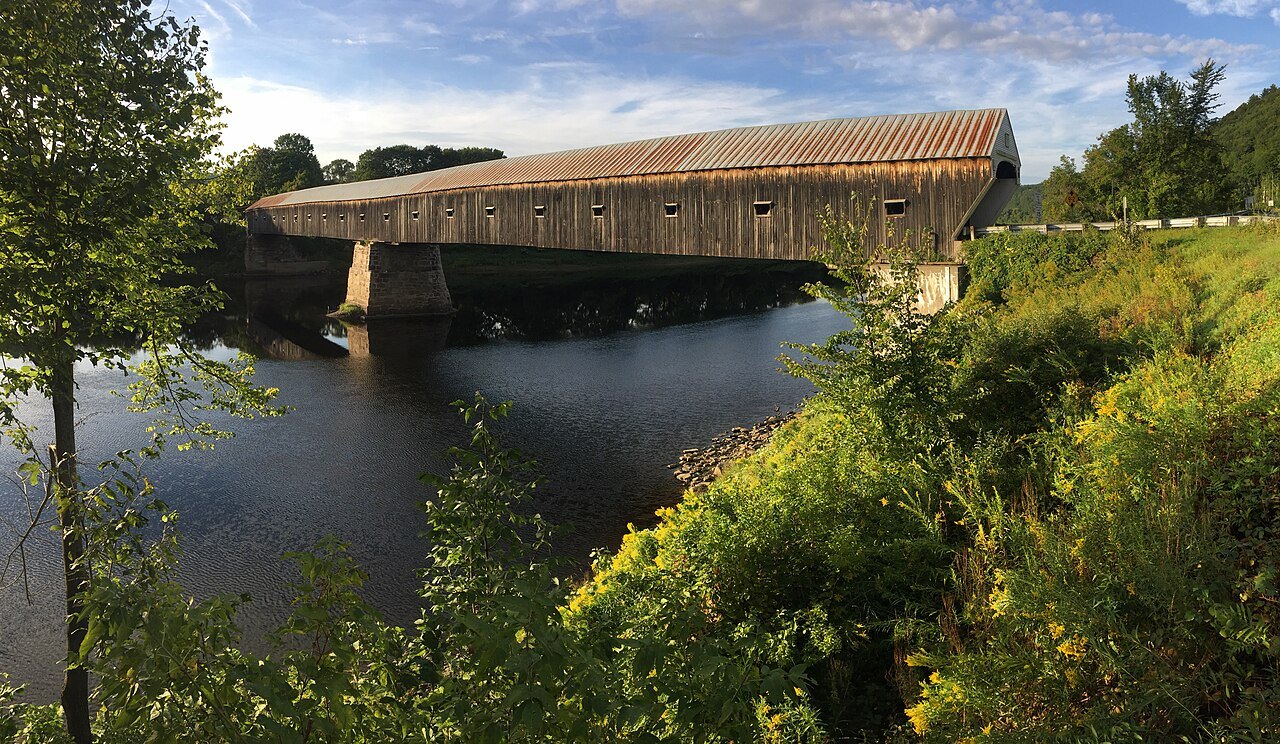
In 1785 Colonel Enoch Hale built the first bridge over the Connecticut River, and it remained the only bridge across the river for more than a decade. In 1820 Nathaniel Tucker bought the bridge site and funded its reconstruction when it began to deteriorate. Two bridges now link the village across the river, the Vilas Bridge and the New Arch Bridge, also called the Church Street Bridge, which replaced the Arch Bridge in 1982.
The Bellows Falls Canal, one of the first canals built in the United States, was dug by a British-owned company from 1791 to 1802. It was 22 feet wide and four feet deep, with nine locks, each 75 feet long and 20 feet wide, that lifted boats 52 feet around the gorge. River traffic declined after the railroads came to the Connecticut Valley in 1849, and by 1858 the canal was used only for water power to run the paper mills. The bridges and the canal remain the best way to read the village: the water was once the reason for the place, and the structures that tamed it are still there to walk beside.
A mill town
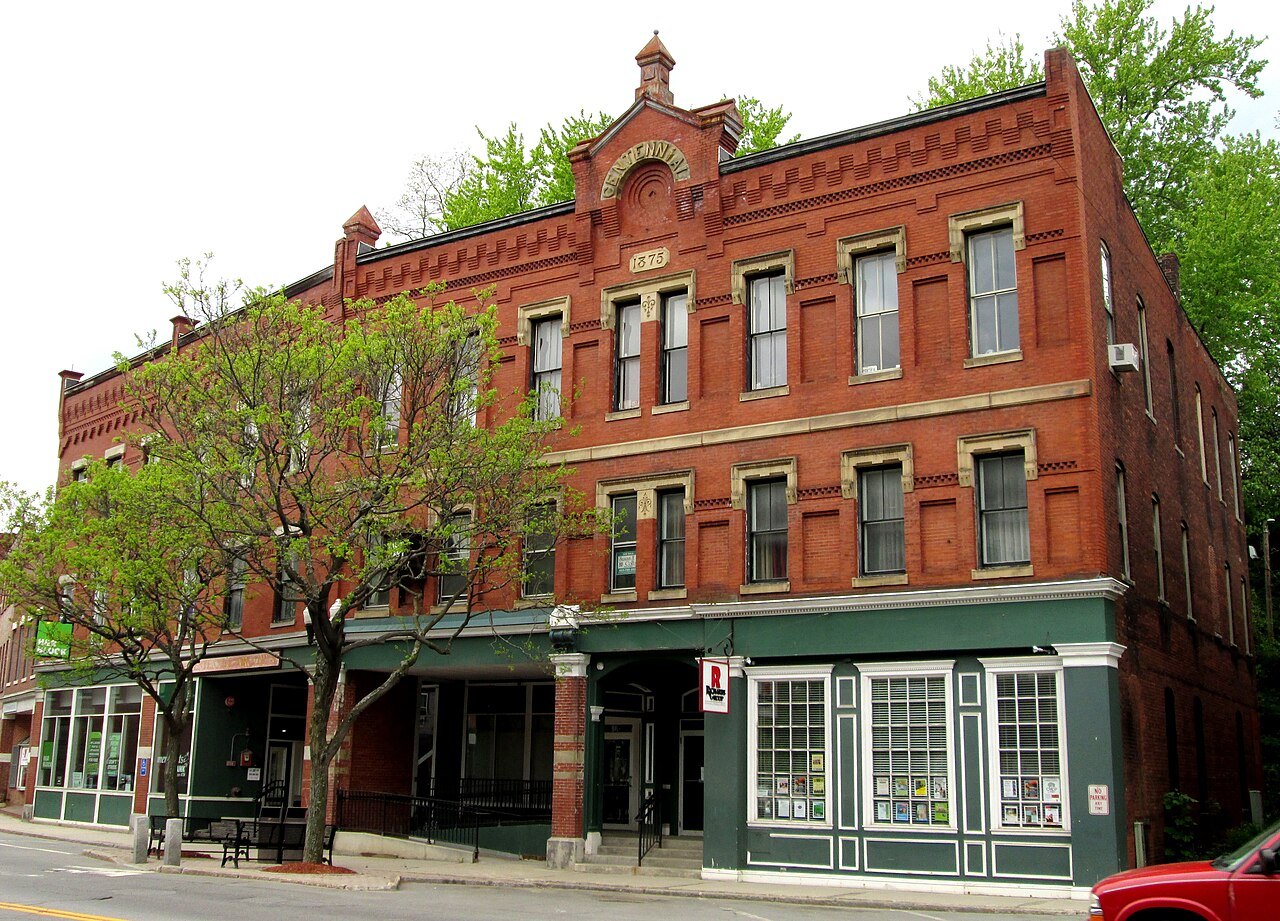
Entrepreneurs built the first paper mill in Windham County here in 1802. Two railroads converged at Bellows Falls in 1849, helping it become a major mill town, and by 1859 a woolen textile mill was running alongside factories that made furniture, marble, sashes and blinds, iron castings, carriages, cabinetware, rifles, harness, shoe pegs and organs.
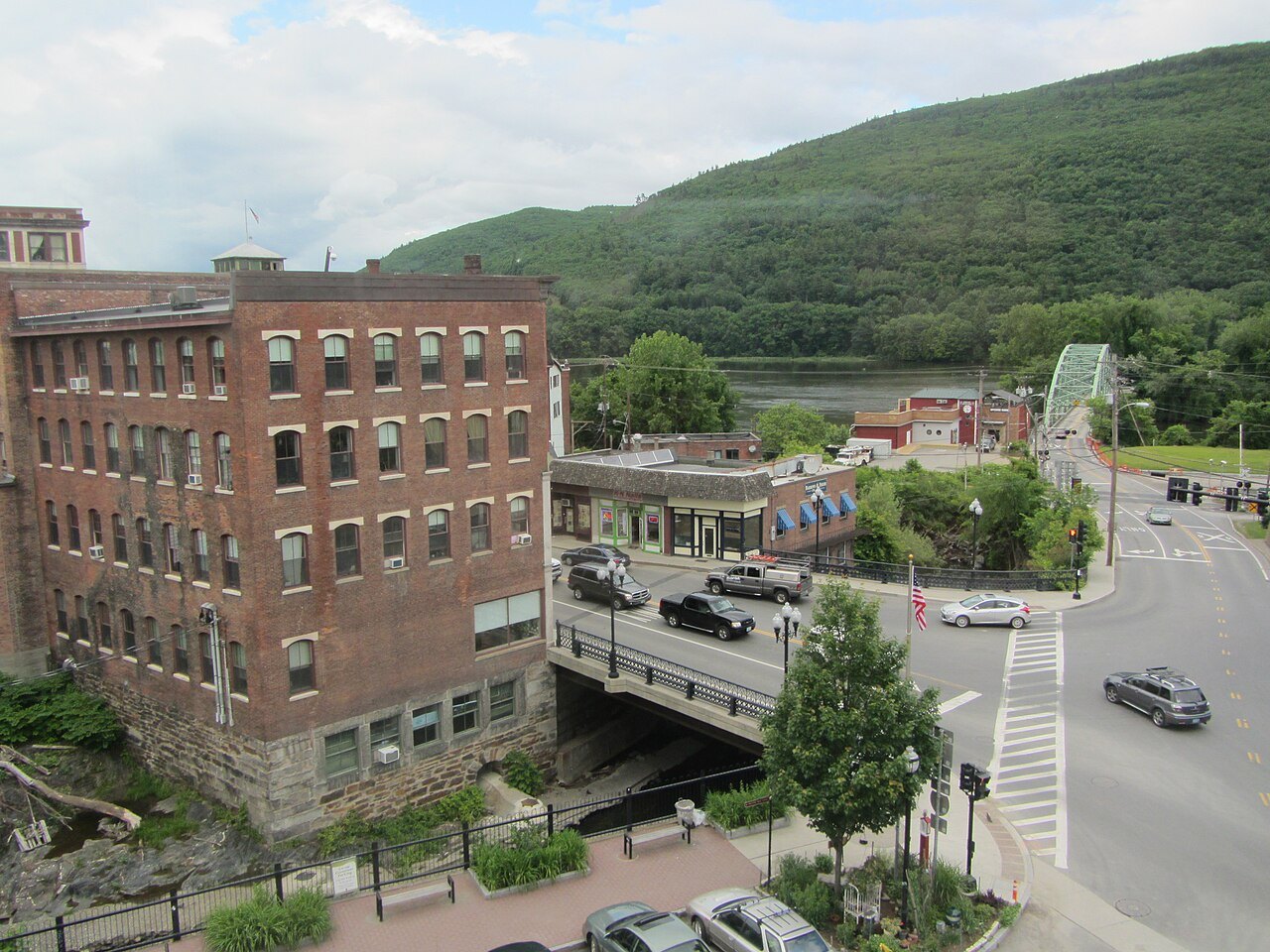
The years of industry created wealth, and substantial Victorian houses and mercantile buildings were constructed with it. That wealth is the reason the village looks as it does: a downtown of brick commercial blocks beside the canal and, across the water, houses of the period.
The neighborhoods
The Bellows Falls Neighborhood Historic District is a residential area of roughly 42 acres south of downtown, bounded on the north by School Street, on the east by Westminster Street and on the west by Atkinson Street, which is U.S. Route 5. In the nineteenth century the main industrial area and the village downtown grew immediately west of the canal, and the residential neighborhoods grew west and south of them.
Most of the housing is wood-frame, in buildings of one to three units, and much of it was built between 1850 and 1920, when the village was at its economic peak, in a cross section of the architectural styles of that period. More than 90 percent of the buildings in the district were built before 1950, a remarkably high concentration for a district of its kind.
The diner
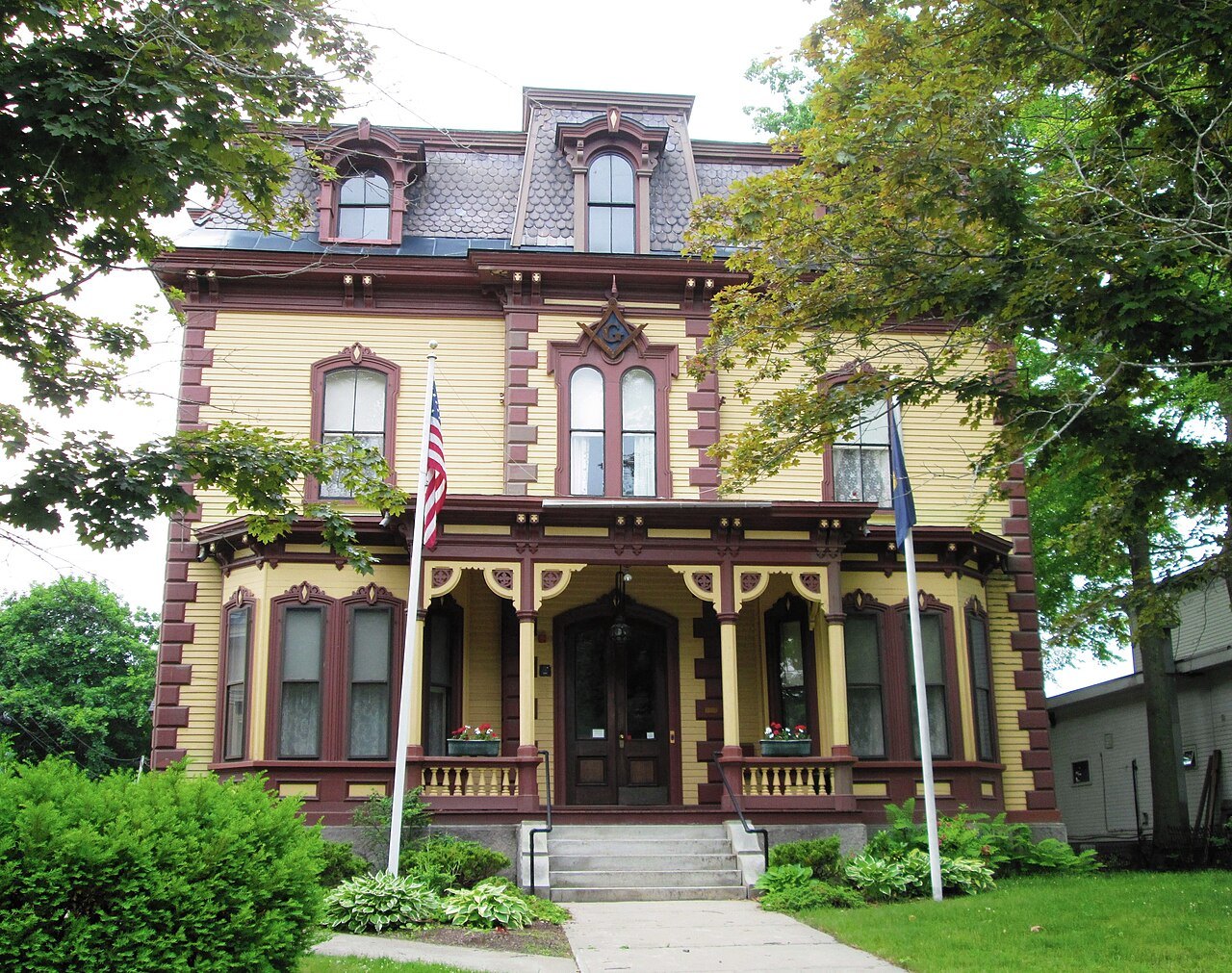
Miss Bellows Falls Diner stands on Rockingham Street, just northwest of the central business district. It is a small barrel-roofed metal building that keeps its original varnished wood walls, enamel panels, multicolored tile floor, oak booths with Formica tops and a counter finished in marble and metal.
The Worcester Lunch Car Company built it in 1941 as number 771, the only intact example of a Worcester barrel-roofed diner known in Vermont. It was first built for John Korsak and Frank Willie; both were called up for military service in the Second World War, and the diner was sold and arrived in Bellows Falls on May 14, 1944, replacing an earlier diner on the site. It was listed on the National Register of Historic Places in 1983.
The petroglyphs and the river
The Bellows Falls Petroglyph Site holds two panels of precontact Native American carvings on bedrock above the river beside the falls, figures interpreted as human heads with mouths, eyes and radiating projections. The assemblage is believed to be unique in New England, and the figures have been known and commented on since the late eighteenth century. The site is a sacred and archaeological place, which is why this guide does not picture it. The two rock panels lie close to the Vilas Bridge, adjacent to the Great Falls, and similar figures are rare in New England, which is why the site is unusual for establishing links between distant regions before European contact.
Roots on the River and the No Film Film Festival bring visitors to the village every year; the Brattleboro page covers the larger town 20 miles or so to the south, and the getting here page explains the roads and the train.
Nearby
Sources read for this page