Where to stay in Vermont: bases for a first trip
Photographs: AlexiusHoratius, Wikimedia Commons, CC BY-SA 4.0 · G. Edward Johnson, Wikimedia Commons, CC BY 4.0 · Farragutful, Wikimedia Commons, CC BY-SA 4.0
Access Vermont · Bases
Vermont is a state to base in rather than hurry across; this page compares eight bases by what lies within reach of each, without recommending hotels or taking bookings.
The bases
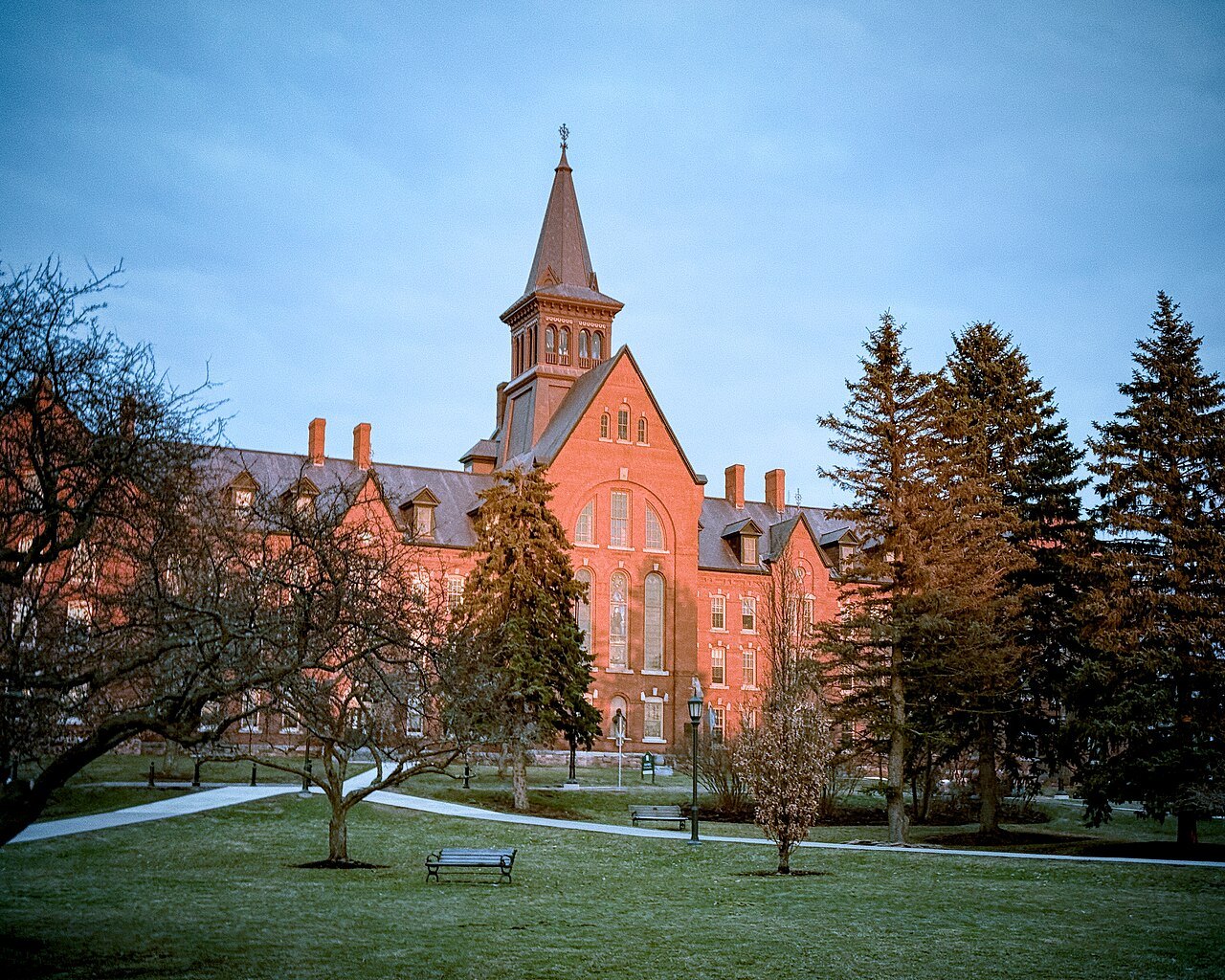
Old Mill at the University of Vermont, a brick building with a tall tower, on the green. Photo: HeyTomek, Wikimedia Commons, CC0 1Burlington
The largest city, with a walkable core, the waterfront, the airport 3 nautical miles away and Amtrak's Ethan Allen Express at Union Station.
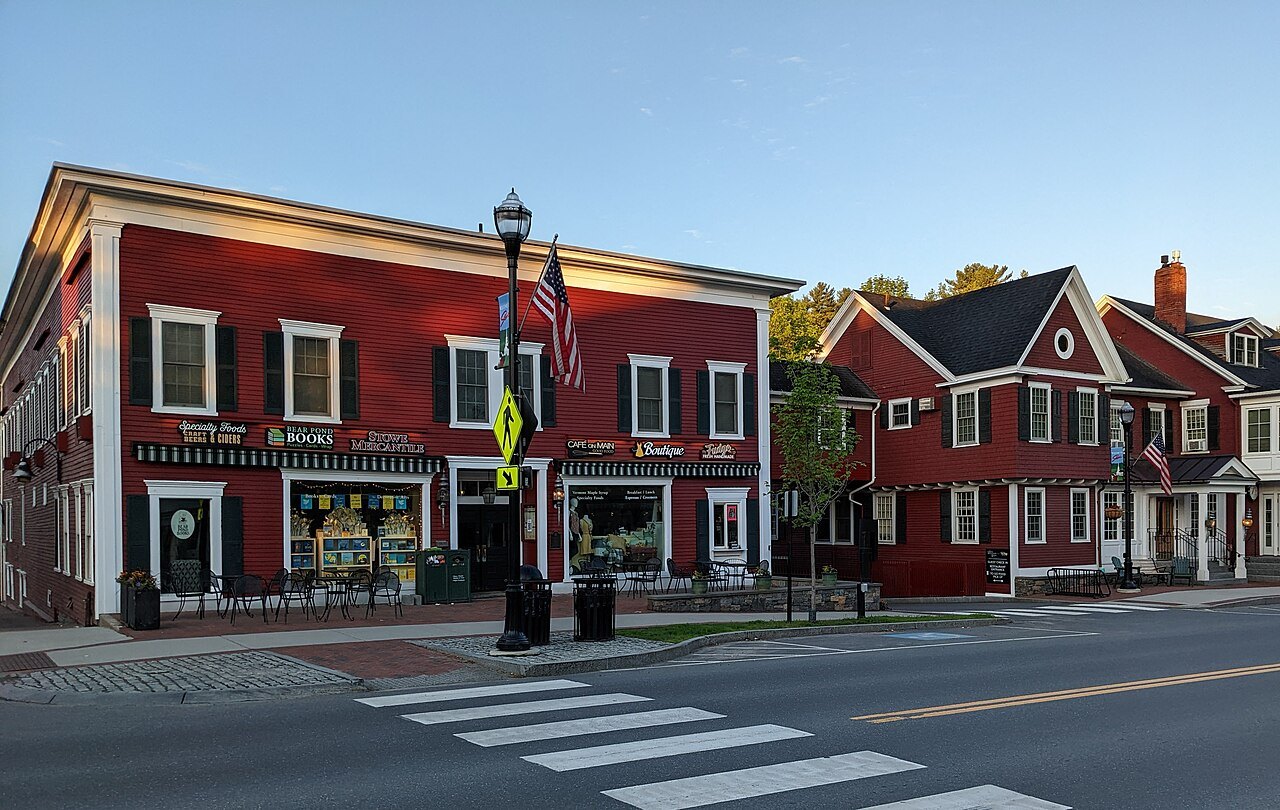
The Depot Building in Stowe, red clapboard shops beside a crosswalk. Photo: Seasider53, Wikimedia Commons, CC BY-SA 4.0 2Stowe
A village in a broad valley with the state's highest peak behind it, strongest in winter and fall.
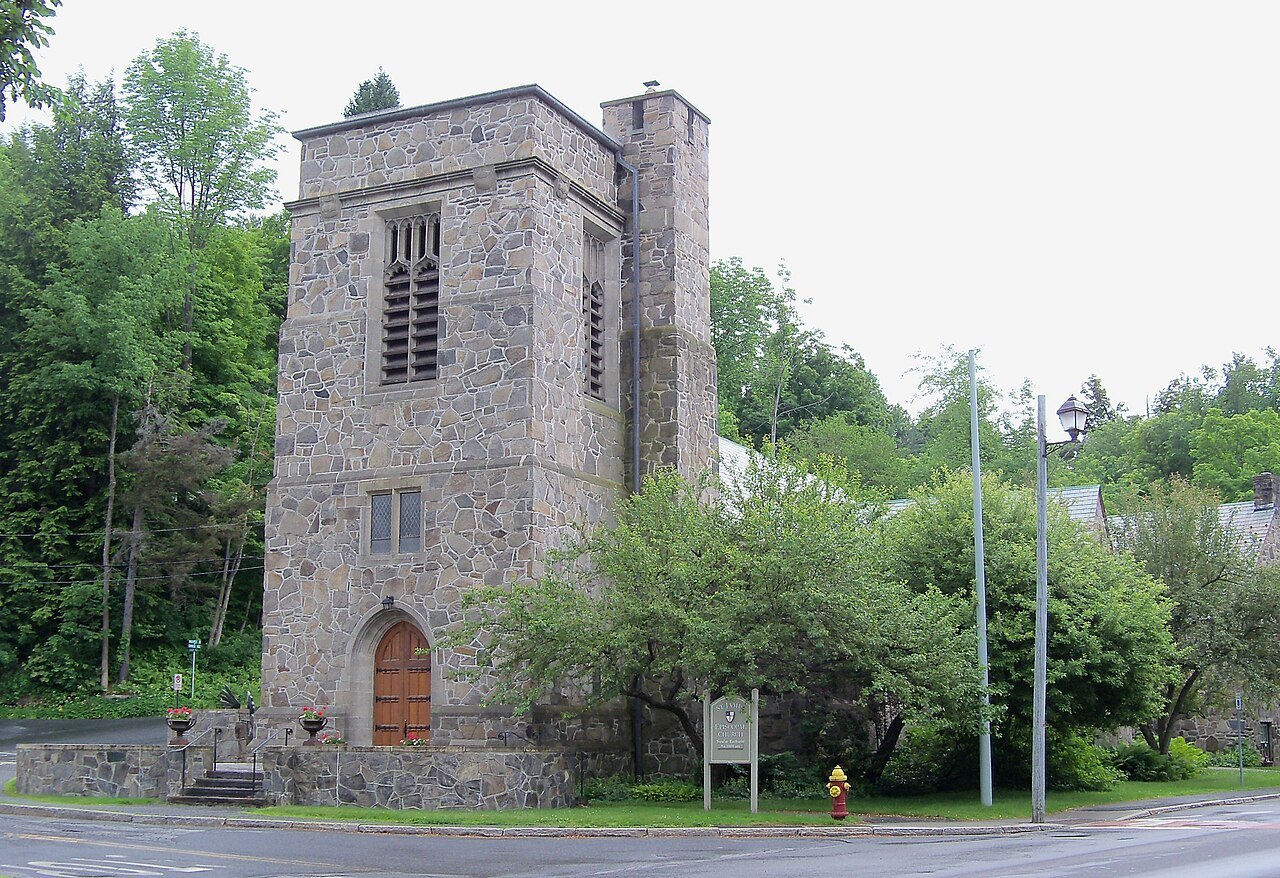
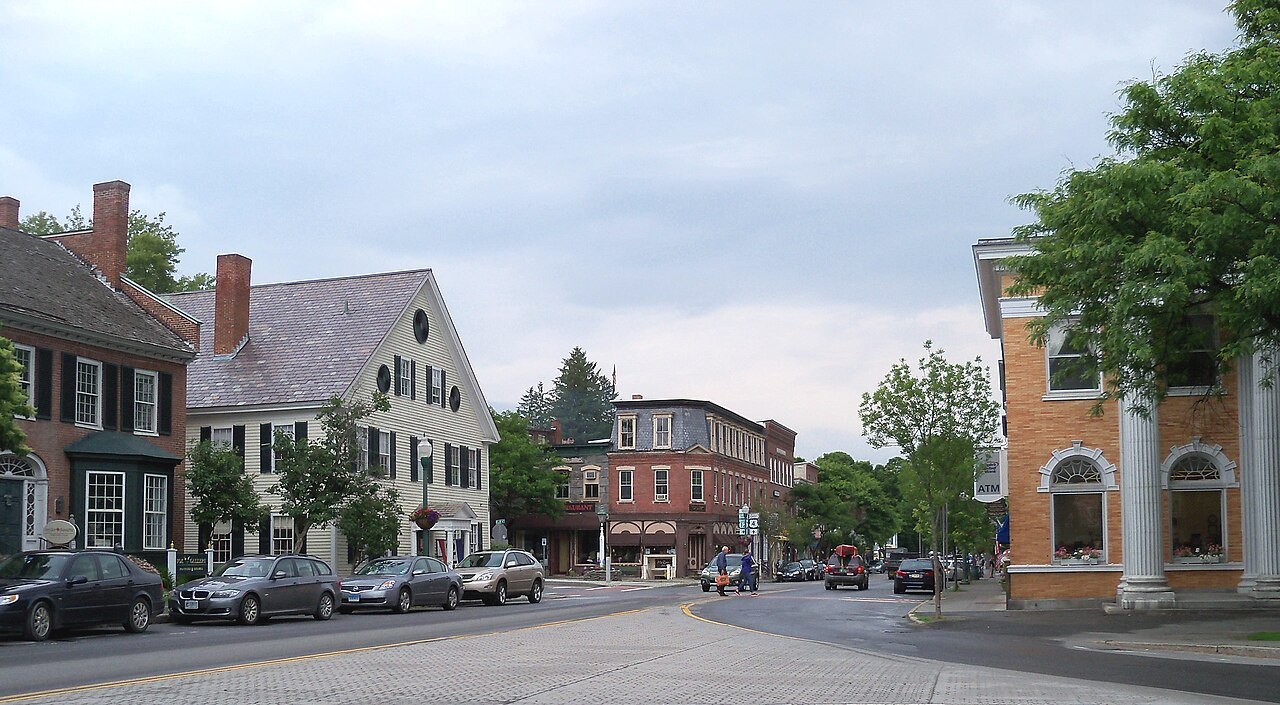
St. James Episcopal Church, a stone tower with an arched red door, on a Woodstock street corner. Photo: AlexiusHoratius, Wikimedia Commons, CC BY-SA 4.0 3Woodstock and Quechee
A preserved village on its green, with Quechee Gorge a short drive east along U.S. Route 4.
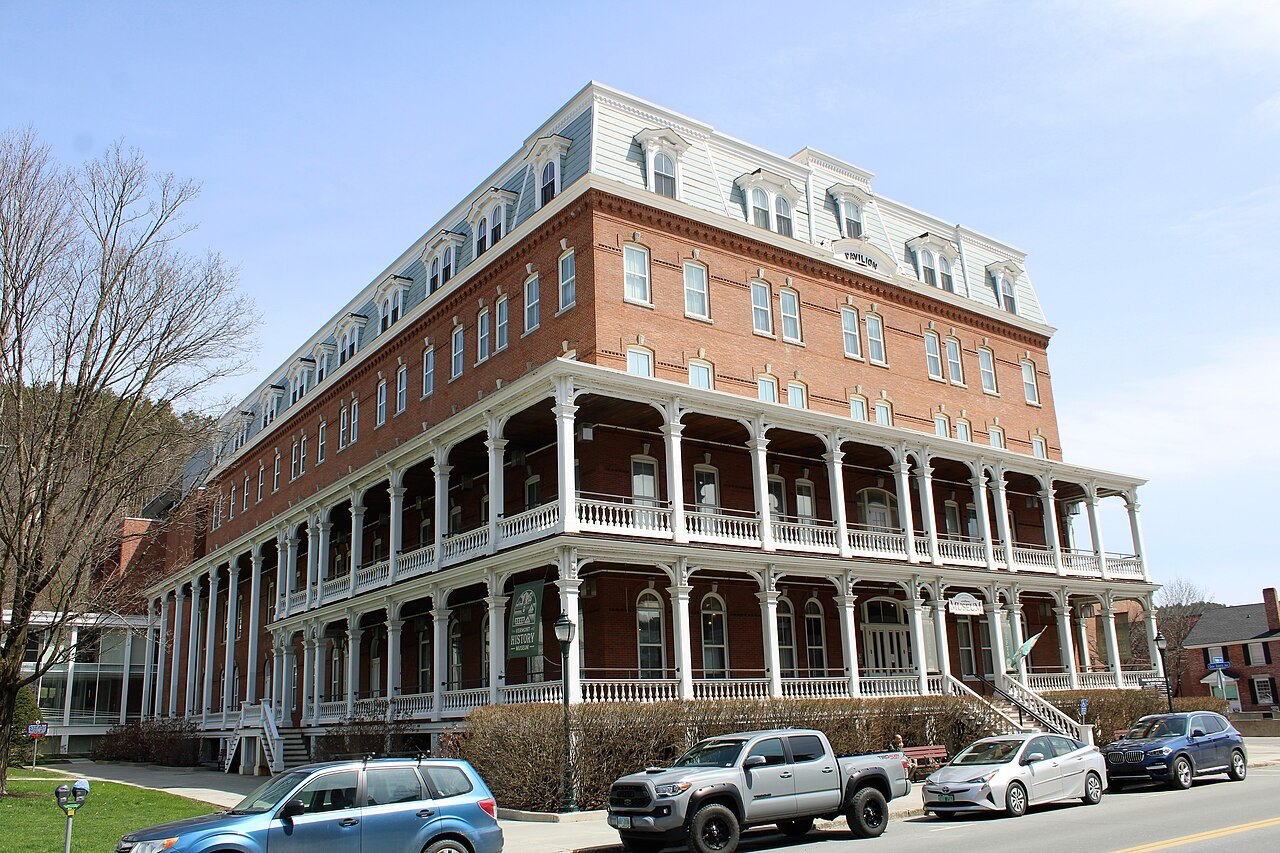
The Pavilion, a four-story brick building with a mansard roof and long wooden porches. Photo: Farragutful, Wikimedia Commons, CC BY-SA 4.0 4Montpelier
The smallest state capital, with a compact downtown, and Interstate 89 and U.S. Route 2 at hand.
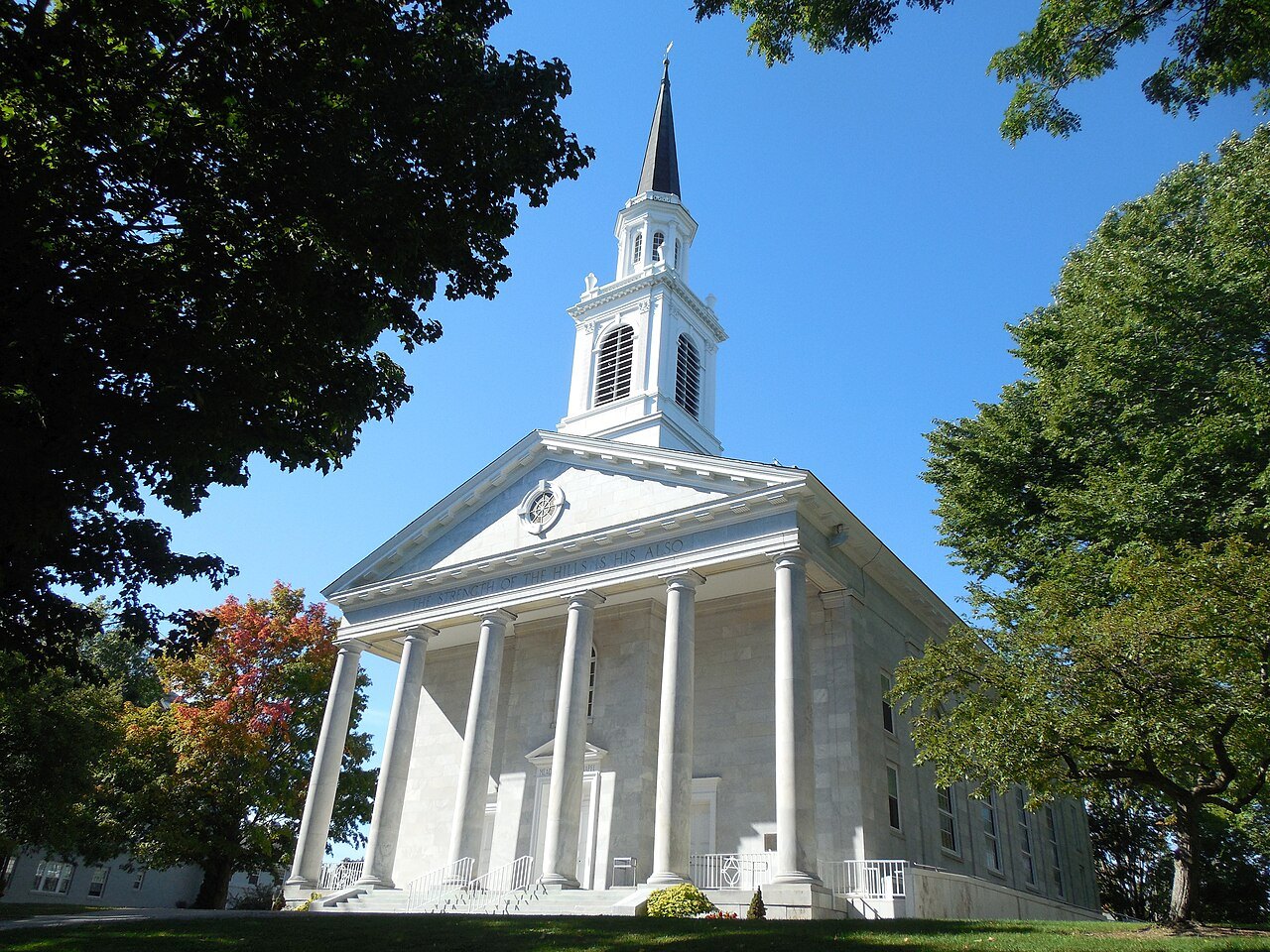
Mead Chapel at Middlebury College, a white building with a spire, in autumn light. Photo: Niranjan Arminius, Wikimedia Commons, CC BY-SA 4.0 5Middlebury
A town of falls and stone buildings on U.S. Route 7, on the Ethan Allen Express line.
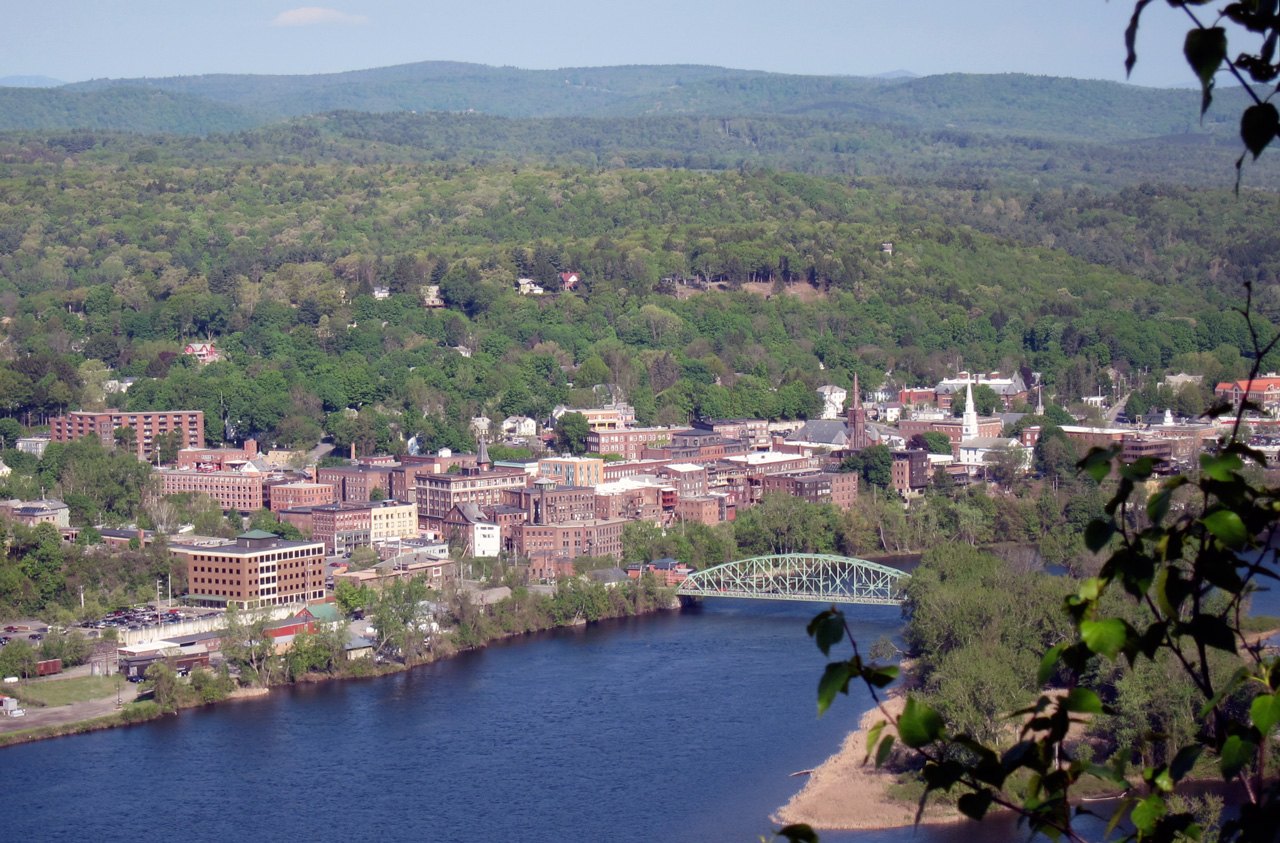
Brattleboro from a hillside above the Connecticut River, with the green bridge at the right. Photo: Caleb Clark, Wikimedia Commons, CC BY-SA 3.0 6Brattleboro
The first major town on Interstate 91 northbound, with a Vermonter train station and a downtown of galleries and shops.
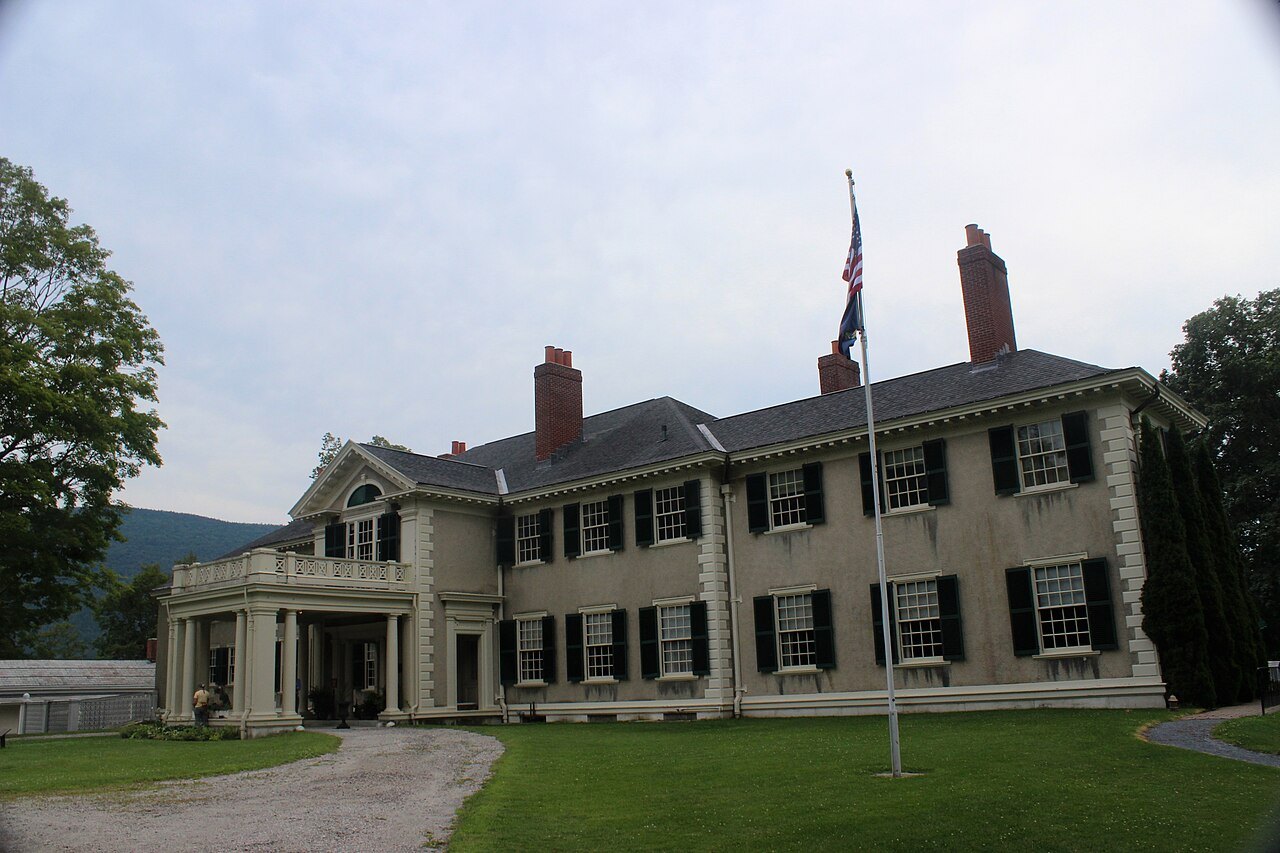
The house from the lawn, a long mansion with dark shutters and a flag. Photo: Miguel Hermoso Cuesta, Wikimedia Commons, CC BY-SA 4.0 7Manchester and Bennington
Resort villages in the southwest, with Hildene southwest of Manchester Center and the Bennington Battle Monument on the Route 7 corridor.
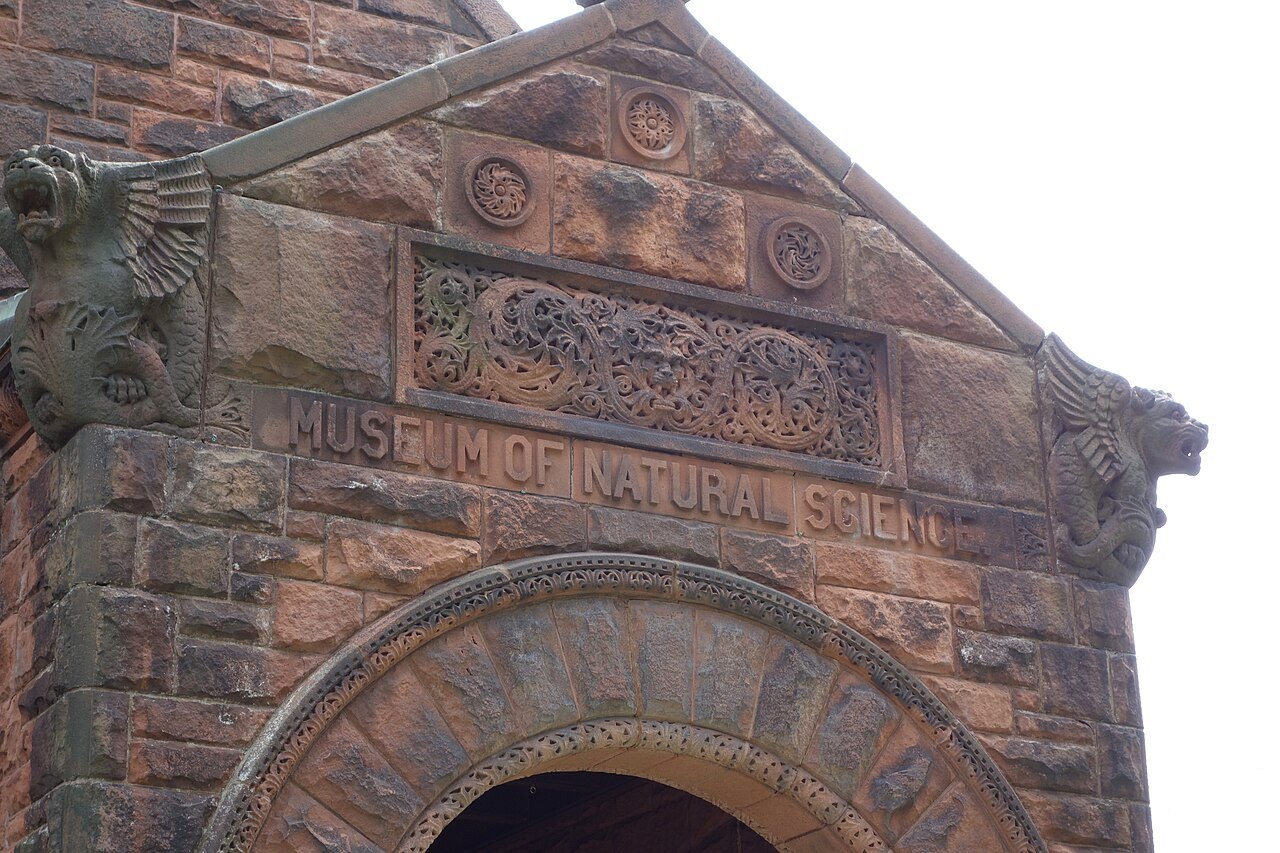
The carved stone lintel above the arched door of the Fairbanks Museum, lettered for natural science. Photo: Daderot, Wikimedia Commons, CC0 8Newport and St. Johnsbury
The northern base, far from the main routes, for those who want quiet and the lakes of the Kingdom.
Choosing a base
The usual mistake in Vermont is to try to see the whole state from one town. The state is long and narrow, with two Interstates and a mountain range between them, and it is better to choose a base for a few nights and make day trips of an hour or so. This page lists the bases that fit the places on this site, and says what each is near. Distances matter more than they look on a map: two towns that are close as the crow flies may be an hour apart across a mountain pass.
The site does not take bookings, quote rates or recommend particular hotels or inns. It does not sell, book or reserve anything. What it can say is which town puts which landmark within an easy drive, and what to check when you arrange a stay yourself.
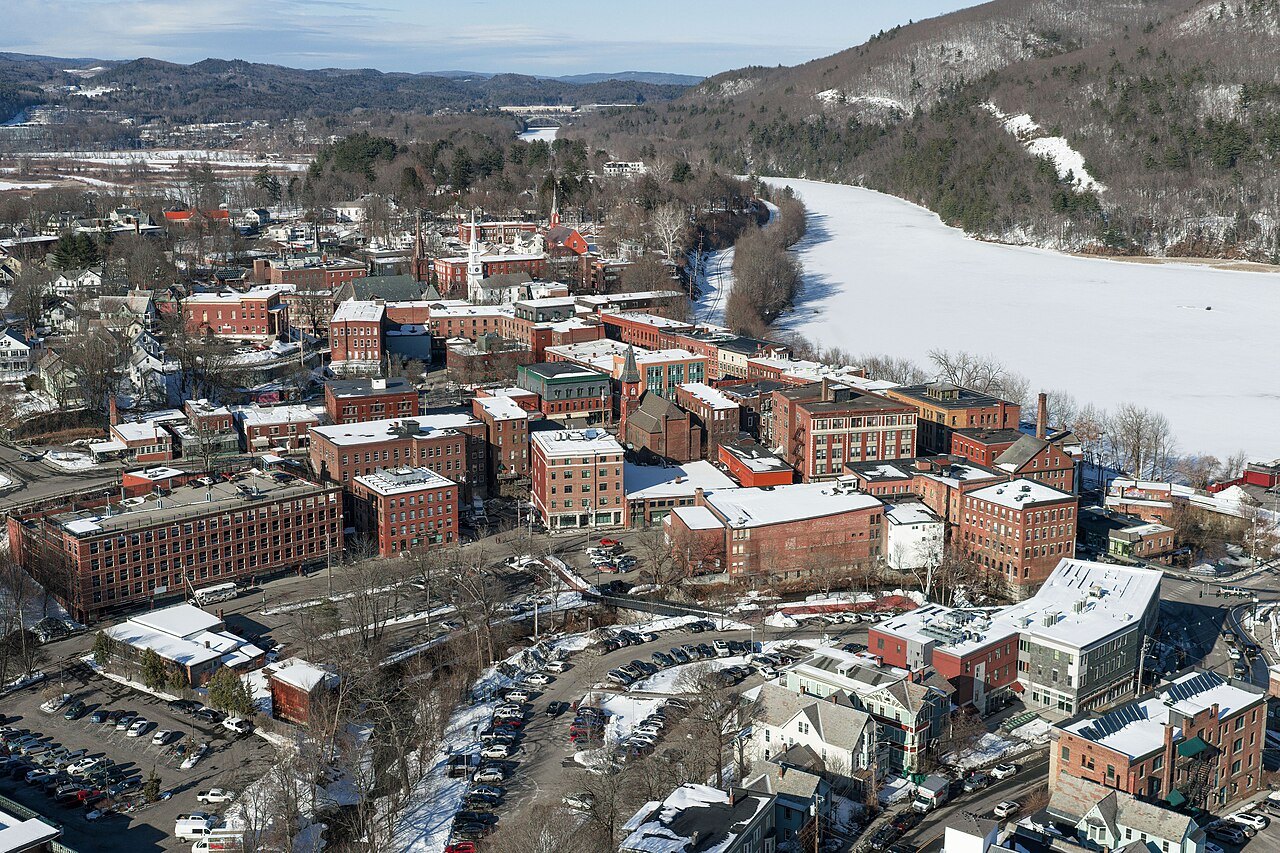
The Vermont inn, then and now
The idea of a stay in the hills is old here. By the middle of the nineteenth century Stowe was a well-known summer resort, and the 300-room Mansfield House, known as the Big Hotel, once occupied most of the settlement on the mountain before it burned in 1889. Woodstock's Eagle Hotel became the Woodstock Inn, a Victorian building reconstructed in 1892, and the Rockefellers replaced it in the late 1960s with a neo-colonial building set back from the street.
Newport's Bellevue Hotel was built in 1873 to hold 75 guests and later 100, and Manchester became an affluent resort area after the Civil War, when the railroad brought visitors. The pattern has lasted: lodging in Vermont is as often an inn or a lodge in a village as a large hotel, and the Quechee Lakes planned community, begun in the late 1960s, shows the resort model of later decades.
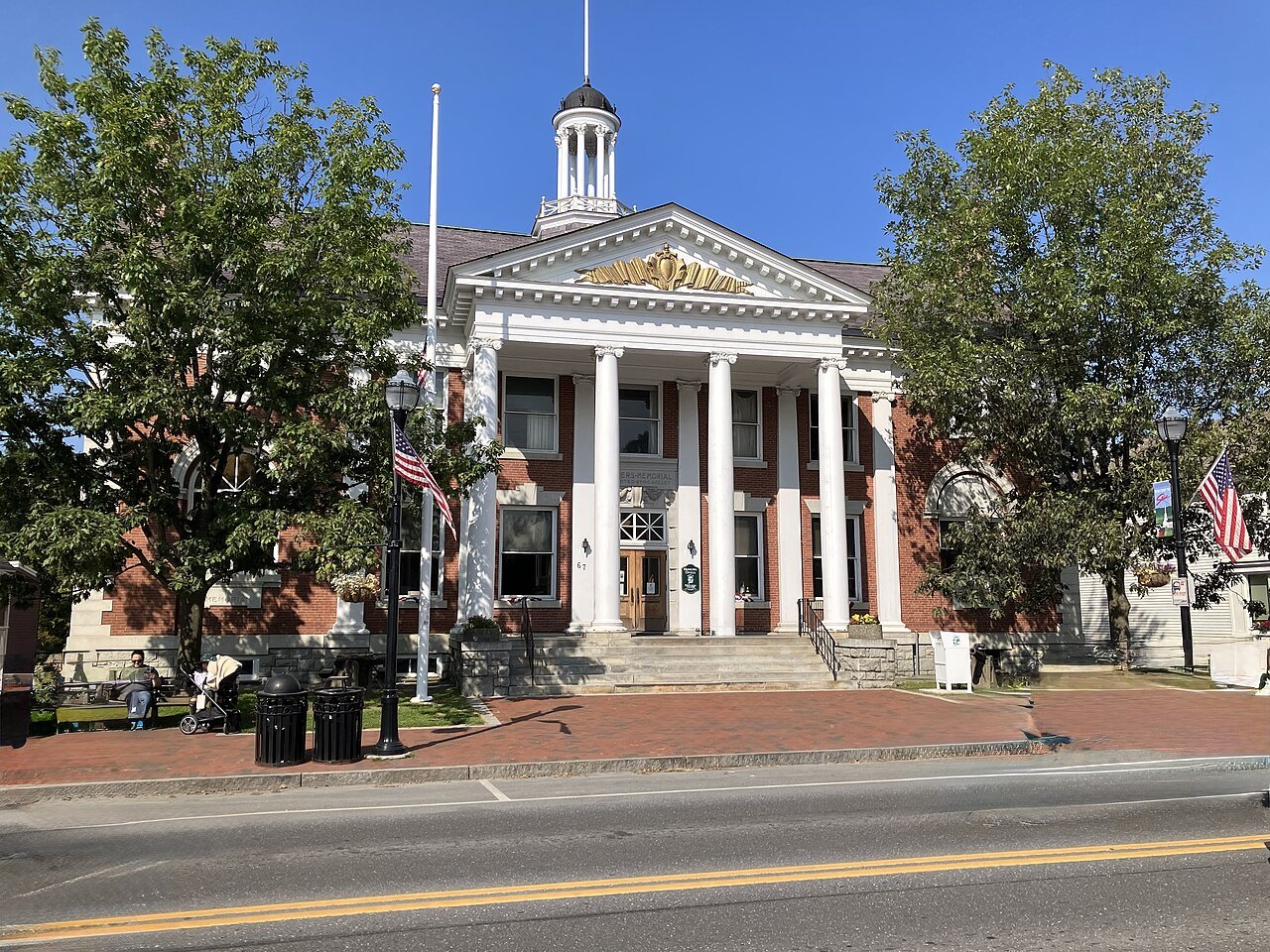
The lake: Burlington and Middlebury
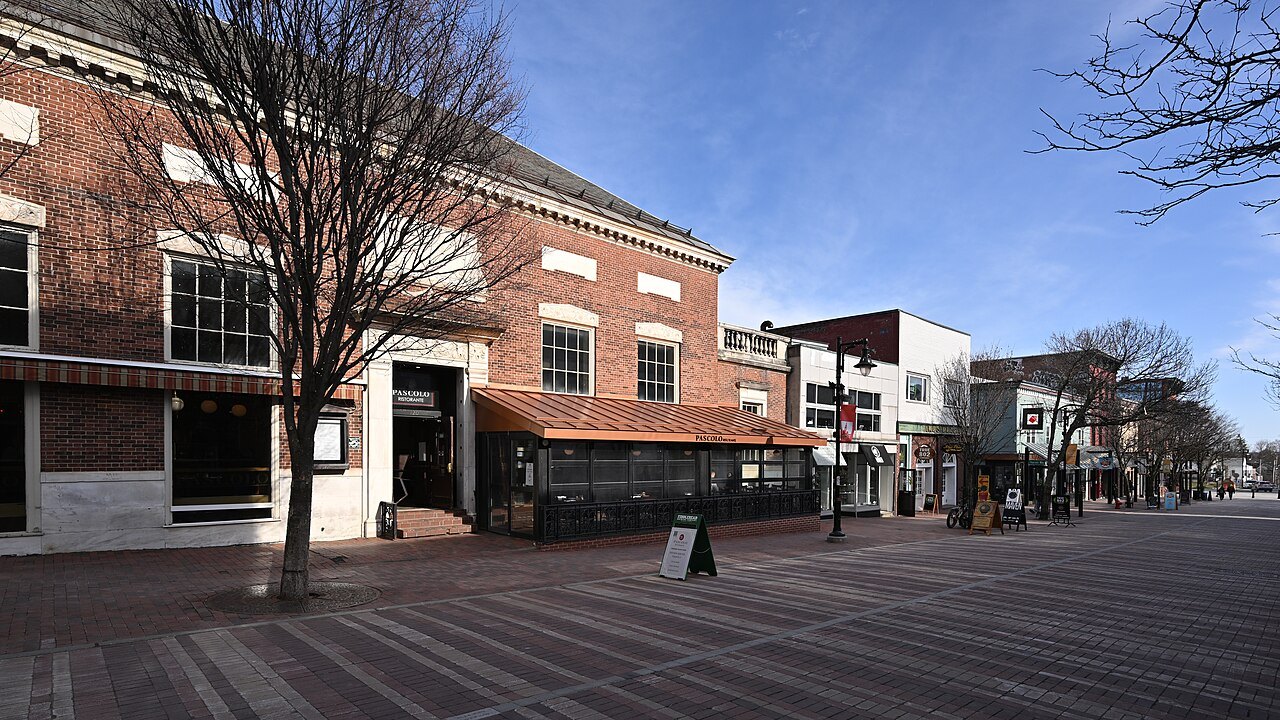
Burlington is the best base for the Champlain Valley. It is a walkable college city with a pedestrian marketplace, a waterfront on the lake and the Breakwater, and it has the state's busiest airport, 3 nautical miles from the center, and a train station on the waterfront. From it, Shelburne is a short drive south on U.S. Route 7, and the ferries across the lake leave from the city and from Charlotte and Grand Isle.
Middlebury is a smaller base on the same Route 7 corridor, a college town of 9,152 people with falls at the center of the village and the Ethan Allen Express stopping there since 2022. It puts the western foothills of the Green Mountains and the Bread Loaf campus within easy reach.
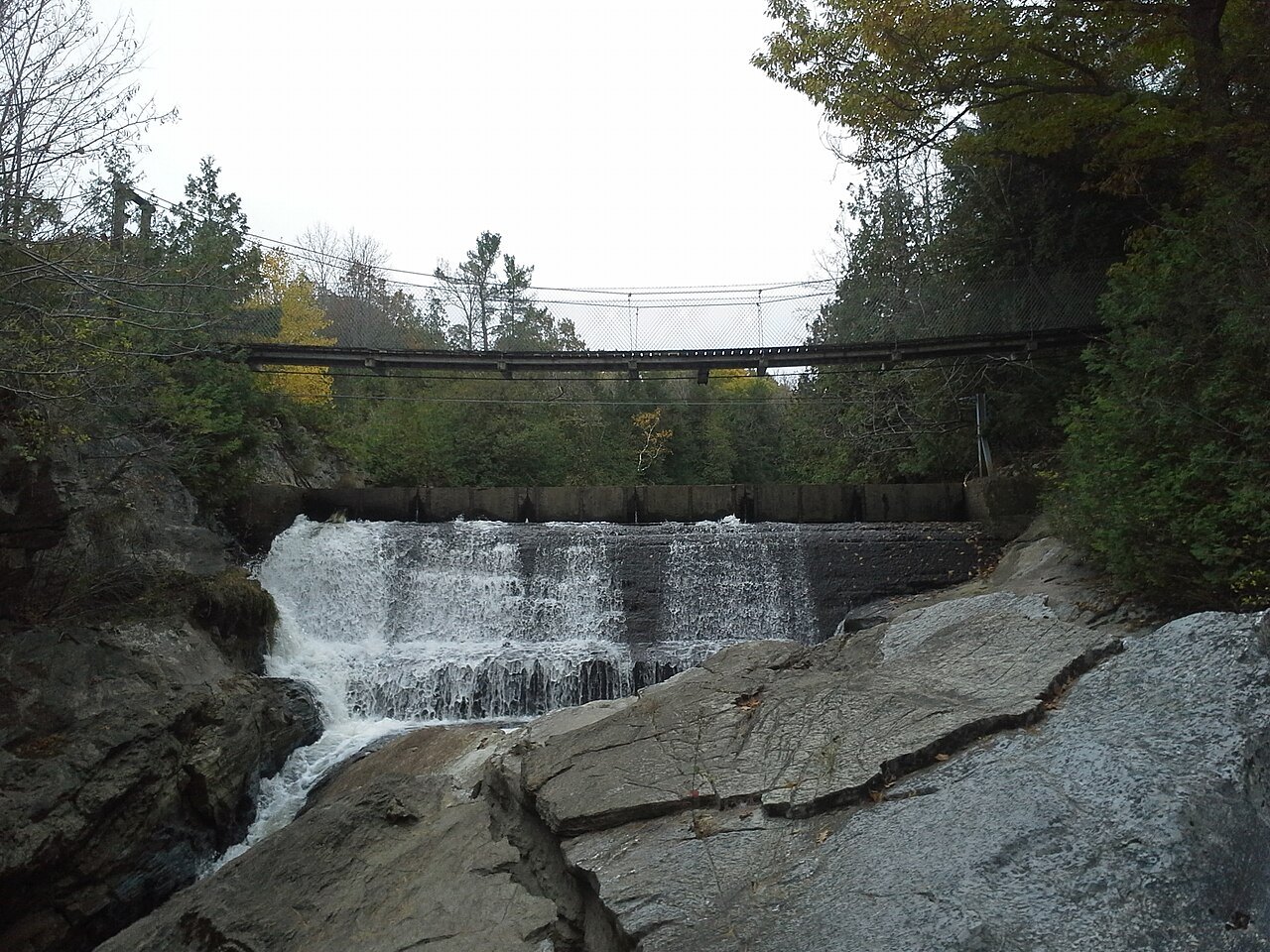
The mountains: Stowe and Killington
Stowe lies in a broad valley between Mount Mansfield and the Worcester Range, and the village is a good base for anyone whose trip centers on the mountain, the notch road or skiing; Stowe Mountain Resort has terrain on both Mount Mansfield and Spruce Peak. The town is on Routes 100 and 108, so it is also a natural stop on a drive down the spine of the state. The Trapp Family Lodge is one of the points of interest the town lists, and the Stowe Recreation Path, which runs from the village toward the TopNotch Lodge, links the village with lodgings along the valley without a car.
Killington is the other mountain base, a resort town whose main peak is the second-highest summit in the state and whose ski area is the largest in the eastern United States. It lies on U.S. Route 4, near Rutland and the Ottauquechee valley, and it is a good base for the central ranges.
The valleys: Woodstock, Quechee and Montpelier
Woodstock is the classic Vermont village base: a green bordered by restored Federal and Greek Revival houses, a national historical park and a dairy farm museum on its edge, and a free wi-fi network over most of the village. Quechee, a census-designated place of 831 people in the town of Hartford, is just east on U.S. Route 4 and is the site of Quechee Gorge.
Montpelier suits those who want the capital and its surroundings: the State House, the Barre granite quarries and the central valleys, with the Vermonter train station 2 miles from downtown. As the town is the least populous state capital in the country, lodging is limited and a stay here may be combined with nearby towns.
The south: Brattleboro, Bennington and Manchester
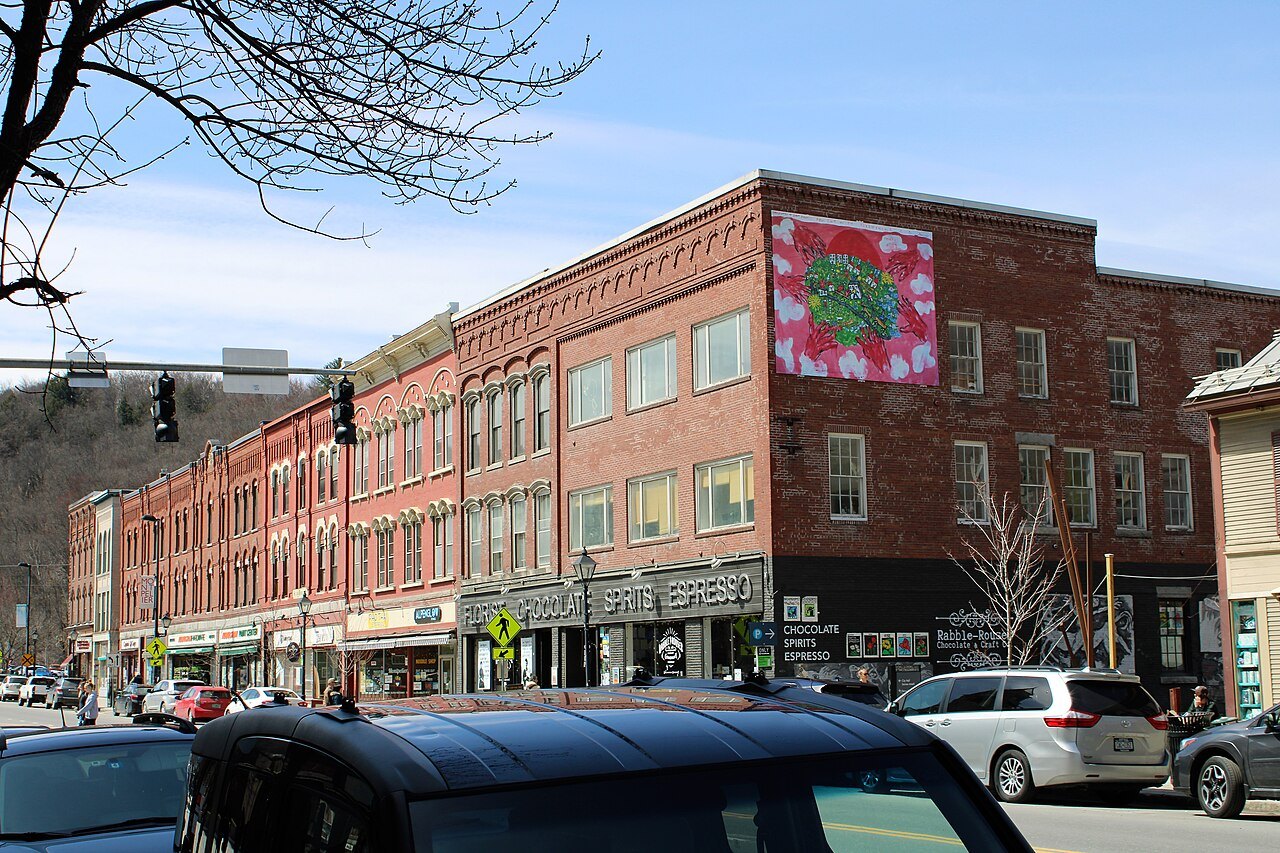
Brattleboro is the natural base for southern Vermont and for anyone arriving from the south: it is about 10 miles from the Massachusetts line, the first major town on Interstate 91, and the Vermonter stops there. Bellows Falls is a short drive north on the river. The town has a number of lodging establishments, and along Putney Road north of the West River there are seven chain hotels and motels within a short distance of each other, so a traveler who wants a simple room near the Interstate will find one there, while the downtown is the place for galleries and the monthly Gallery Walk.
In the southwest, Manchester has been an affluent resort area since the years after the Civil War, when the railroad brought tourists drawn by its architecture and mountains. Hildene, the summer home of Robert Todd Lincoln, lies southwest of Manchester Center, and Bennington, on the Route 7 corridor, is a base for the Battle Monument.
The Northeast Kingdom
Newport, on Lake Memphremagog, and St. Johnsbury, home of the Athenaeum and the Fairbanks Museum, are the two northern bases. The Kingdom is the most remote part of the state, often about 10 degrees colder than the south in winter, and the lakes, the Athenaeum and the long views reward the extra drive. Lake Willoughby is within reach of both.
What to check when you book
Whichever town you choose, check four things yourself. Parking: villages have limited parking and the winter ski towns can be crowded. Winter access: some mountain roads are shut to vehicles for months, and some small lodges stop taking guests for the season. Flooding and construction: parts of the state were hit by floods in 2011 and 2023, so confirm that the lodging and the roads to it are working. And distance: Vermont is long, so a base 90 minutes from your main goal is a poor base.
The when to come page covers the seasons, and the itineraries page shows how the bases link into trips of three, five and seven days.