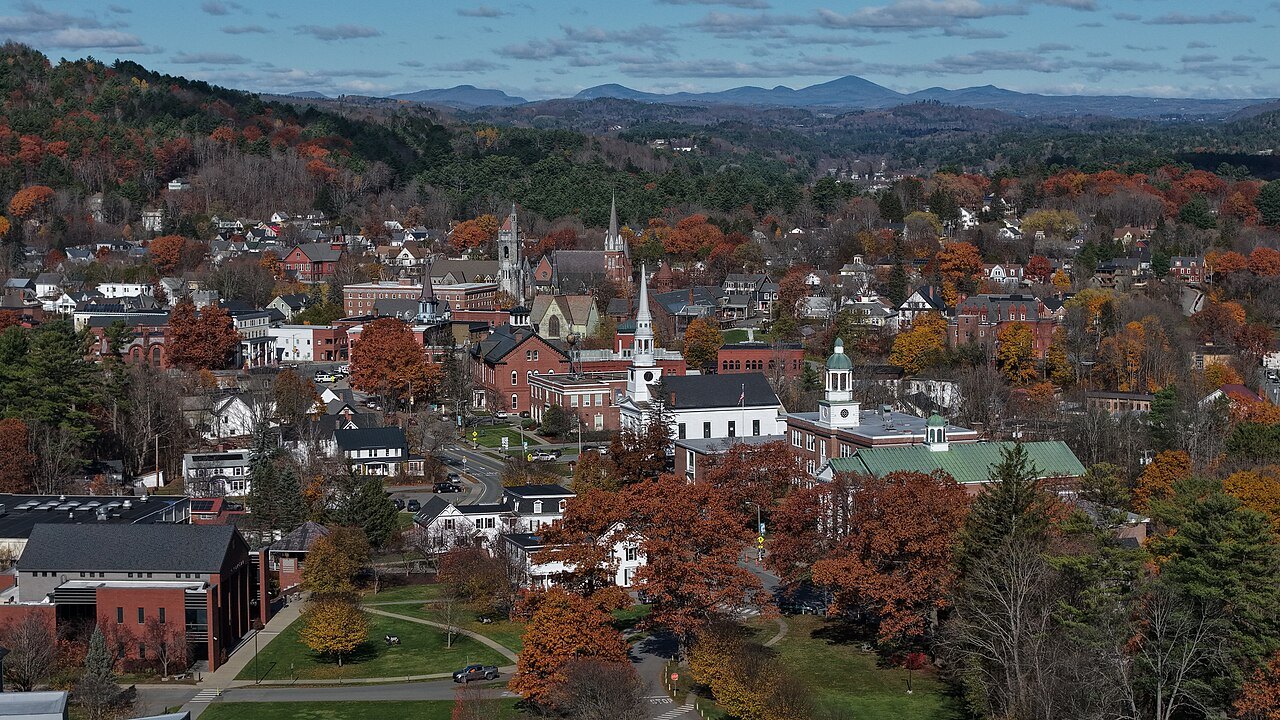
The St. Johnsbury Athenaeum and the Fairbanks Museum, two Victorian gifts to one town
Photographs: Daderot, Wikimedia Commons, CC0 · Ascended Dreamer, Wikimedia Commons, CC BY 4.0 · Daderot, Wikimedia Commons, CC0
The Northeast Kingdom · landmark 15 of 15
A library and art gallery in French Second Empire dress and a Romanesque natural-history museum with Vermont's only public planetarium stand a few blocks apart, both gifts of the family that made the platform scale.
- The Athenaeum galleryA Victorian art gallery of 1873 with black walnut walls, an arched skylight and Bierstadt's Domes of the Yosemite.
- The libraryThe original reading rooms, with a shared catalog linking over fifty other Vermont libraries.
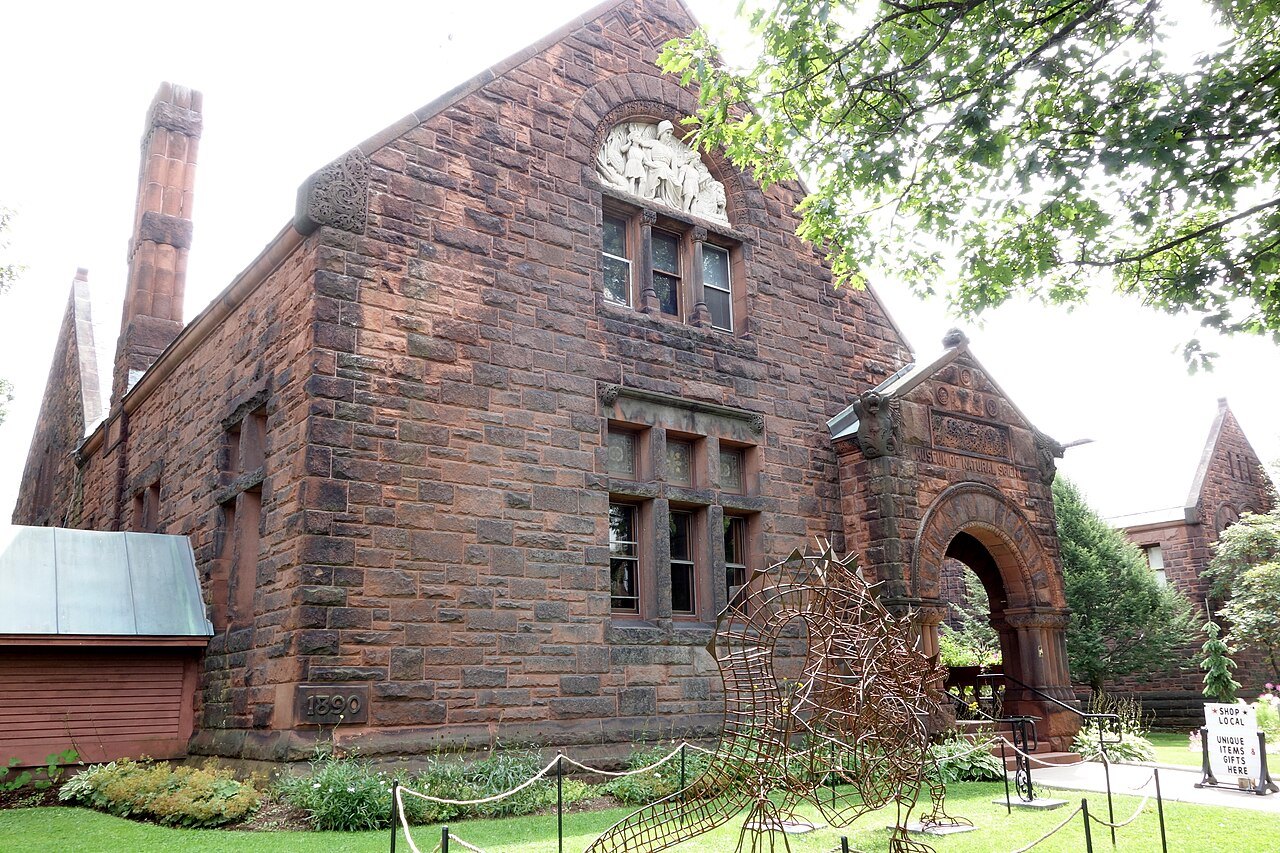
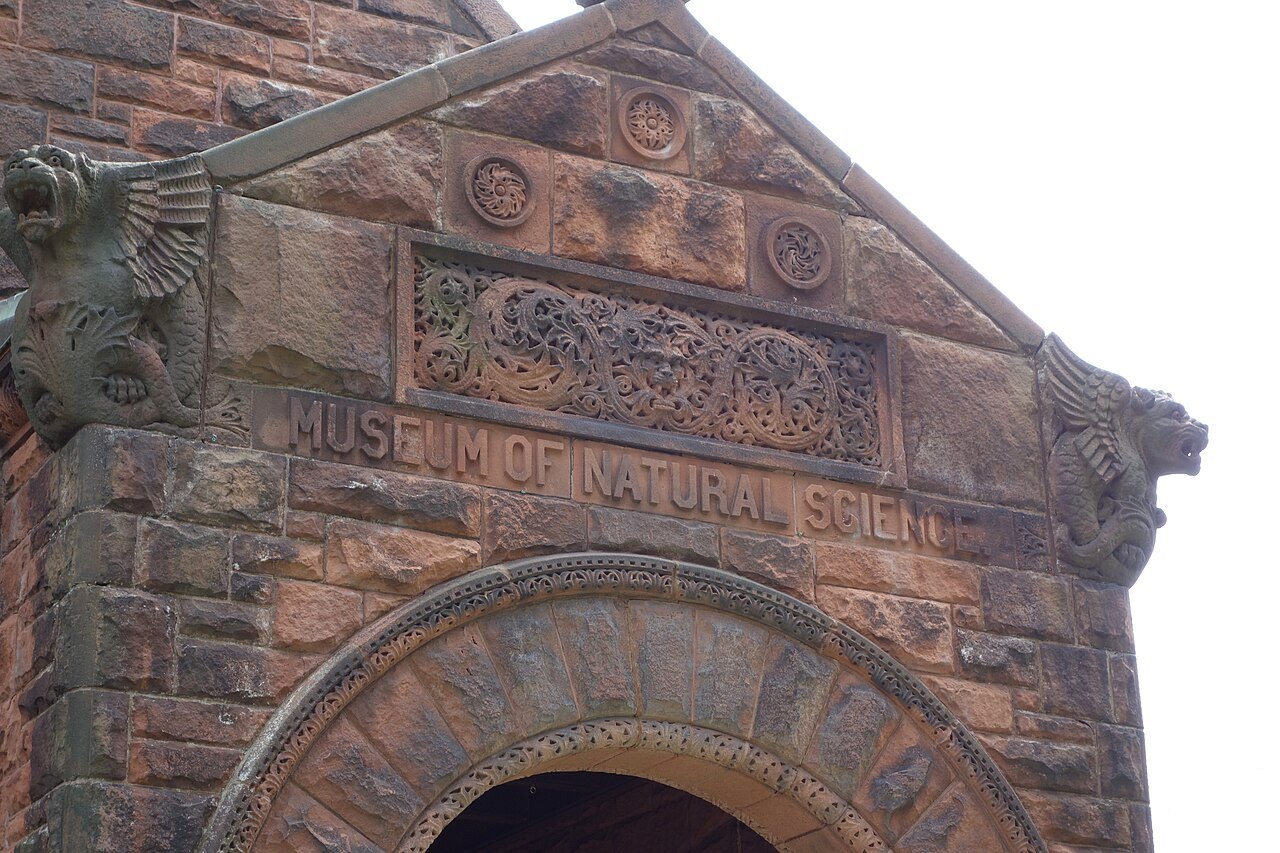
- The Fairbanks MuseumRed sandstone and limestone in the Richardsonian-Romanesque style, finished in 1891.
- The planetariumOpened in 1961 and still the only public planetarium in Vermont.
- The Eye on the Sky Weather CenterA forecasting station at the museum since 1893.
Why it matters
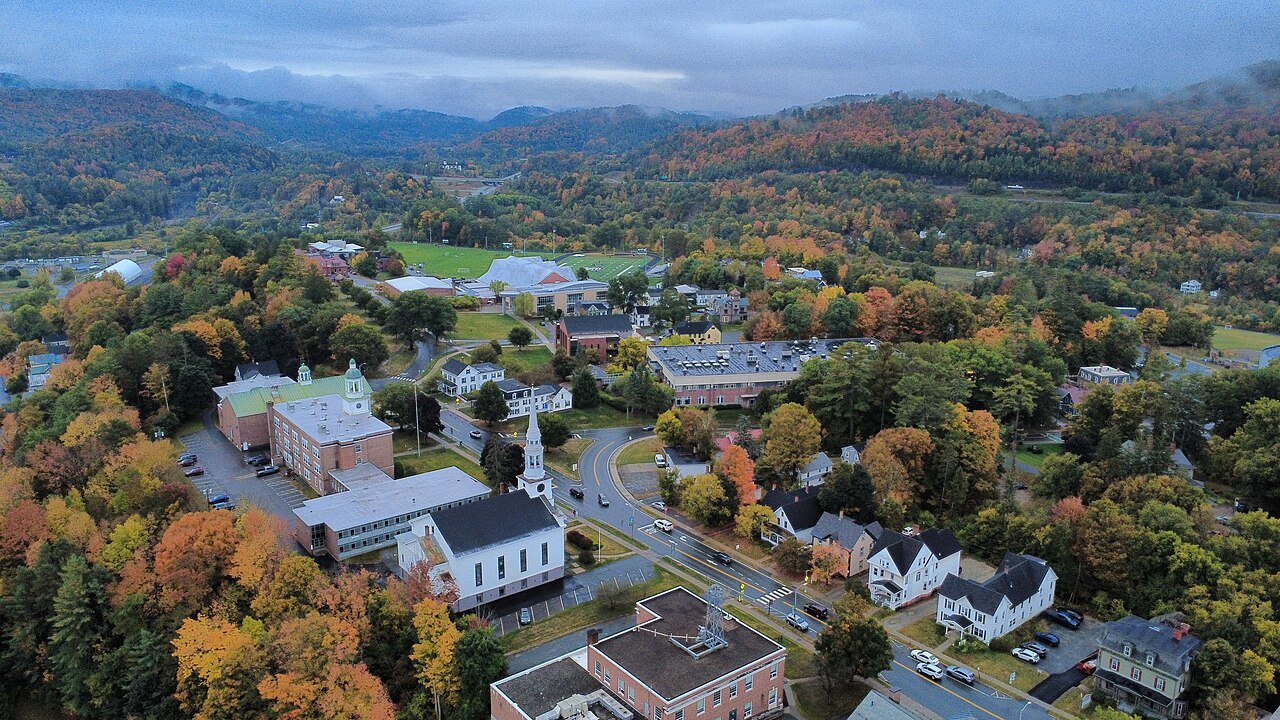
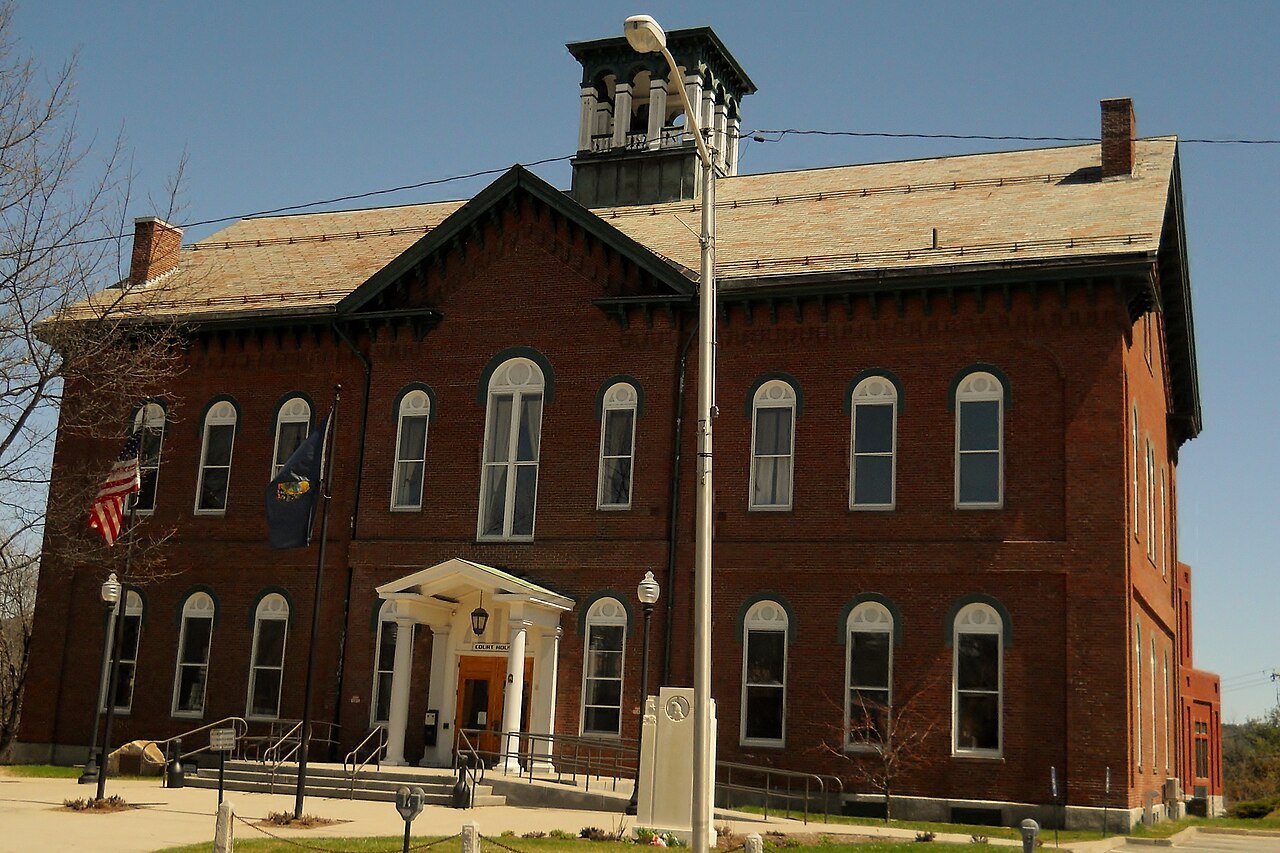
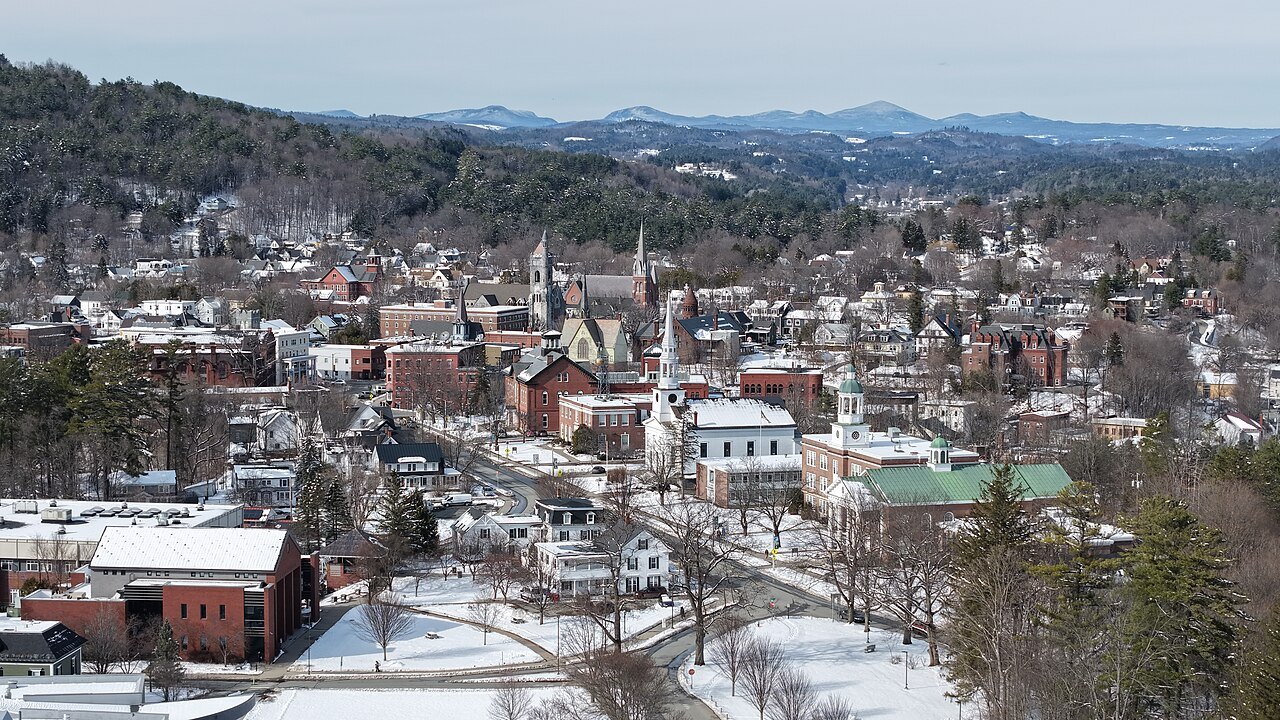
St. Johnsbury, known locally as St. J, is the county seat of Caledonia County and the largest town in the Northeast Kingdom. It sits on the Passumpsic River about six miles northwest of the Connecticut River. The St. Johnsbury Athenaeum is its only National Historic Landmark and the only one in the Northeast Kingdom, and the town holds thirteen other sites on the National Register of Historic Places, the most in the county.
Two buildings explain why a town of that size has such institutions. Both were built by the Fairbanks family, whose scale works made the town rich.
The family and the scale
St. Johnsbury was a manufacturing center, and its main products were scales and maple syrup. The platform scale was invented there by Thaddeus Fairbanks in 1830, and the Fairbanks Scales headquarters and factories were in the town from the 1820s. A main railroad line reached the town in the 1850s, the town grew quickly, and in 1856 it replaced Danville as the county seat.
The Fairbanks family also owned several mansions and estates in town. Franklin Fairbanks, the president of the company, founded the museum, and Horace Fairbanks funded the Athenaeum.
The Athenaeum
The St. Johnsbury Athenaeum, sometimes written Athenæum, is a combined library and art gallery. The building keeps a strong Victorian flavor of the nineteenth century in the French Second Empire style, and is architecturally and historically significant for its construction. The collection is noted for American landscape paintings and for its books. When the library opened, it held 8,000 books chosen by the bibliographer William F. Poole.
Today the library shares a unified catalog and circulation system with more than fifty other Vermont libraries, so it remains a working public library as well as a landmark.
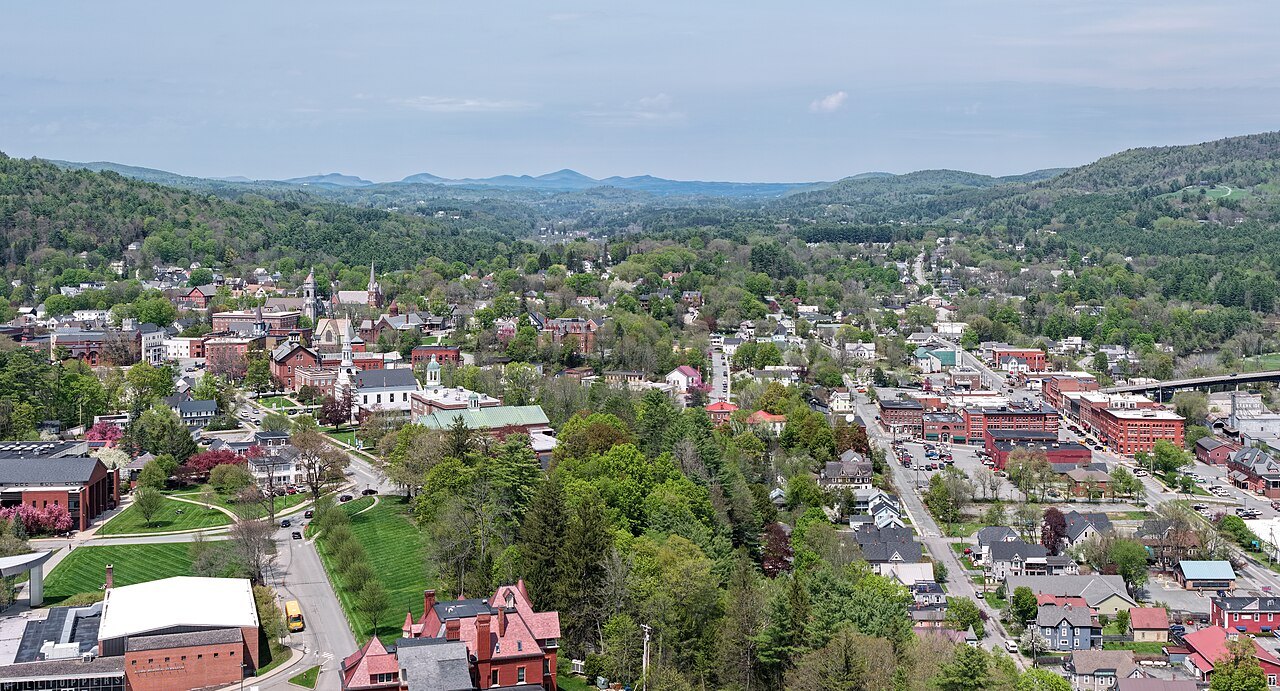
The building is also remarkable for what surrounds it: the Athenaeum was funded by Horace Fairbanks, the manufacturer of the world's first platform scale, and its collection includes a number of Hudson River School paintings. That a manufacturer's gift should survive as a working library and gallery is the point of a visit.
The art gallery
Horace Fairbanks added a small art gallery in 1873. It is one of the few art galleries in the United States that still carries late nineteenth-century Victorian design, with intricate painted and stenciled schemes, detailed moldings, creative natural lighting and unusual installations of paintings. The walls and floor are black walnut, and an arched skylight lights the room. Cases on two sides hold art books in tooled leather bindings, and gilt-framed paintings hang above.
One hundred works are on display, American originals alongside copies of European masterpieces, most of them from the late eighteenth to the middle nineteenth century. Hudson River School painters include Asher B. Durand, Jasper Francis Cropsey and Sanford Gifford, with pastoral landscapes with cattle by James and William Hart, and western scenes by Samuel Colman and Worthington Whittredge. Dominating the room is a canvas ten by fifteen feet, Albert Bierstadt's Domes of the Yosemite. European painters represented by original works include Bouguereau, Félix Ziem, Charles Euphrasie Kuwasseg and Louis Pinel de Grandchamp.
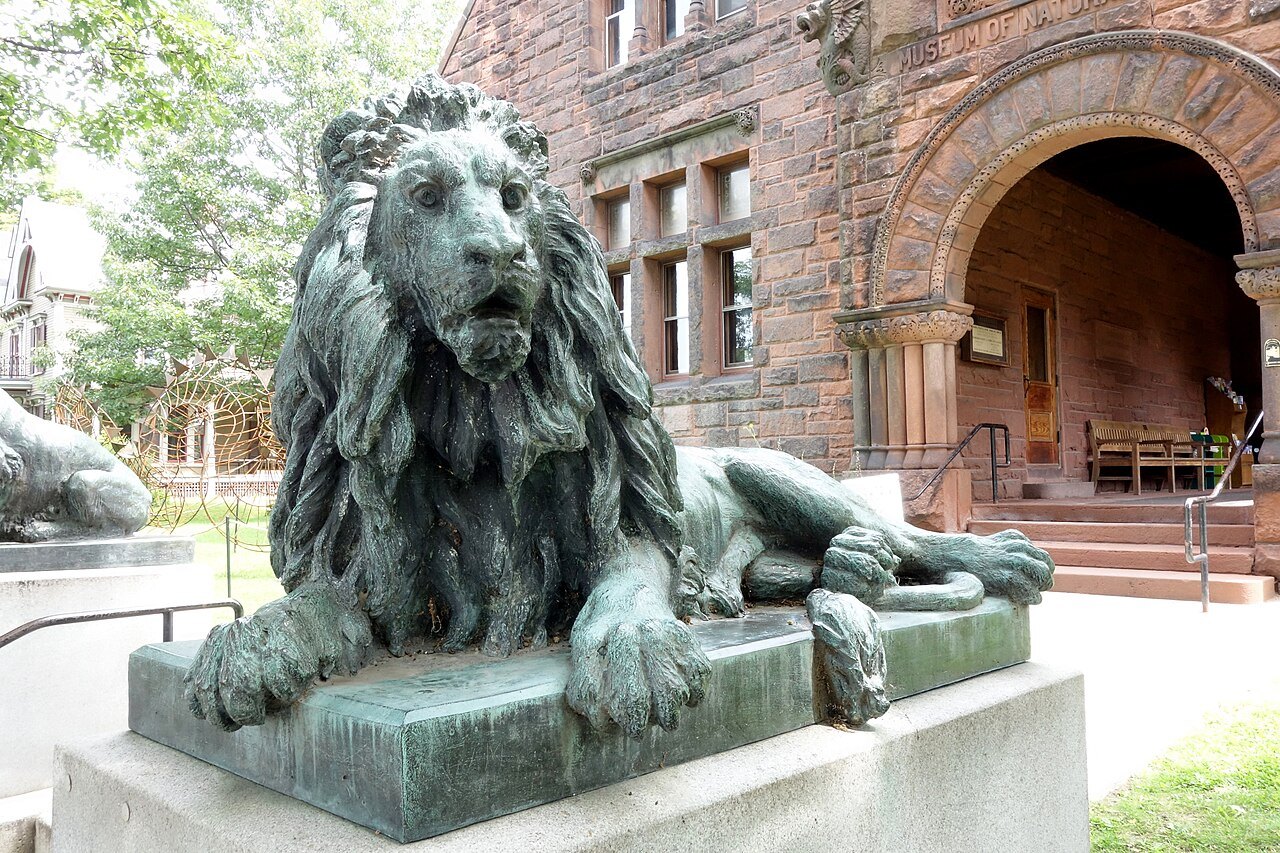
The Fairbanks Museum
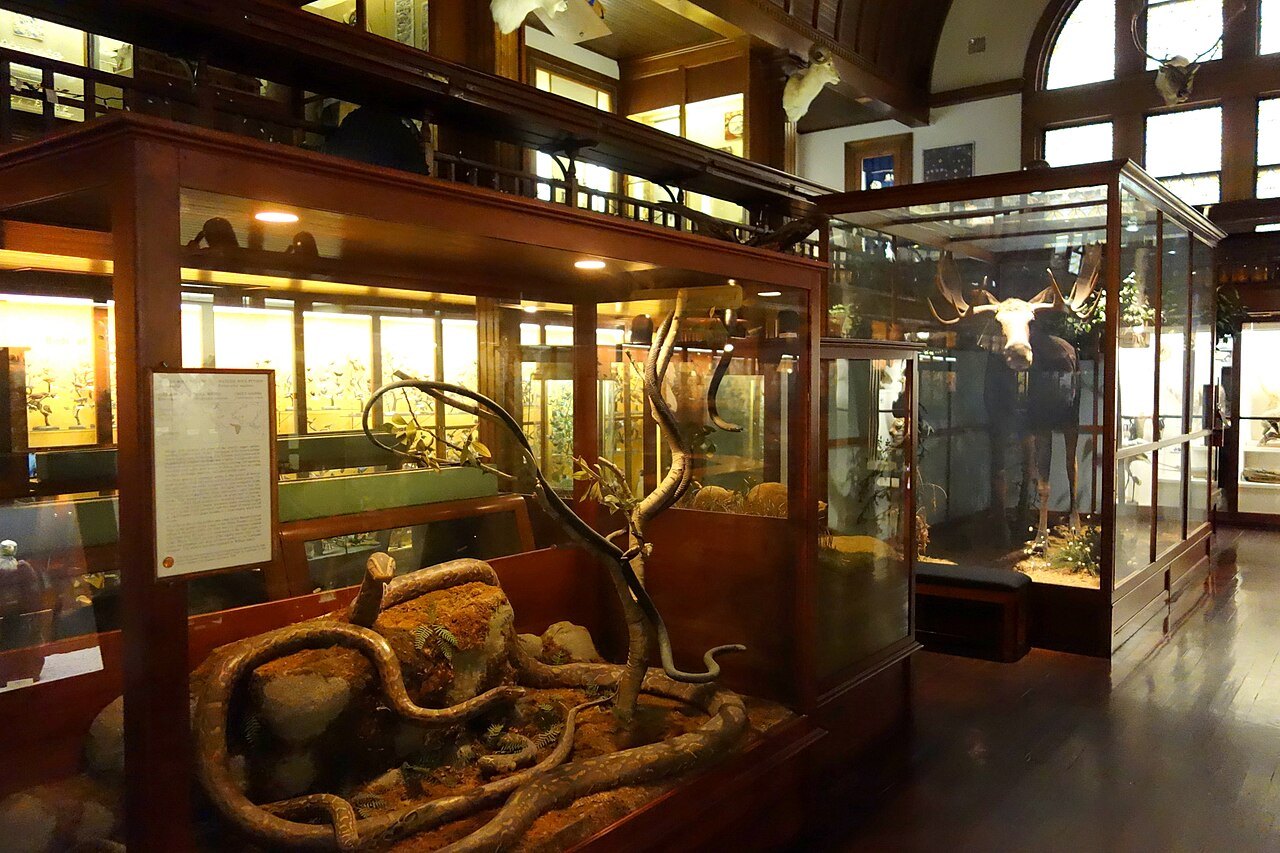
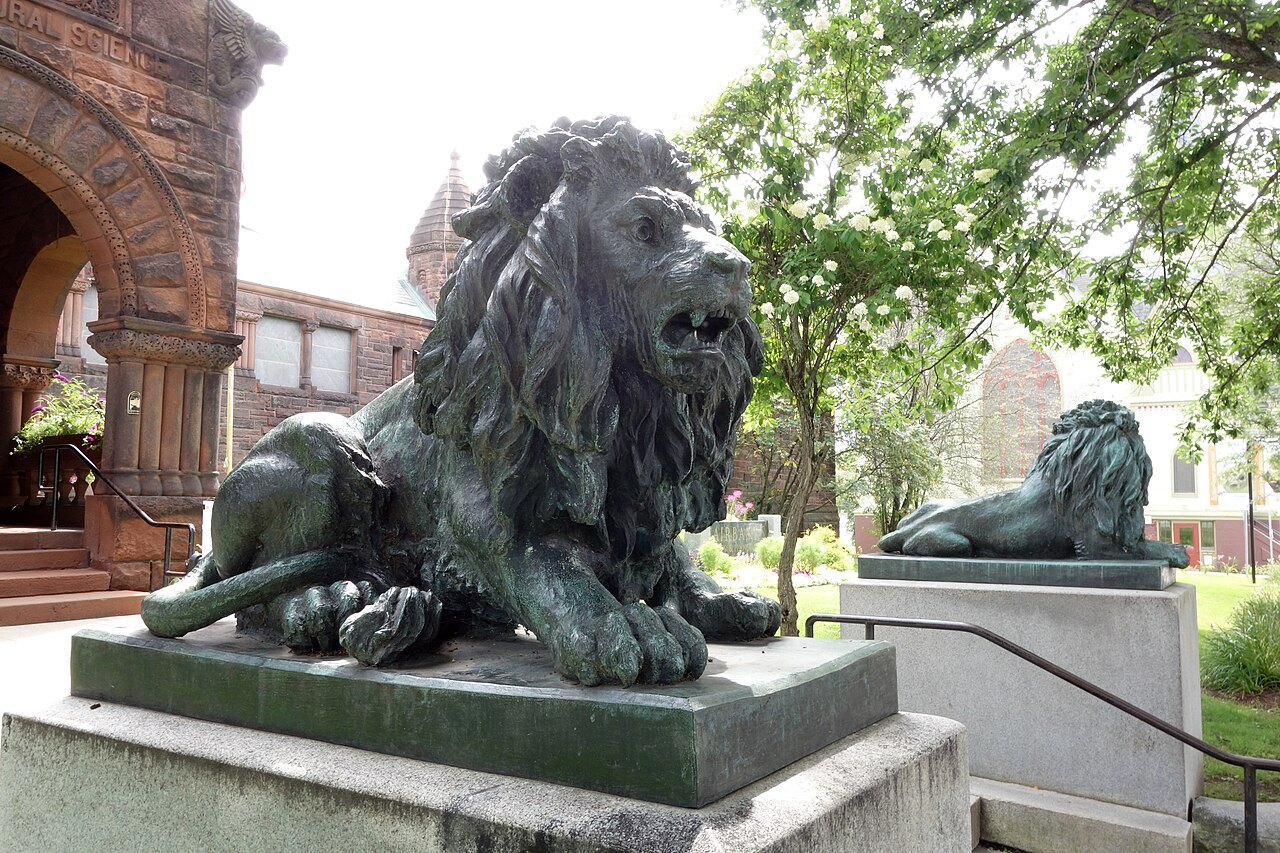
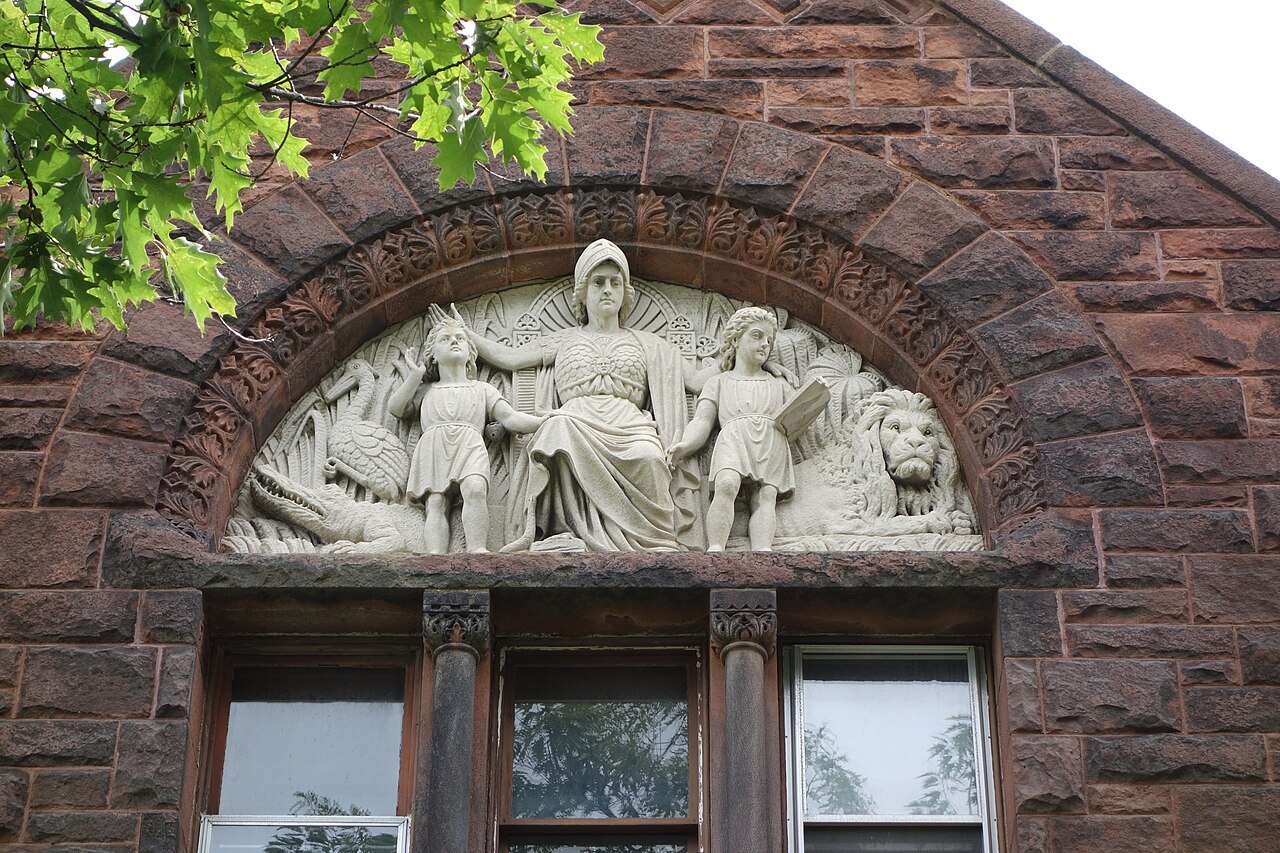
The Fairbanks Museum and Planetarium is a natural science museum, a history museum and a planetarium. It was founded in 1890 by Franklin Fairbanks, a businessman, politician, naturalist and collector, and the museum and its buildings are on the National Register of Historic Places. Construction began with a ceremony on July 4, 1890, when Frances Clapp Fairbanks laid the cornerstone, and the building was finished by the spring of 1891 and opened to the public that year. Lambert Packard designed it in red sandstone and limestone in the Richardsonian-Romanesque style. It was expanded in 1894 to house the whole growing collection.
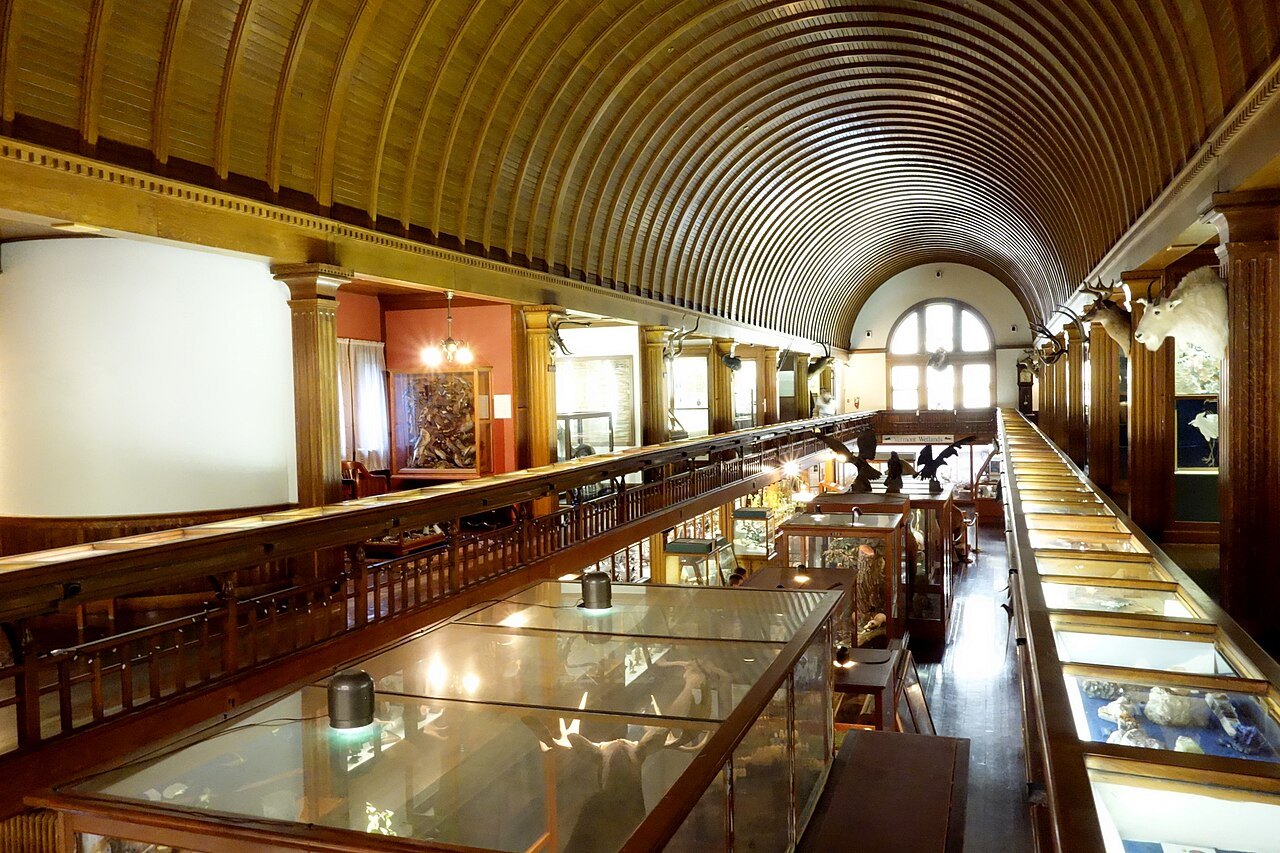
The collection holds roughly 175,000 objects in six departments: natural history, geoscience, ethnology, engineering, meteorology and astronomy. Exhibits include natural specimens, a seasonal wildflower table, a native butterfly house, an observation beehive, taxidermy dioramas of moose, bison, bears and birds, fossils, and geological and ethnographic displays. On the second floor an exhibit on ice crystal formation features photographs by Snowflake Bentley.
Planetarium and weather
The Lyman Spitzer Jr. Planetarium was installed in 1959 and 1960 and opened to the public in April 1961. It is the only public planetarium in Vermont and has been upgraded periodically, and it produces public astronomy shows and educational classes. The Eye on the Sky Weather Center, a meteorology and forecasting station, has operated at the site since 1893, and its forecasts are broadcast for Vermont and the surrounding region on public radio and used by three newspapers.
A butterfly house was installed in the museum's courtyard in 2017: an open structure with a canopy and benches that lets visitors walk among native butterflies and local flowers in summer. Between 2020 and 2023 the museum built an annex on the east side of the main building to give it more exhibition space and better accessibility, with major funding from the federal Economic Development Administration, while general maintenance and preservation work went on.
The museum's meteorologists give weather forecasts on public radio for Vermont, parts of New Hampshire and the area around, and the planetarium also produces an astronomy program for radio and articles on astronomy and spaceflight for online and print publication.
Seeing both
The Athenaeum and the museum are in the same village, so a visit takes a morning for the two. St. Johnsbury is a gateway to the Northeast Kingdom and the base for the road to Lake Willoughby, and the granite town of Barre lies across the state to the southwest.
Check each institution's own information for hours and any seasonal changes before traveling.