Barre and the granite quarries, the Granite Center of the World
Photographs: Ascended Dreamer, Wikimedia Commons, CC BY 4.0 · Kenneth C. Zirkel, Wikimedia Commons, CC BY 4.0 · Kenneth C. Zirkel, Wikimedia Commons, CC BY-SA 4.0
The Valleys and Villages · landmark 8 of 15
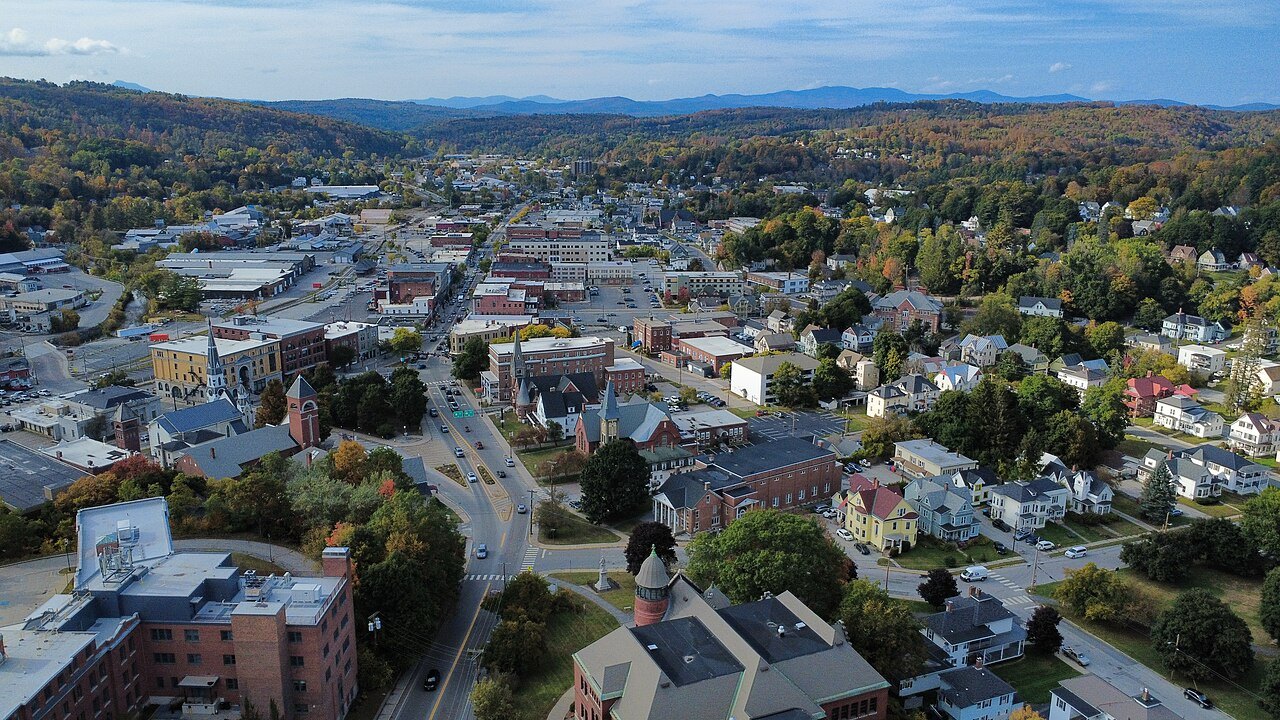
Barre calls itself the Granite Center of the World. A deposit found on Millstone Hill after the War of 1812 built the city, drew workers from a dozen countries and still supplies Barre Gray granite to sculptors worldwide.
- Millstone HillWhere the vast deposit was found; its old pits and grout piles now sit among wooded trails.
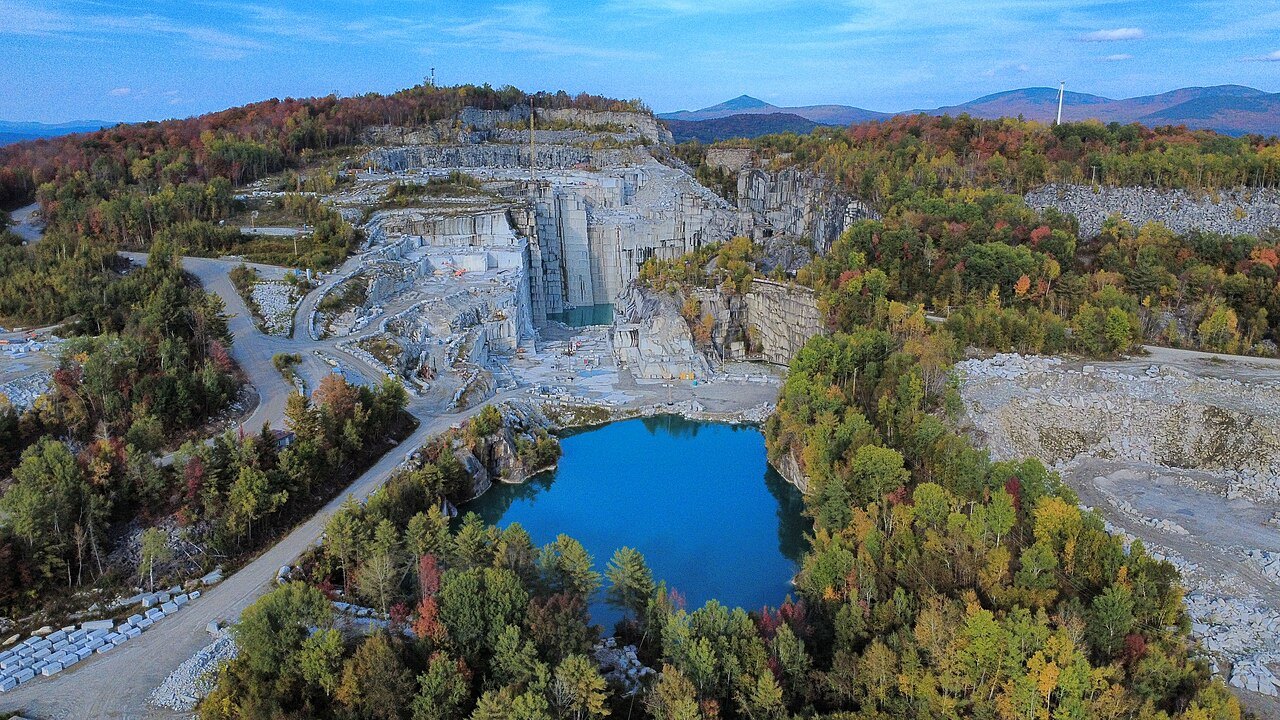
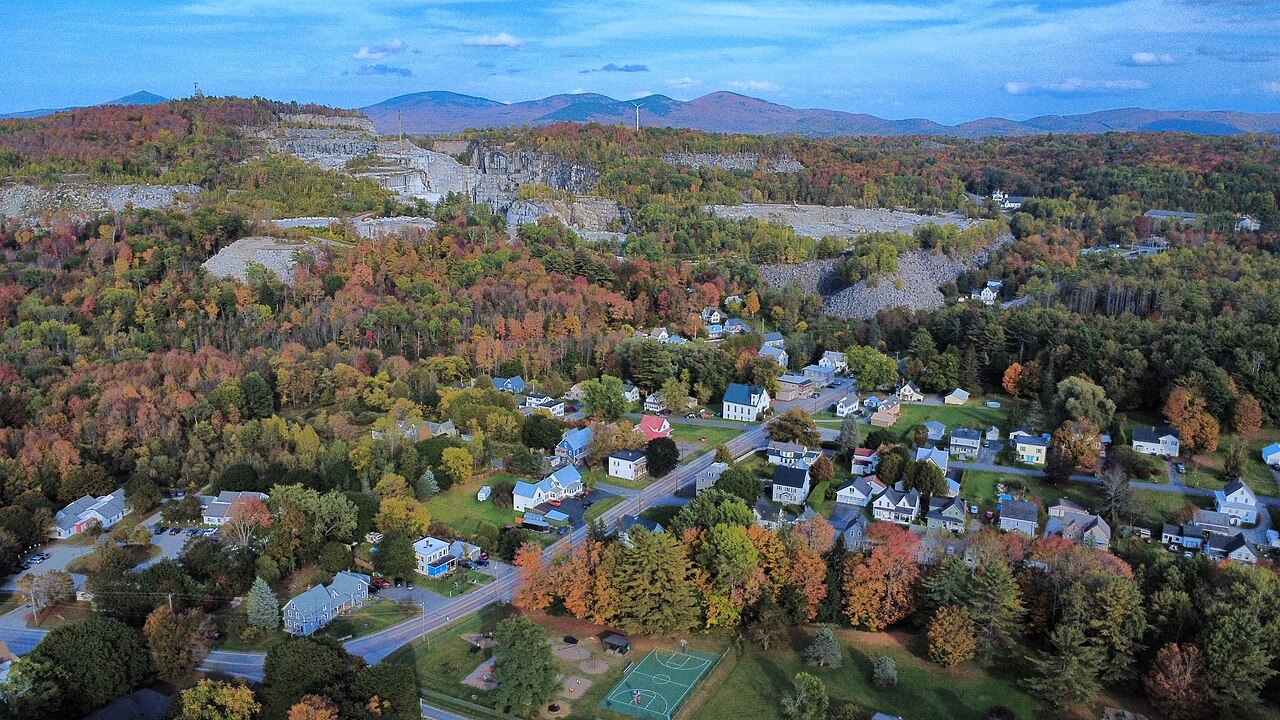
- The E. L. Smith QuarryA deep-hole quarry the Rock of Ages company calls the largest of its kind in the world.
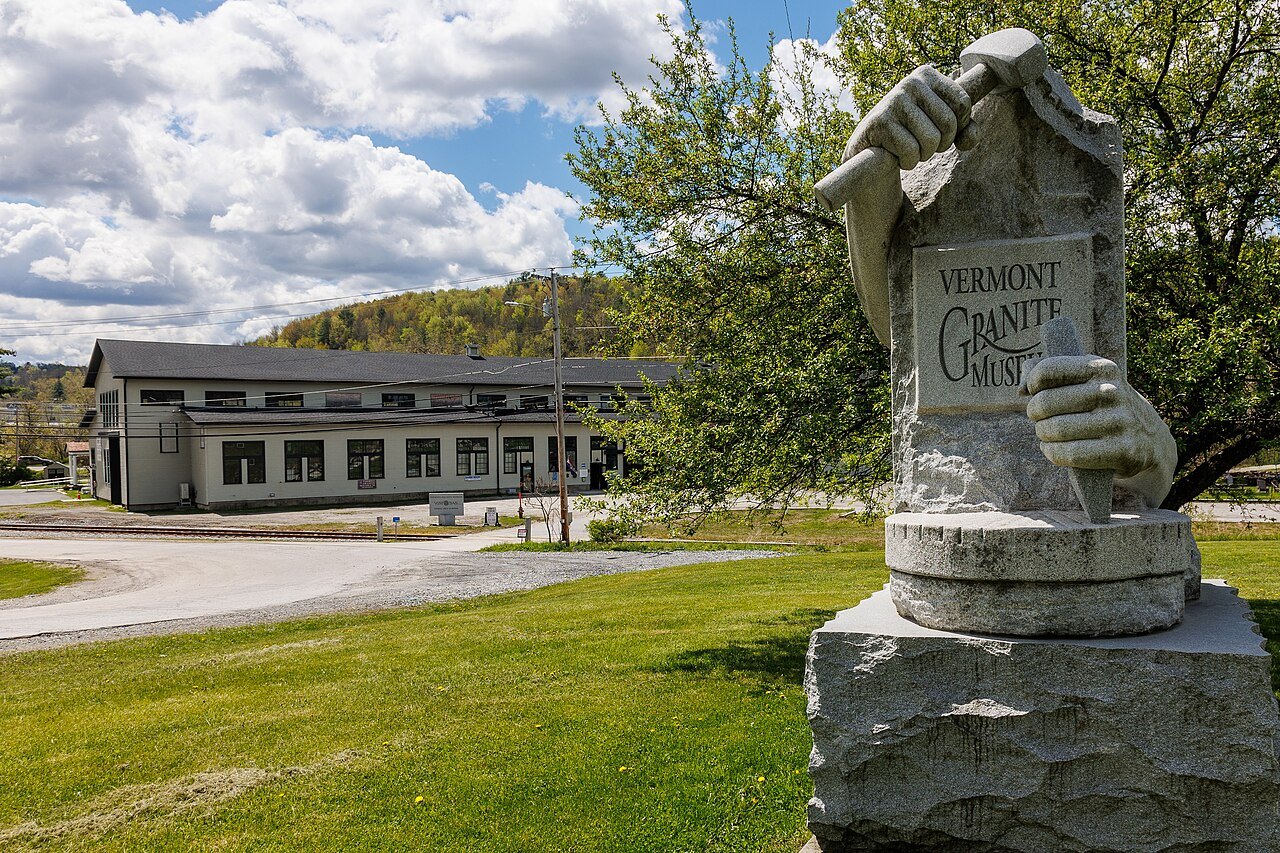
- Vermont Granite MuseumIn the Jones Brothers Granite Shed of 1895, a straight shed beside the Stevens Branch.
- Barre GrayA fine-grained, even-textured granite sought worldwide for outdoor sculpture.
- Barre Opera HouseOne of the cultural landmarks of the downtown, with Studio Place Arts nearby.
Why it matters
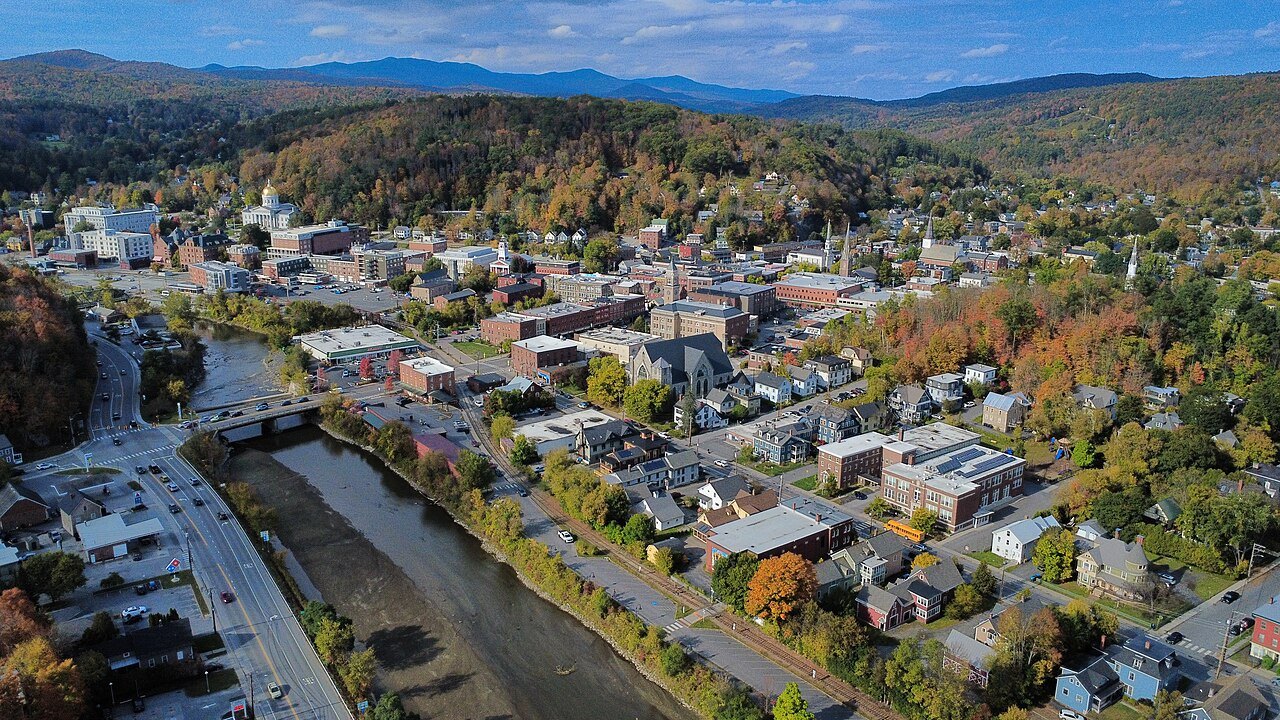
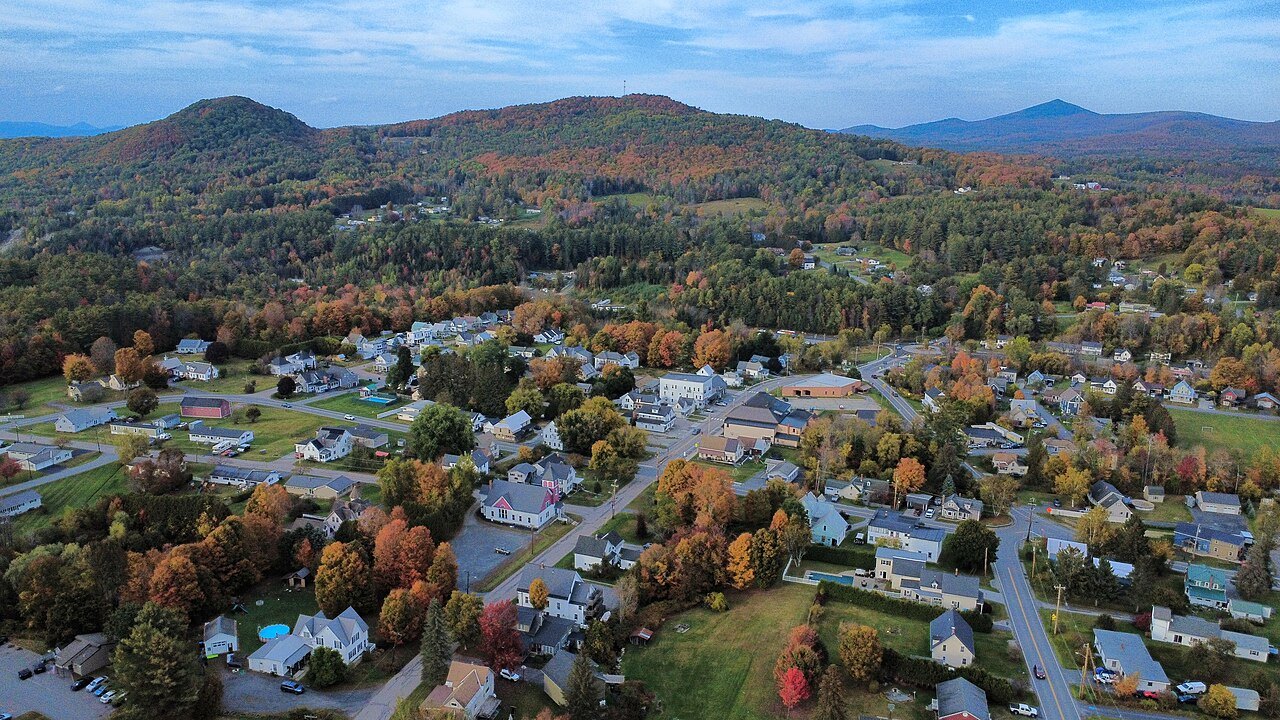
Barre, pronounced BARE-ee, is a city of about 8,500 people and the most populous municipality in Washington County. It is almost completely surrounded by a separate municipality, Barre Town, and local media and businesses often pair it with the nearby capital, Montpelier. The two together form the main part of a micropolitan area of nearly 60,000 people, Vermont's third largest metropolitan area after those of Burlington and Rutland, and Barre is itself Vermont's fifth largest city.
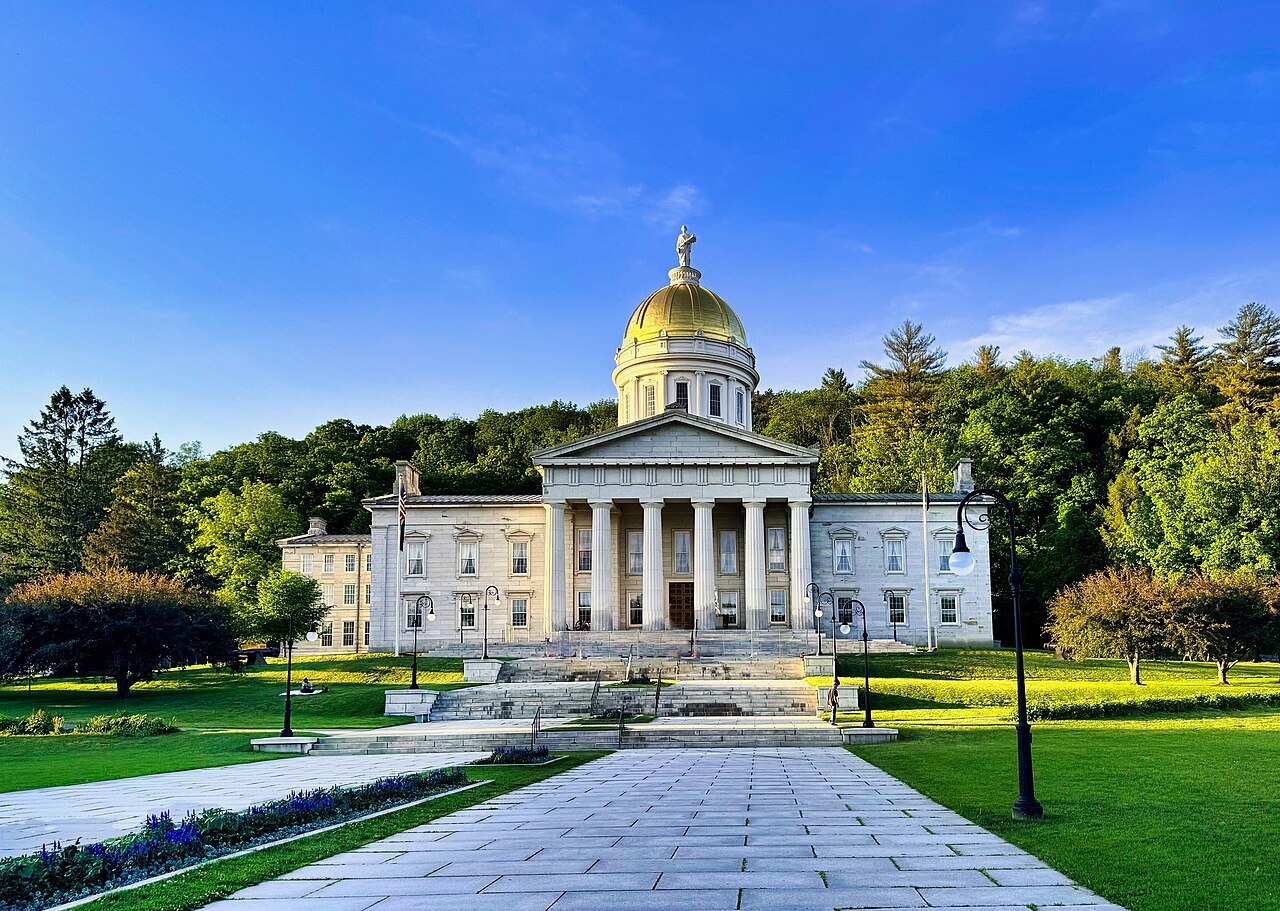
What makes it unusual is the stone. Barre is the self-proclaimed Granite Center of the World, and its quarries, sheds and sculptors are the reason the city exists at all. The State House in Montpelier, for one, is built of Barre granite.
How the stone built the city
The land was granted on November 6, 1780, to William Williams and sixty-four others, under the name Wildersburgh. The first settlers arrived in 1788, and citizens, dissatisfied with the name, renamed the town Barre, for Isaac Barré, a champion of the American colonies. Another account says that in 1793 the right to name the township went to the man who offered most toward a meeting house, Ezekiel Dodge Wheeler, who bid sixty-two pounds and named it for Barre, Massachusetts, where some of the settlers had come from. The city was set off from the town and incorporated in 1895.
The granite changed everything. Vast deposits were found at Millstone Hill soon after the War of 1812, and the industry, and the city, boomed when the railroad arrived. Some geologists describe the deposit as four miles long, two miles wide and ten miles deep. Its fame spread to Europe and Canada, and the population grew from 2,060 in 1880 to 6,790 in 1890 and 10,000 in 1894.
A city of many countries
Large numbers of people moved to Barre from Italy, Scotland, Spain, Scandinavia, Greece, Lebanon, Canada and other countries, and by the turn of the century Barre was noted as the most diverse city in the state. The Italian immigrants in particular brought a radical, largely anarchist labor movement. In the 1920s and 1930s a number of granite strikes shook the city, with disputes over wages and, increasingly, over health and hazards in the quarries and the sheds. The Quarry Workers' International Union of North America was based in Barre, and in 1916 and 1929 the city elected a Socialist Party candidate as mayor. The old Socialist Labor Party Hall, still standing, was listed on the National Register of Historic Places in 2000.
The stone itself
Barre Gray granite is sought worldwide for its fine grain, even texture and resistance to weather, and many sculptors prefer it for outdoor work. In 1936 the quarry cut a 35-ton cross out of a single section of rock. Hope Cemetery in Barre displays extensive examples of the sculptors' art.
The Rock of Ages company, founded in 1885 and based in Graniteville and featured in a 2005 public television documentary on cemetery-related businesses, keeps what it describes as the world's largest deep-hole granite quarry, the E. L. Smith Quarry, where the Devonian Barre Granite is mined. The stone was first quarried with primitive tools, with hand saws and explosive charges blasting away the benches of the quarry. Modern work uses diamond-tipped wire saws and water jets. Visitors to the company's factory and gift shop can watch quarriers cutting granite from the quarry wall. One of its works is the United States Korean War Memorial at the United Nations Memorial Cemetery in Busan, South Korea, a sculpture by Frank Gaylord carved from Barre granite.
The Vermont Granite Museum
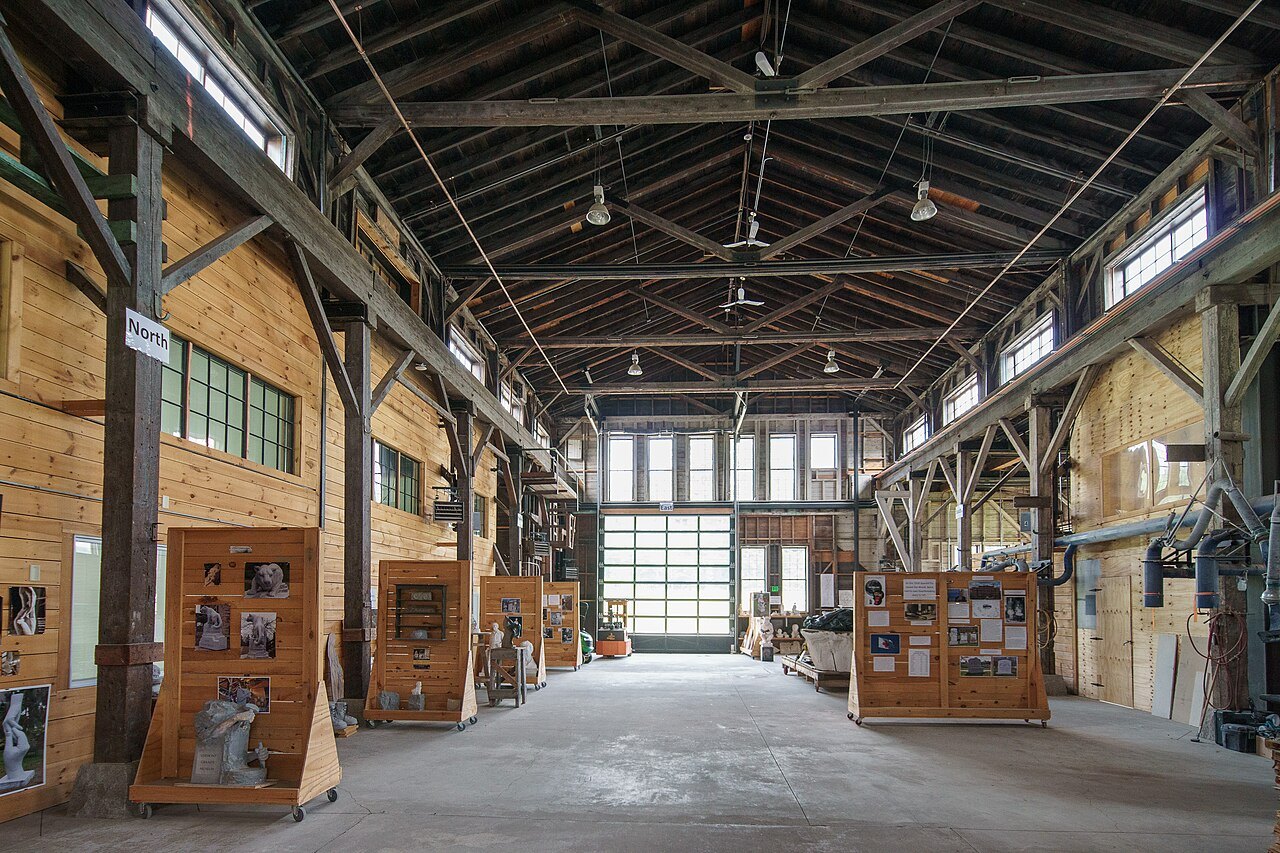
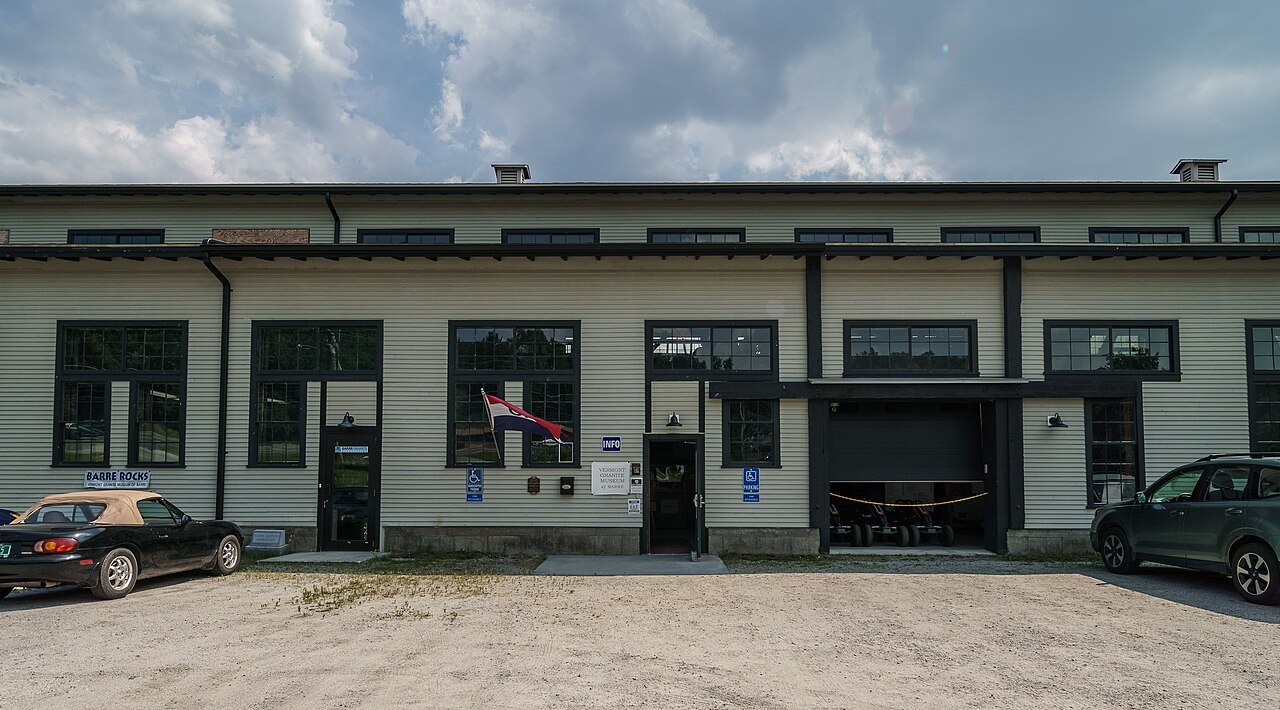
The museum preserves and interprets the history of the industry and stands at 7 Jones Brothers Way, northwest of downtown, between North Main Street, which is US 302, and the Stevens Branch of the Winooski River. It occupies the former Jones Brothers Granite Shed, built in 1895 and listed on the National Register of Historic Places. The shed is an early example of a straight shed, the layout that replaced the older horseshoe design, and it is the principal surviving building of a once-larger complex.
In it, large blocks of granite were turned into finished products, mostly cemetery markers. Jones Brothers was founded in 1882 and was the oldest operating granite works in Vermont when it stopped work in 1975. The museum acquired the shed in 1997, and its Stone Arts School teaches aspiring sculptors historic and modern granite-working techniques.
Walking Millstone Hill
Millstone Hill, where the first deposit was found, is now a recreational site with a network of wooded trails, and the mining holes and piles of waste stone, called grout piles, are still scattered through it. It is the easiest way to see how big the working quarries were without entering a working one.
In the city
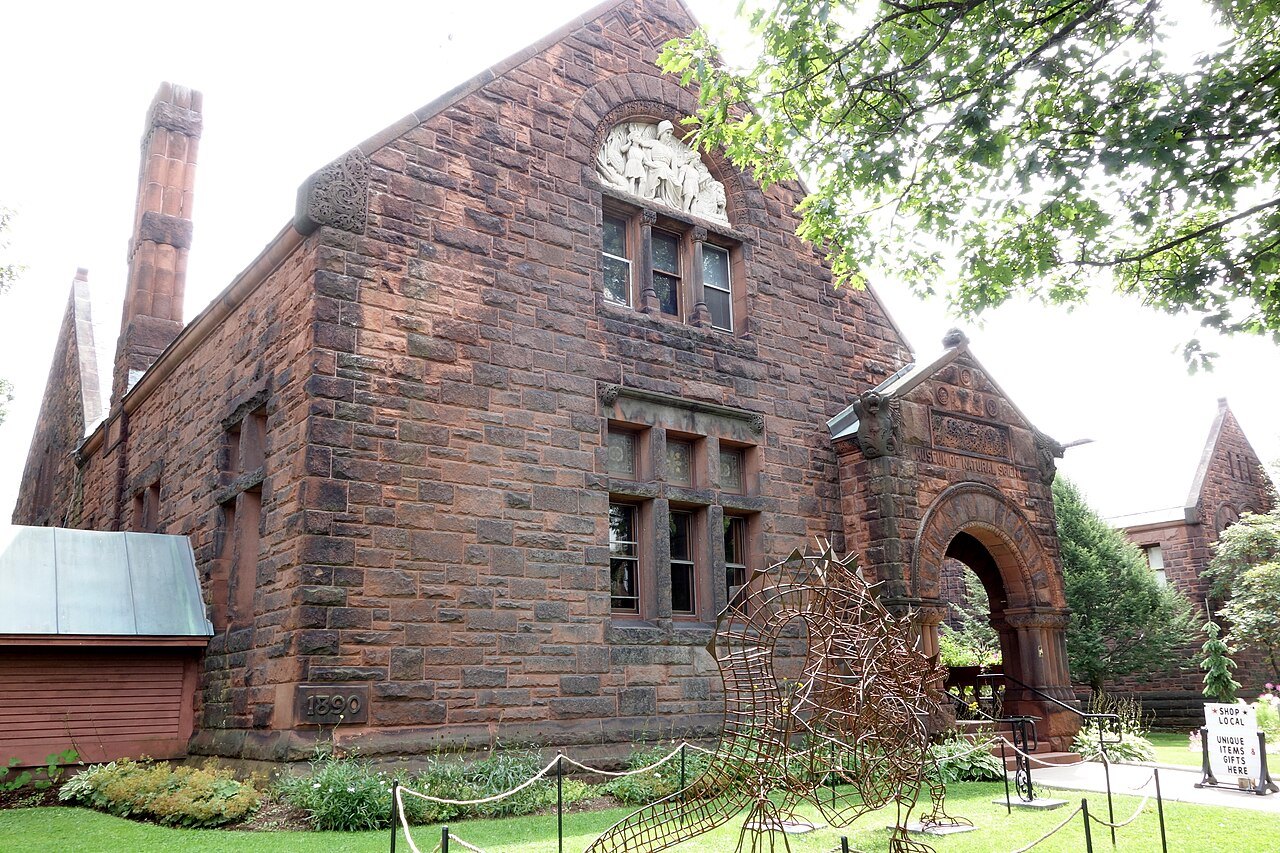
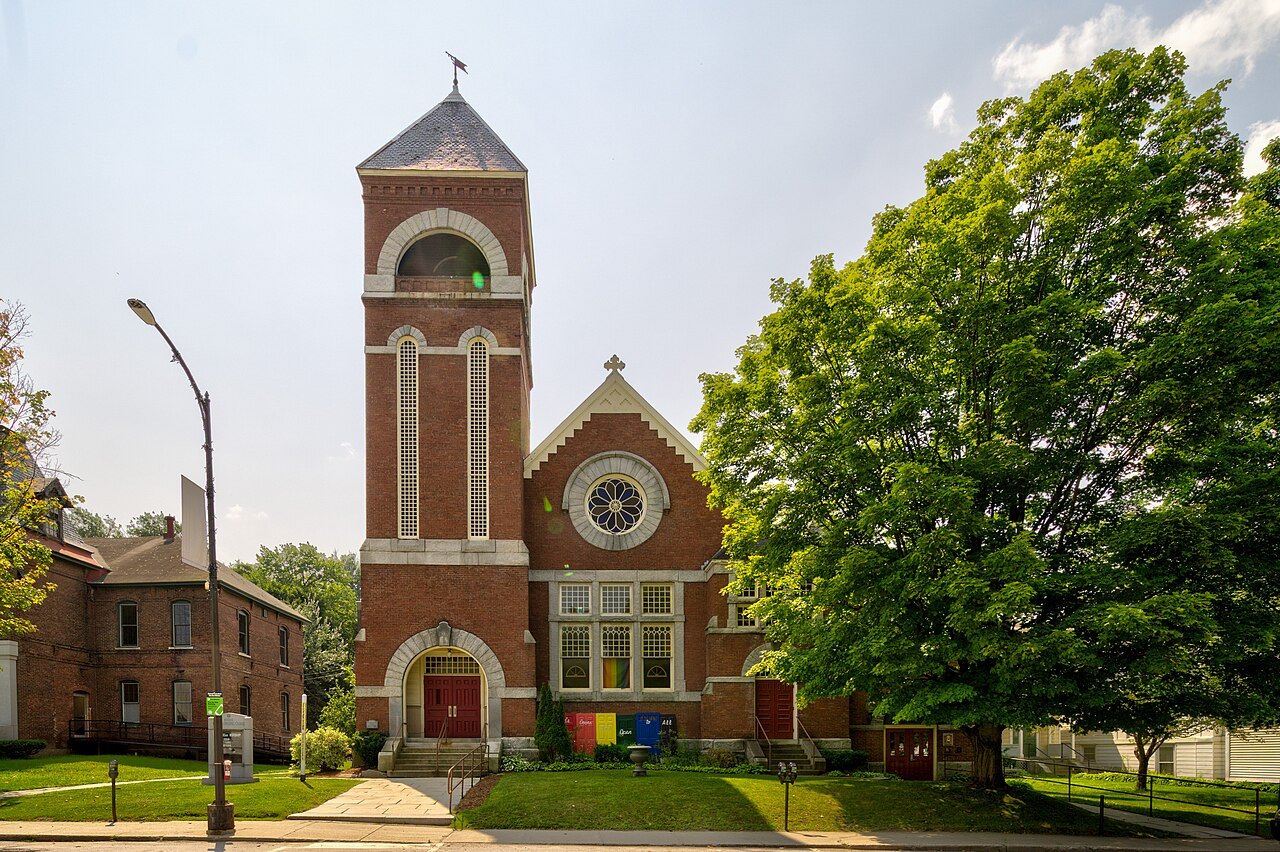
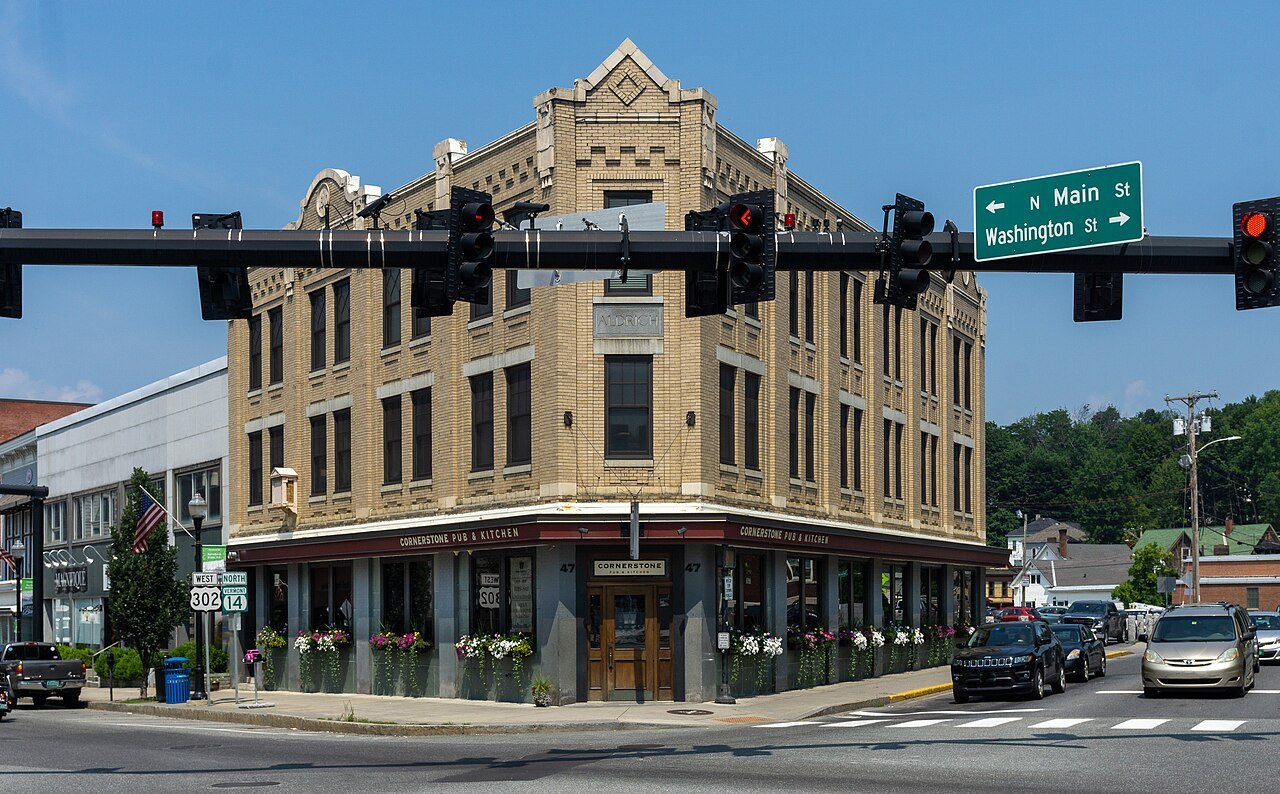
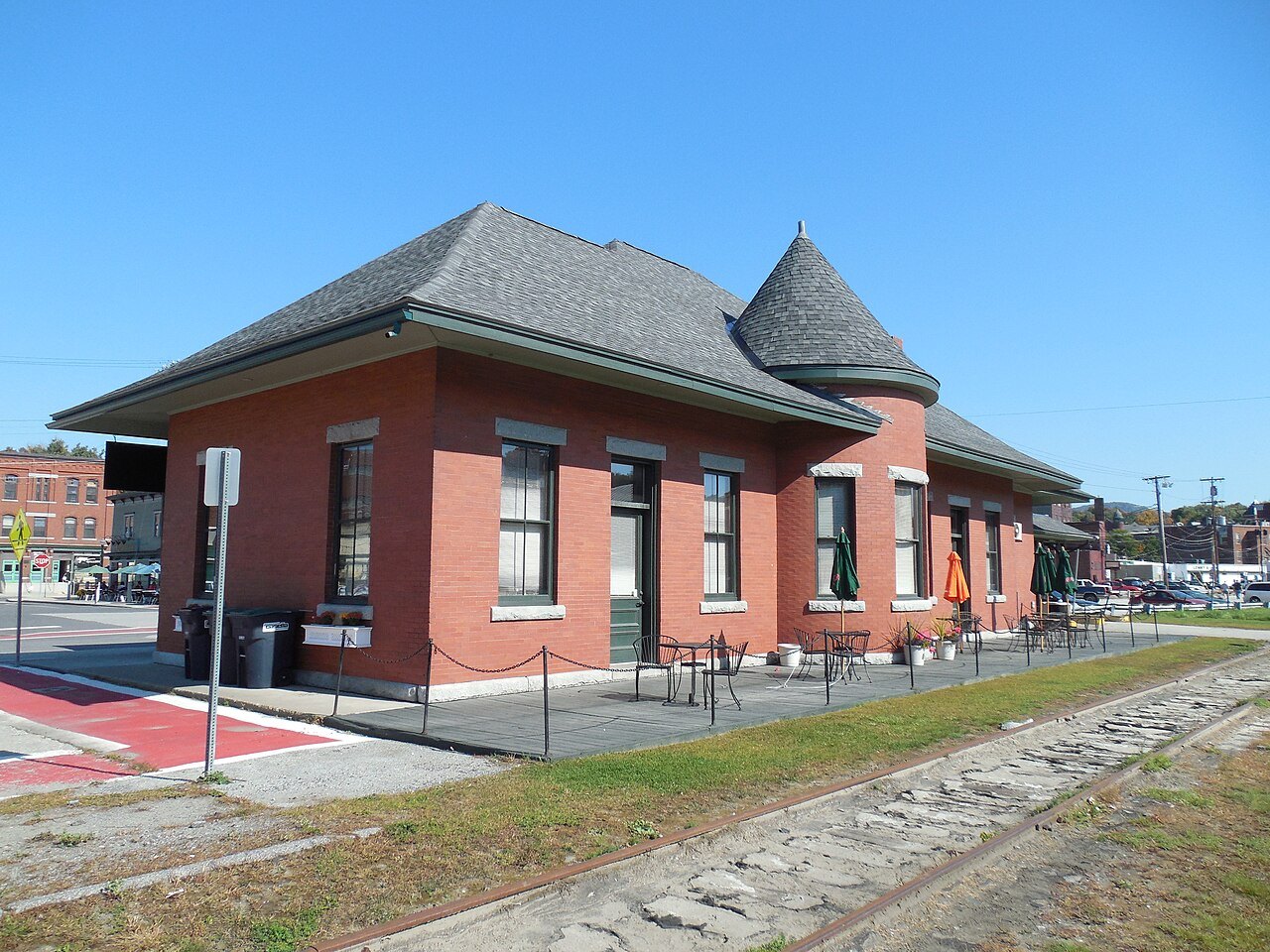
Downtown Barre holds the Barre Opera House, Studio Place Arts, the Vermont Historical Society and the Vermont Granite Museum. Alfred Hitchcock's film The Trouble With Harry premiered at the Paramount Theater in Barre on September 27, 1955, and the original version of the musical Hadestown first played in Barre in 2006. The city is drained by the Stevens Branch and Jail Branch rivers, tributaries of the Winooski.
Barre is served by I-89, US 302, VT 14 and VT 62, so the quarries, the museum and the opera house are easy to pair with a visit to the State House. See the State House page for the building the stone went into.