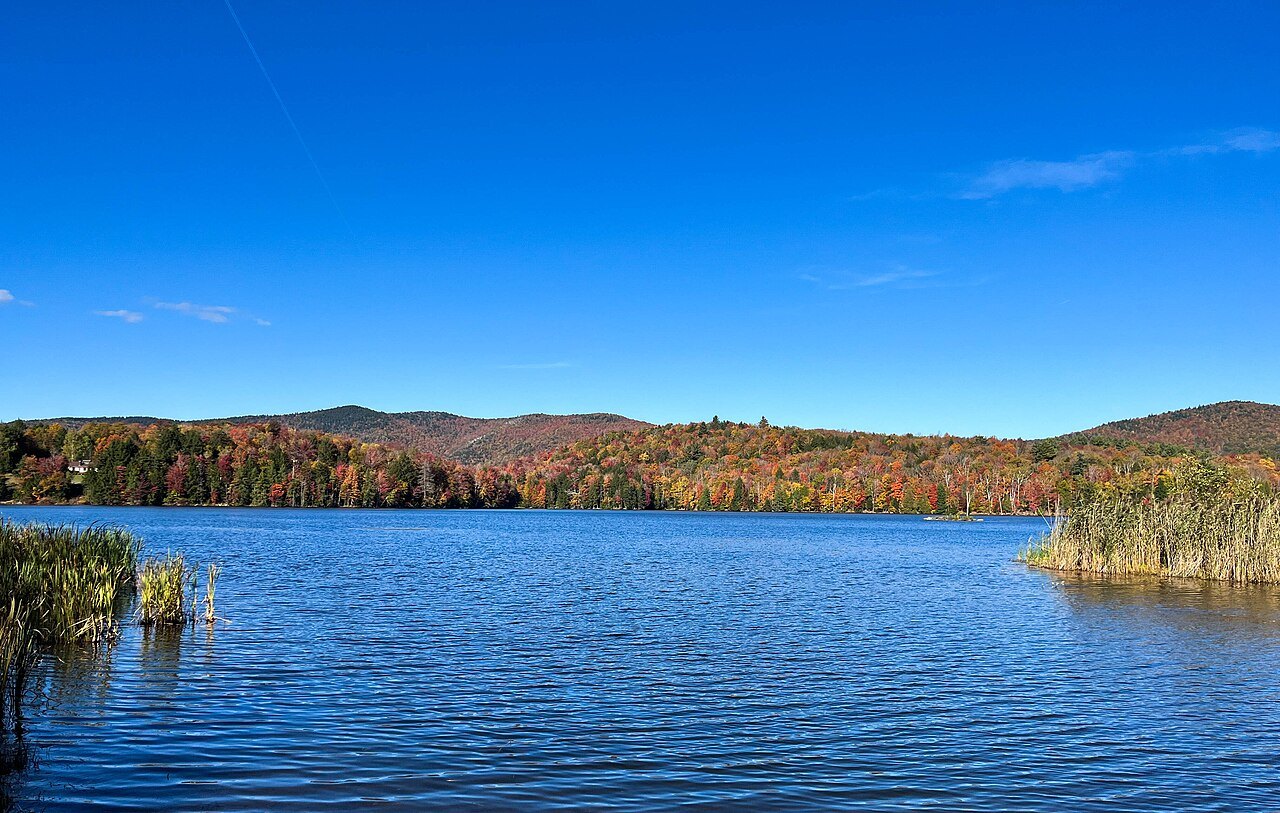
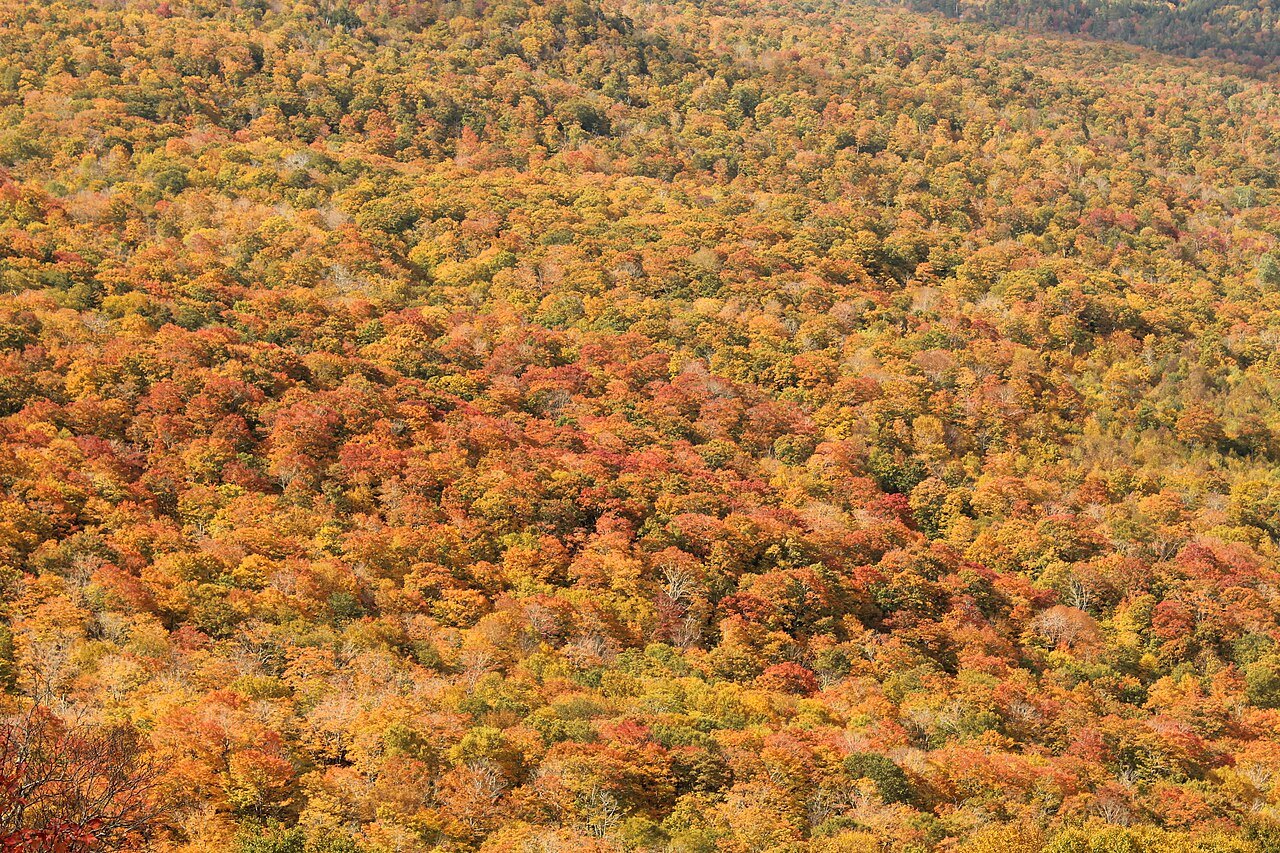
Why do Vermont's leaves change color?
Photographs: Mike's Birds from Riverside, CA, US, Wikimedia Commons, CC BY-SA 2.0 · Victoria Stauffenberg, Wikimedia Commons, Public domain · Forest Service Photography, Wikimedia Commons, Public domain
Vermont's hills turn red, orange and gold each fall. Where the colors come from, why bright cool days and chilly nights make the best displays, why northern New England is especially red, and how to time a trip.
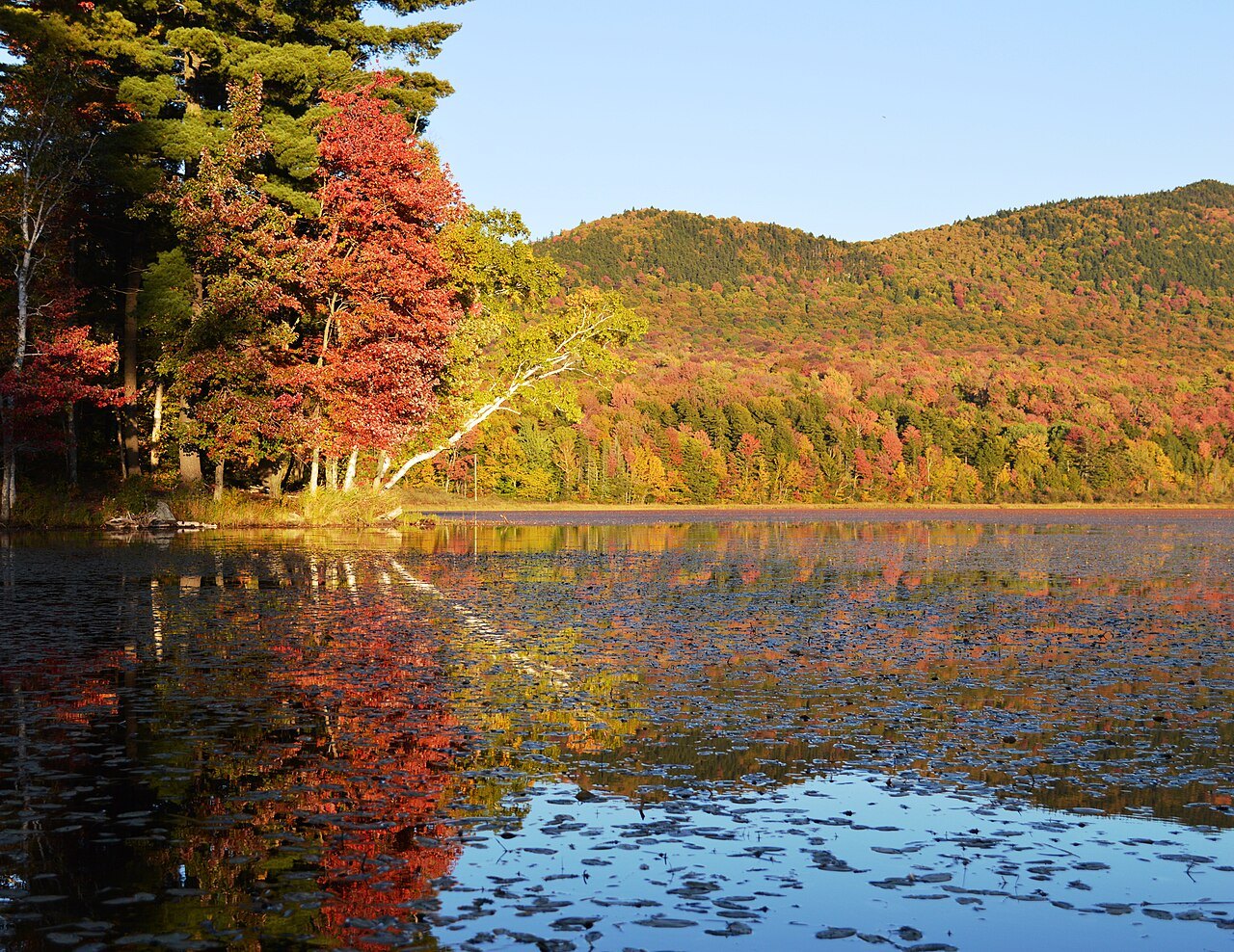
The short answer
Leaves are green in summer because of chlorophyll, which captures sunlight to make the tree's food. In late summer, as the days shorten and the temperatures cool, the tree starts to recover what it has invested in the leaves, and the chlorophyll is broken down. The yellows and oranges that appear are pigments called carotenoids, which were in the leaf all along but masked by the green; the reds and purples come from anthocyanins, which the leaf actively makes in the fall.
In Vermont, the hills reveal red, orange and, on the sugar maples, gold as cold weather approaches, and the state's own climate description counts the colorful autumn among its defining features. This article explains the pigments and what makes one year brighter than another, and the when to come page covers the calendar.
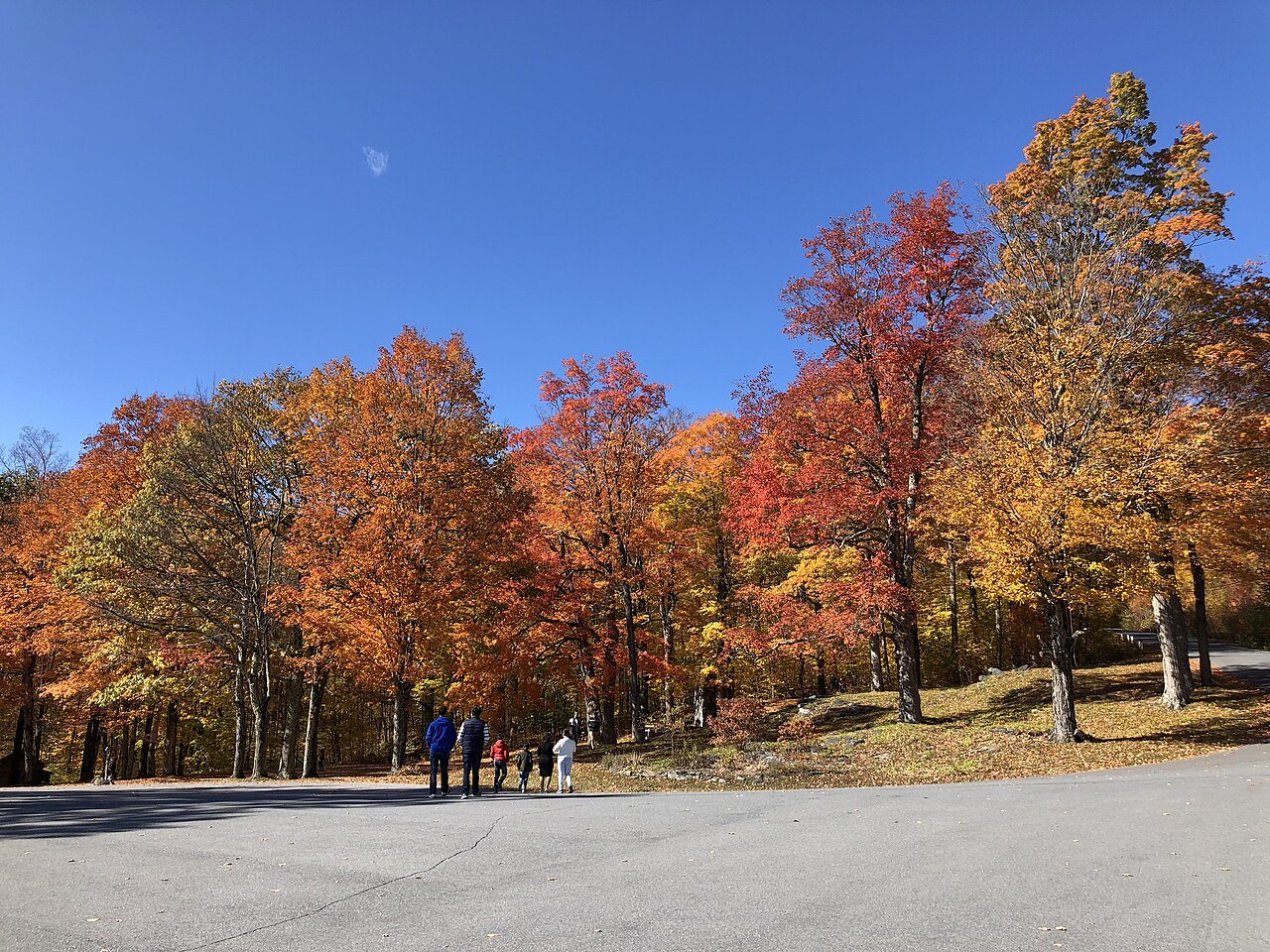
Chlorophyll fades
A green leaf is green because of chlorophyll, a pigment inside the leaf's cells. During the growing season the tree replenishes the chlorophyll as fast as it breaks down, so the green dominates and masks the other pigments. In late summer, with daylight hours shortening and temperatures cooling, the tree begins to take back its nutritional investment, and the chlorophyll is degraded.
At the same time the leaf is being cut off from the tree: a layer of special cork cells forms at the base of each leaf and gradually closes off the veins that carry fluids into and out of it, which is how a leaf eventually falls. Often the veins stay green after the tissue between them has almost completely changed color.
Yellow, orange and gold
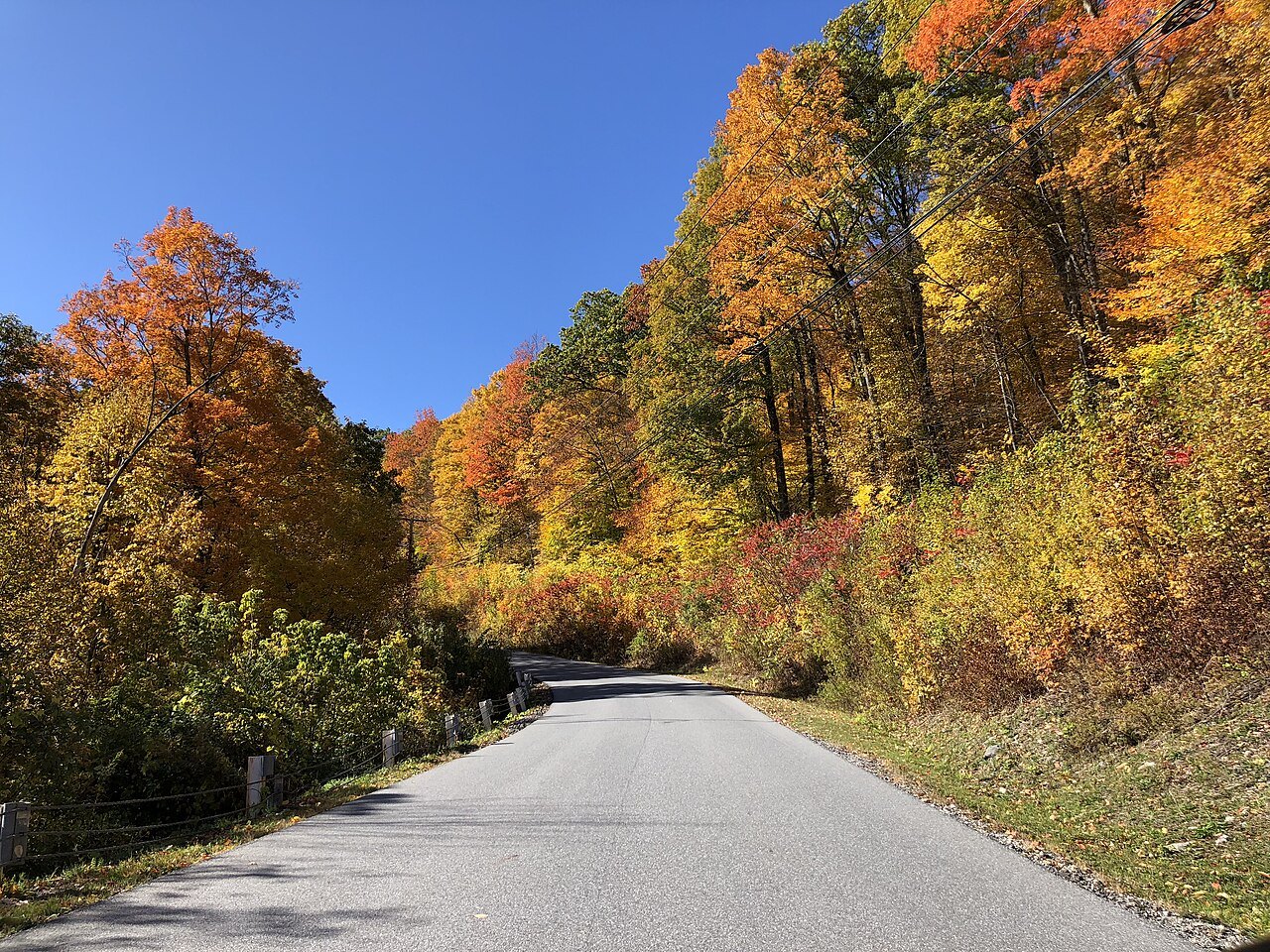
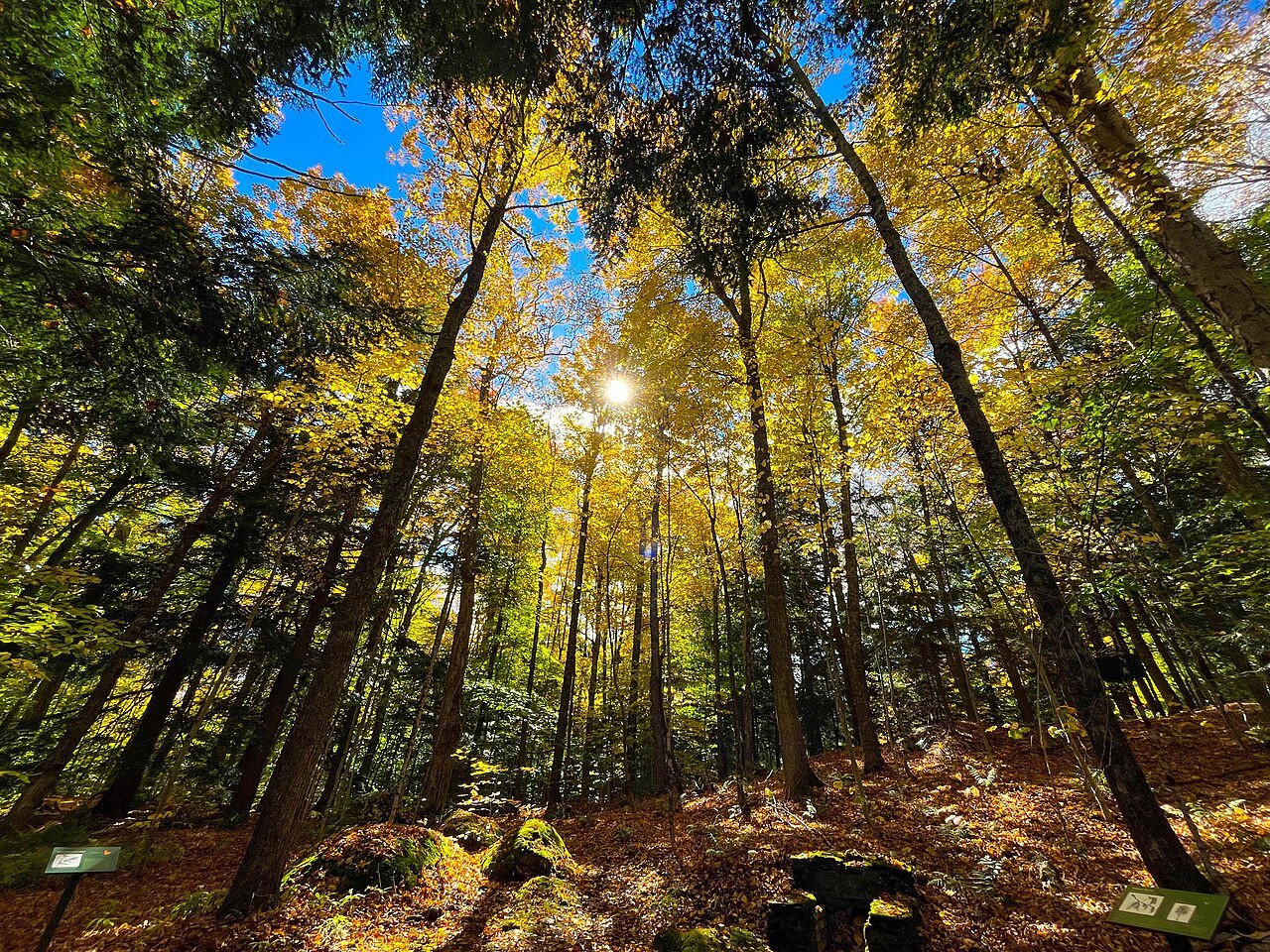
Carotenoids are present in leaves all year, but their orange-yellow colors are usually masked by chlorophyll. As the chlorophyll supply dwindles, the masking fades, and the yellows, oranges and browns show through. The same pigments give their color to carrots, corn, daffodils and egg yolks.
Their yellows and oranges tint the leaves of hardwoods such as hickory, ash, maple, aspen and birch, and carotenoids are the dominant pigment in about 15 to 30 percent of tree species. In Vermont this is the gold of the sugar maples.
Why the reds are special
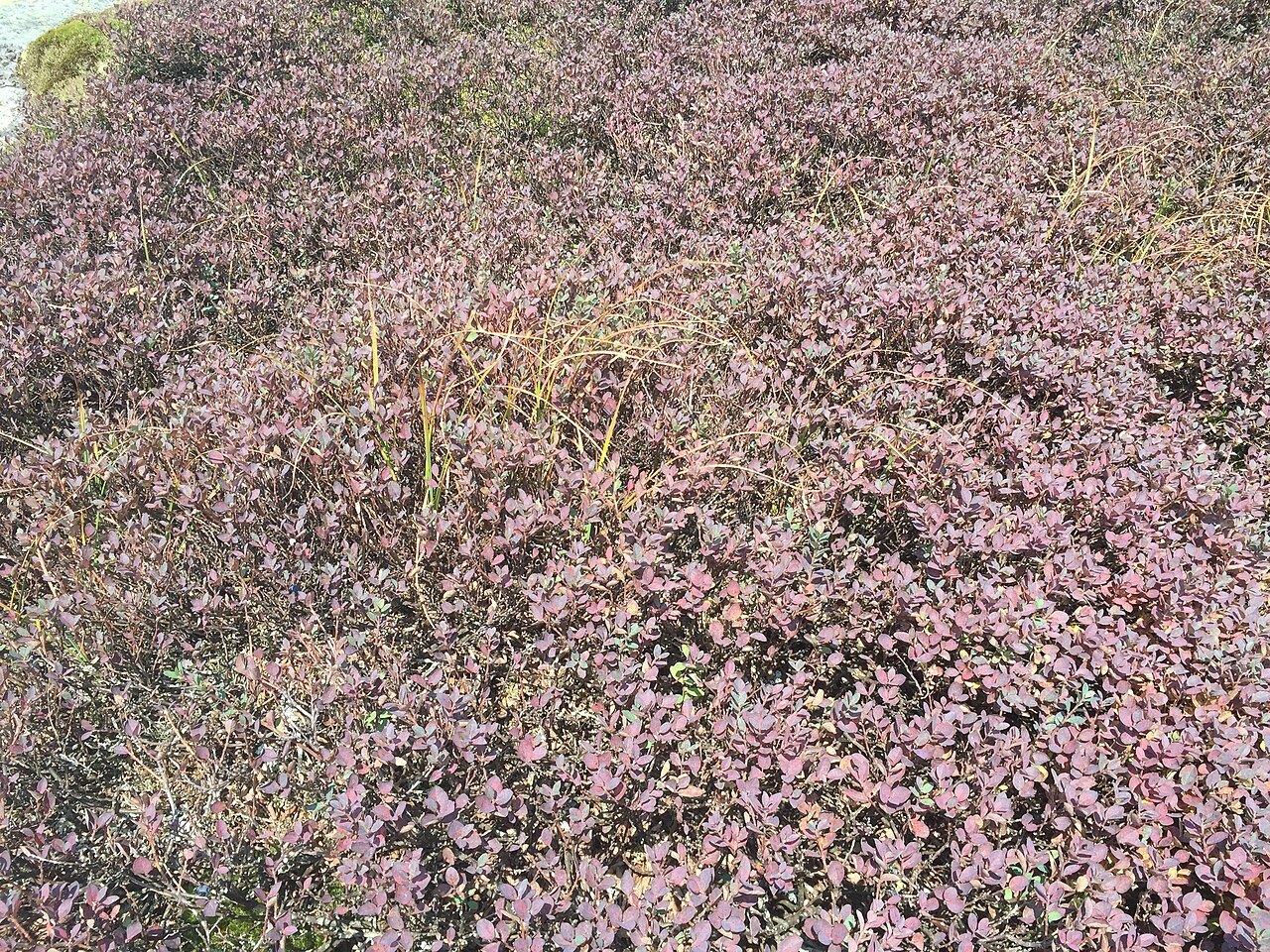
The reds, purples and pinks come from anthocyanins. Unlike carotenoids, they are not present through the growing season but are actively produced toward the end of summer, in the sap of the leaf's cells, when the leaf's phosphate moves out and the breakdown of sugars changes. The brighter the light during this period, the greater the production of anthocyanins and the more brilliant the color.
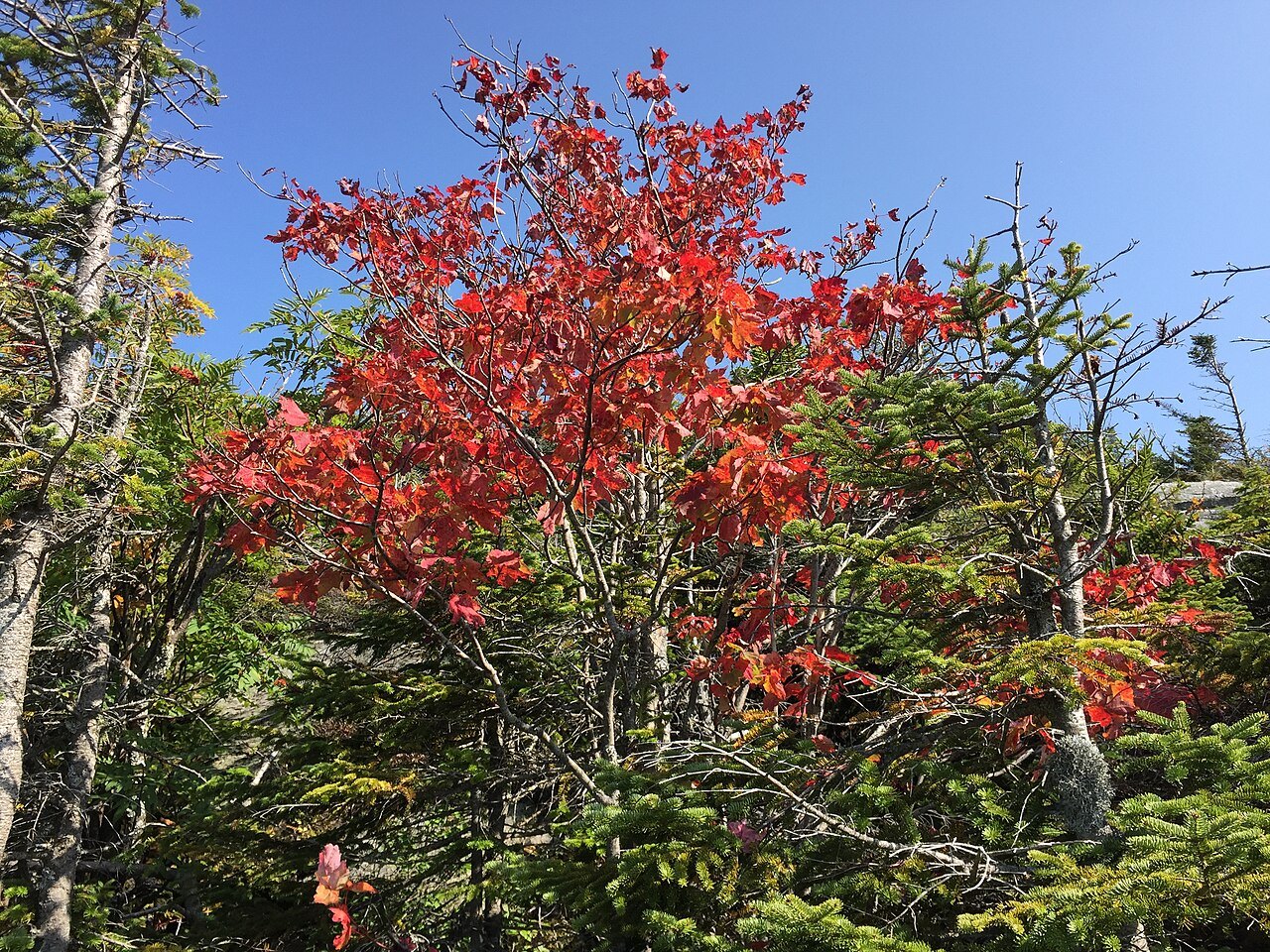
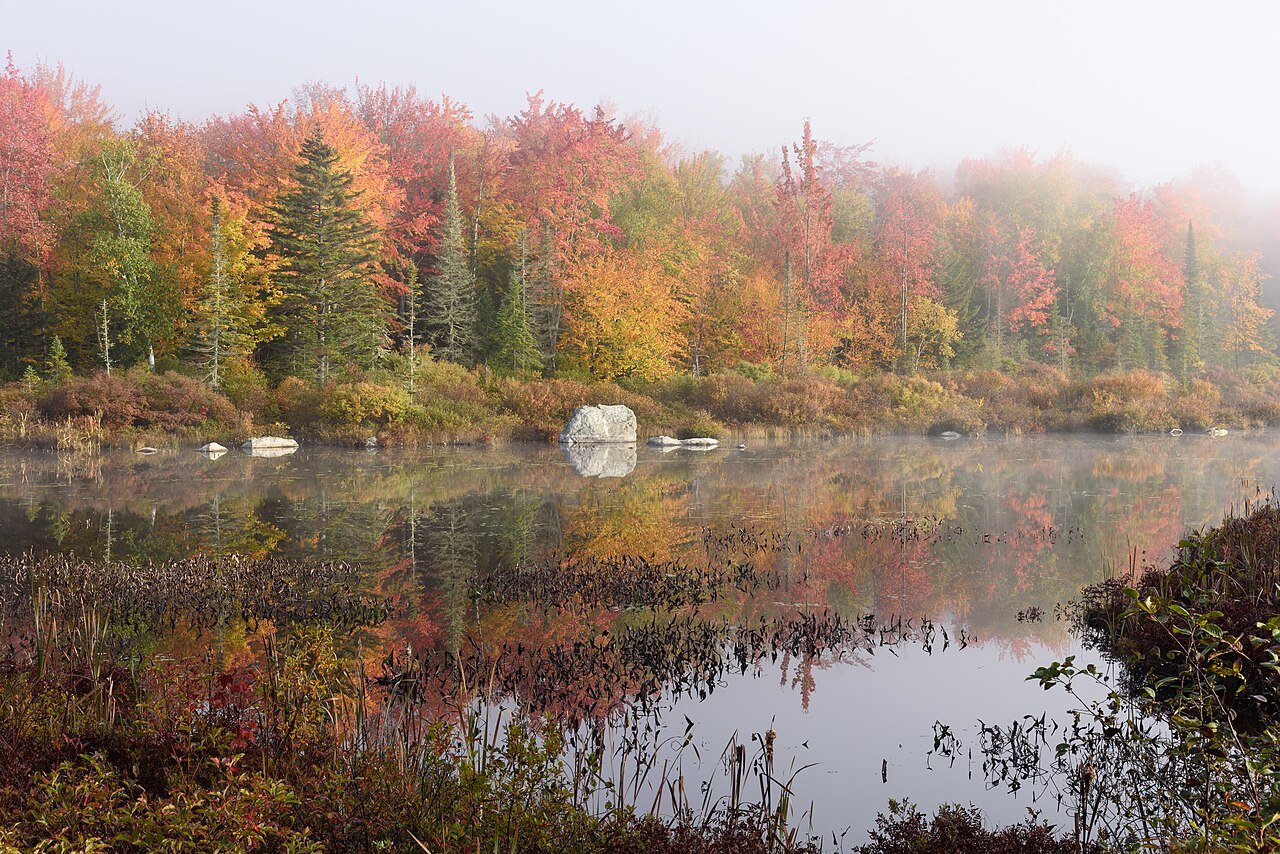
Anthocyanins are present in about 10 percent of tree species in temperate regions, but in some places, most famously northern New England, up to 70 percent of tree species may produce them. That is the reason the fiery reds and bronzes of Vermont's maples are so well known, and why a photograph of the state in October looks the way it does.
Anthocyanins also color the familiar fruits of the season and the edges of some very young leaves as they unfold in early spring: cranberries, red apples, blueberries, cherries and plums owe their color to the same group of pigments, so a Vermont orchard in October and a hillside of maples are, chemically, the same story.
Why trees bother
Deciduous trees were traditionally thought to shed their leaves because the cost of maintaining them in the low light and cold of winter would outweigh the benefit, though that explanation turned out to be too simple: insect pests, water loss and damage from wind or snow also play a part. The reds are not involved in leaf-drop at all. They are made actively, and several theories try to explain why.
According to the photoprotection theory, anthocyanins shield the leaf against light at low temperatures, so that the tree reabsorbs nutrients, especially nitrogen, more efficiently before the leaf falls. According to the coevolution theory, the red is a warning to insects such as aphids, which use trees as a host for the winter; one study found that maples showed red coloration earlier after simulated insect damage. In maples, the brilliant red is also produced by processes separate from the breakdown of chlorophyll, and it has been found to stunt the growth of nearby saplings.
What makes a good year
When the days of autumn are bright and cool, and the nights are chilly but not freezing, the display is at its best, because the brightness of the light during the period when the leaf is making anthocyanins sets how brilliant the color is.
Climate matters over the long run too. Higher autumn temperatures in the northeastern United States have been found to delay the color change, and experiments suggest that rising carbon dioxide can keep leaves greener longer. For a visitor this means that the peak is a window rather than a date, and that past dates are only a rough guide.
Where the colors come from in Vermont
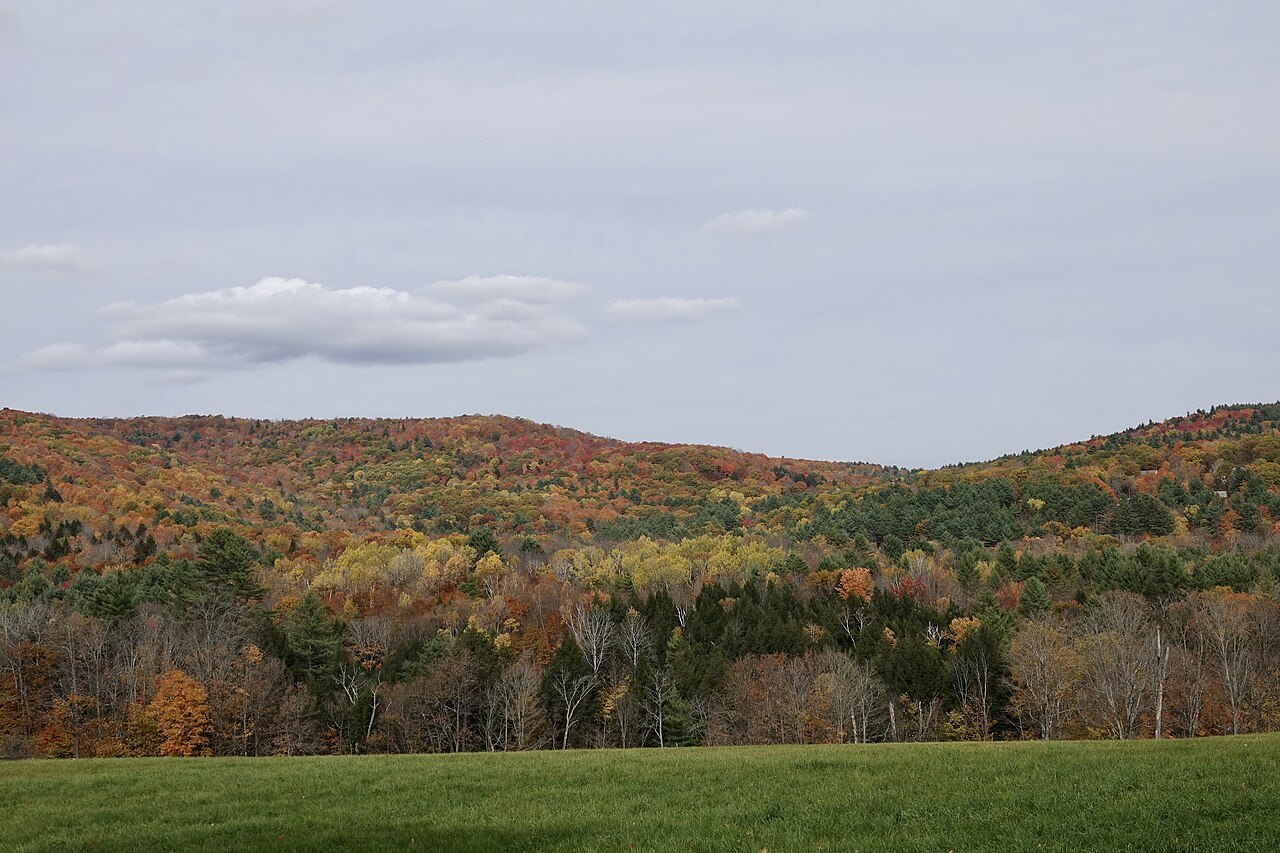
Most of Vermont's terrain is forested, with hardwoods and conifers, and the state has a humid continental climate in which fall is colorful. At Stowe, peak fall color usually comes in late September, and the village's peak spring bloom comes in early May. The color season, from the first change to leaf fall, runs from September to November in the northern hemisphere, and leaf-peeping is a major part of the economy wherever it happens.
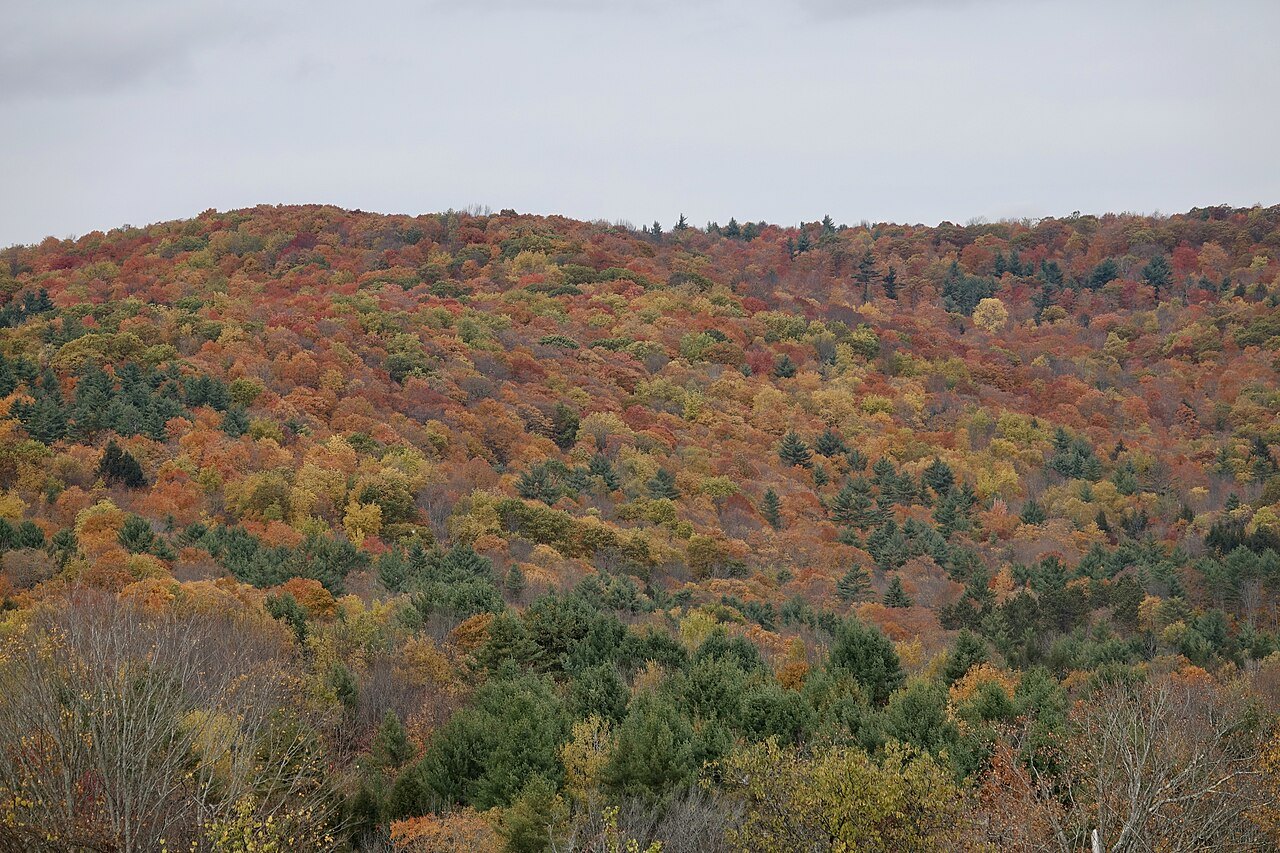
The mountains themselves stay partly green, because the spruce and fir forest of the high ground does not change: Mount Mansfield, for example, has a dominant vegetation of spruce and fir, a northern conifer forest, while the village at its foot has northern hardwoods, which is why the colors show on the lower slopes.
Timing a trip
Aim for late September and the first half of October, check conditions in the days before you travel, and keep the plan flexible. Route 100 is a popular tourist route in fall and can be heavily trafficked, so weekdays are quieter, and the back roads on the scenic drives page are good alternatives. North America has more than 800 tree species, which adds many more colors than Western Europe has, and that variety is part of why the northeastern woods are so varied.
The guide does not sell, book or reserve anything. Rooms in the best-known towns fill early in the season, so arrange lodging directly with the operators well ahead.